
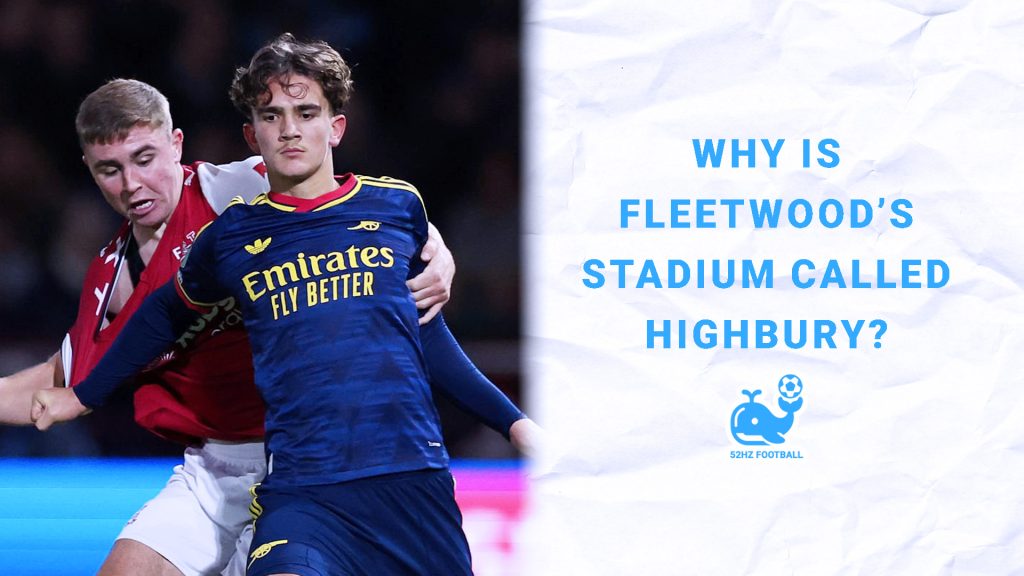
Fleetwood Town’s stadium brings an instantly recognisable name to the Lancashire coast: Highbury. For Arsenal supporters, Highbury is a name loaded with memories.
It recalls the marble halls, the Clock End and the ground the club called home for almost a century.
That made Arsenal’s trip to Fleetwood Town on 27 October 2026 unusually intriguing. The Gunners were playing at a stadium called Highbury again, twenty years after leaving their own. Fleetwood made the occasion even more memorable by winning 5–3 on penalties after a 1–1 draw in the Carabao Cup.
The shared name raises an obvious question: why does a club in Lancashire play at a ground bearing such a famous Arsenal name?
Why Is Fleetwood’s Stadium Called Highbury?
Fleetwood Town’s Highbury Stadium takes its name from Highbury Avenue, the road beside the ground.
The name comes from the stadium’s immediate surroundings. The ground stands beside Memorial Park in Fleetwood, and its naming history is separate from that of Arsenal’s former home in north London.
There is a small geographical detail that can cause confusion: the stadium’s postal address is Park Avenue, even though its name comes from neighbouring Highbury Avenue. Both streets belong to the area around the ground.
Arsenal made “Highbury” internationally recognisable, but Fleetwood’s use of the name has its own local explanation.
When Did Fleetwood Move to Highbury?
Highbury opened in 1939, following an earlier period when Fleetwood’s football ground was beside the North Euston Hotel.
Its opening coincided with the outbreak of the Second World War, interrupting the beginning of its football history. When football resumed in 1946, more than 4,500 spectators watched Fleetwood draw 5–5 with Morecambe in a Lancashire Combination fixture, according to Visit Fleetwood’s local history of the club.
Football was only part of the stadium’s early sporting life. Between 1948 and 1952, Highbury also staged speedway, with the Fleetwood Flyers racing there. The track surrounding the football pitch helped explain the substantial space between parts of the ground and the playing surface before later redevelopment brought the stands closer.
The ground is also older than the current version of Fleetwood Town. The present club was established in 1997, following earlier incarnations of football in the town. Highbury subsequently developed alongside the team’s rise, with new stands opening in 2007, 2008 and 2011 before Fleetwood reached the Football League in 2012.
That distinction helps explain why a relatively young club can play at a stadium whose history stretches back to the 1930s.
Why Was Arsenal’s Ground Also Called Highbury?
Arsenal’s former stadium took its familiar name from Highbury, the north London district where it was located. The same word therefore describes two separate places: a London neighbourhood and a street in Fleetwood.
Officially called Arsenal Stadium, the London ground was home to the Gunners from 1913 until 2006, when they moved to the Emirates Stadium. “Highbury” became the name supporters used almost universally.
By the time Fleetwood’s stadium opened in 1939, Arsenal had already been playing at their Highbury for 26 years. The London ground was older, but Fleetwood’s stadium was named through its own connection to the surrounding streets.
For another look at Arsenal’s history across those eras, explore our guide to the players who represented both Arsenal and Ipswich Town.
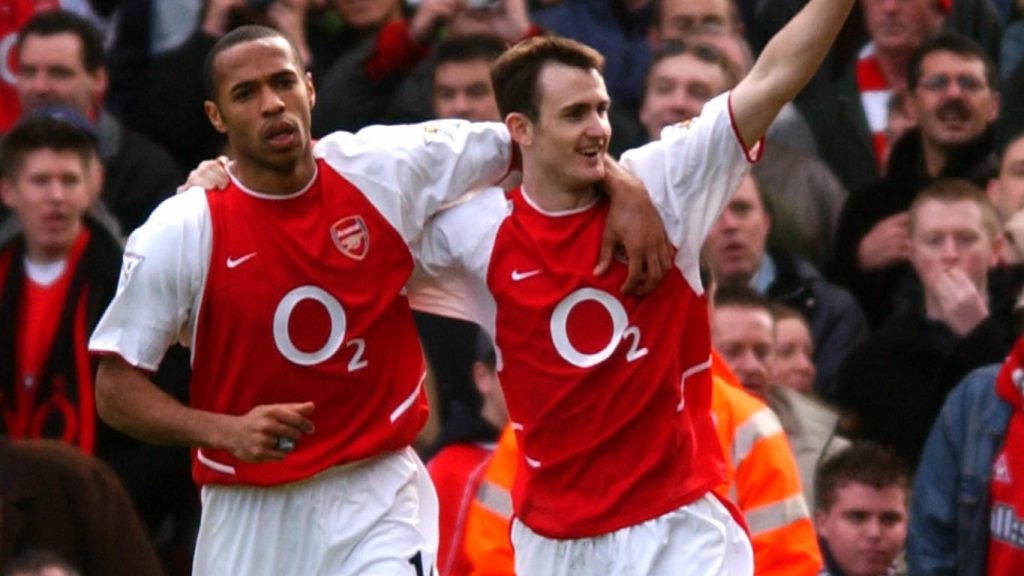
What Happened to Arsenal’s Original Highbury?
Arsenal’s former home became Highbury Square, a residential development incorporating significant elements of the stadium.
The redevelopment retained the historic East and West Stand façades, while the area once occupied by the pitch became a communal garden. Arsenal’s account of Highbury’s history explains how the site was transformed after the club’s departure.
Fleetwood’s Highbury continues to operate as a football stadium. This is why an Arsenal fixture at “Highbury” can appear on a modern schedule even though the club left its London home in 2006.
A Familiar Name With a Fleetwood Story
Arsenal’s visit brought fresh attention to the coincidence, and Fleetwood’s cup victory gave their Highbury a new place in the visitors’ memories.
For anyone discovering the ground through that match, the answer begins with a nearby street. Its wider story includes wartime disruption, speedway racing, successive clubs and a climb into the Football League.
Highbury Avenue supplied the name. Generations of football in Fleetwood supplied the history.
You have just read the article “Why Is Fleetwood Town’s Stadium Called Highbury?”. Follow 52Hz Football for more captivating stories about football, geography and culture.
