
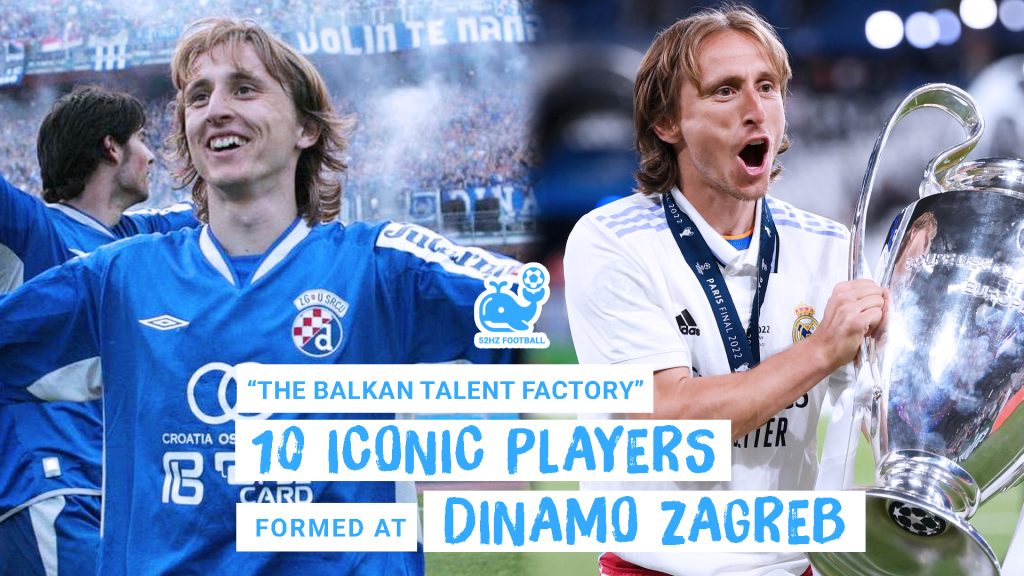
If football is a lavish banquet, then Dinamo Zagreb is the secret head chef – the one quietly supplying the finest ingredients to the world’s most expensive restaurants.
With a philosophy that prioritizes individual technique and supreme mental resilience, this academy has continuously churned out generations of players who possess both raw talent and superior tactical intelligence.
From Champions League winners to World Cup heroes, here are 10 iconic players who were forged in the fires of Zagreb.
READ MORE:
- The Marakana Factory: 10 World-Class Stars Forged at Red Star Belgrade
- The “Other” Balkan Factory: 10 Stars Made in Partizan Belgrade (Vlahovic, Mitrovic)
10. Mario Mandžukić
Technically, Mandžukić didn’t graduate from Dinamo’s academy. In fact, Zagreb was the third club of his career after Marsonia and NK Zagreb. However, it was the “Plavi” that truly elevated the striker born in 1986 to elite status. In over three seasons, he scored 63 goals in 128 appearances, winning 5 trophies.
His success in Zagreb was his passport to the big leagues. At VfL Wolfsburg, Bayern Munich, Atlético Madrid, and Juventus, the veteran striker always found his place, proving his reliability and work rate.
His peak came at Bayern Munich, where he won the historic treble in the 2012/13 season, even scoring in the Champions League final. He later became a key figure at Juventus, contributing to their Serie A dominance and reaching two more Champions League finals.
Internationally, Mandžukić ranks second only to Davor Šuker in Croatia’s all-time scoring charts (at the time of his retirement), and famously scored in the 2018 World Cup final against France.
9. Marcelo Brozović
He started his career at Hrvatski Dragovoljac and Lokomotiva, but it was his two-and-a-half years at Dinamo Zagreb that introduced his talent to Europe. Inter Milan moved quickly to sign him in the winter of 2015.
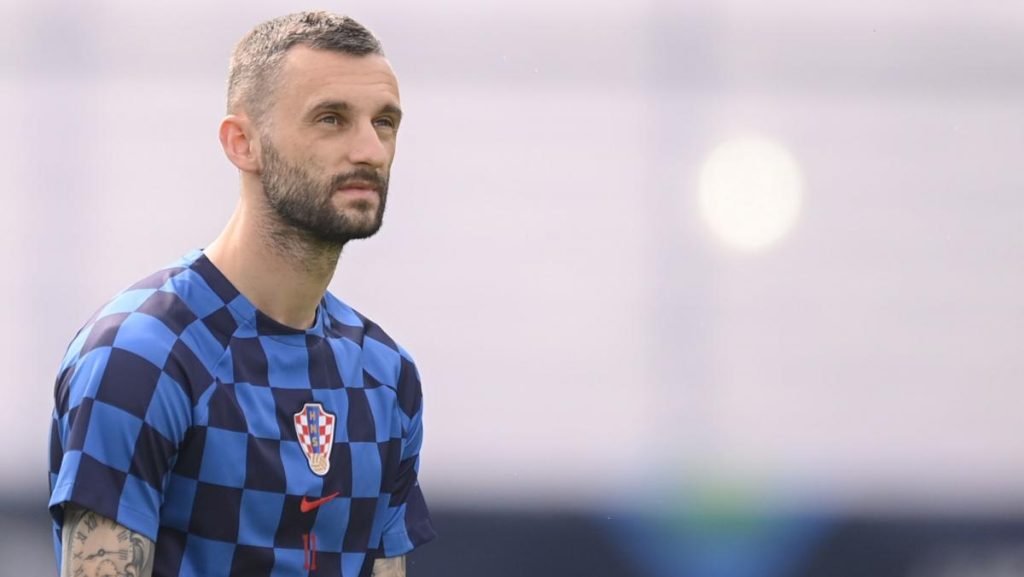
For nearly a decade, the defensive midfielder born in 1992 was the heartbeat of Inter Milan. Brozovic made over 330 appearances, scored 31 goals, won 5 trophies, and reached a Champions League final. He was also named the “Best Midfielder in Serie A” for the 2021/22 season.
For Croatia, he was the tireless engine room of the team that finished as runners-up at the 2018 World Cup.
8. Dejan Lovren
When people mention Lovren, they usually think of his time at Liverpool, where he became a Premier League and Champions League winner. But before reaching those heights, the center-back spent three formative seasons in Dinamo Zagreb’s first team.
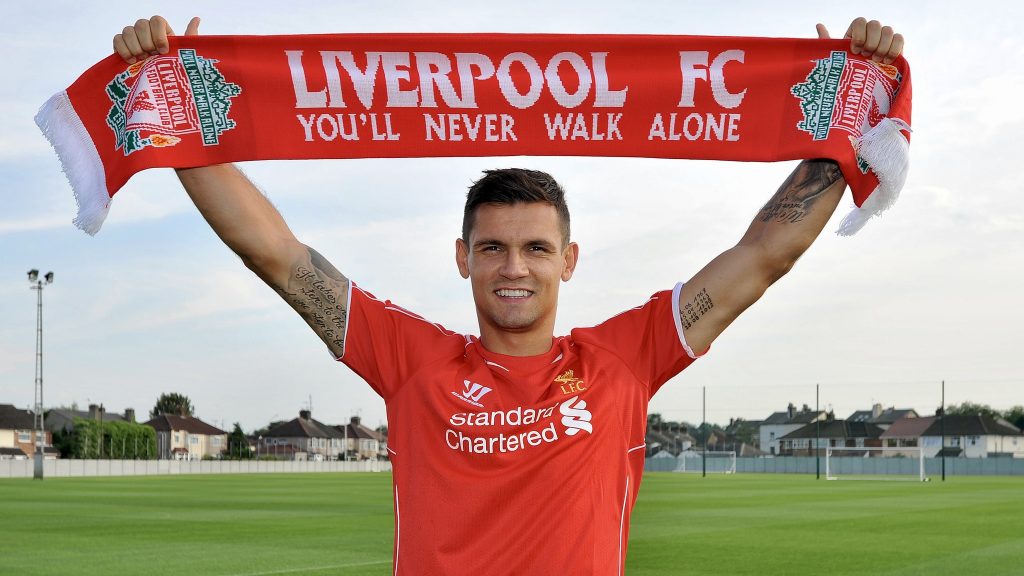
After proving his worth in Croatia, Lovren moved to Lyon, then Southampton, before landing at Anfield. In the twilight of his career, he joined Zenit St. Petersburg, returned to Lyon, and eventually hung up his boots at PAOK in Greece.
And of course, he was a defensive pillar for Croatia, earning 78 caps between 2009 and 2022 and starting in the 2018 World Cup final.
7. Robert Prosinečki
Robert Prosinečki was a midfield legend of the 20th century, renowned for his exquisite dribbling, vision, and long-range shooting. He began his professional career at Dinamo Zagreb, quickly emerging as one of Europe’s brightest prospects.
Prosinečki later played for giants like Red Star Belgrade – where he won the 1991 European Cup (Champions League) – and remains one of the few players in history to have played for both Real Madrid and Barcelona.
In a Croatia shirt, Prosinečki was instrumental in the team’s historic third-place finish at their debut World Cup in 1998, scoring crucial goals against Jamaica and the Netherlands.
6. Dani Olmo
Surprise!
It wasn’t Barcelona who gave Dani Olmo his professional debut; it was Dinamo Zagreb.
Before moving to Croatia, Olmo spent seven years at La Masia (2007–2014). In the summer of 2014, he made the incredibly bold decision to leave Barcelona and move to Dinamo Zagreb at the age of 16.
That gamble paid off spectacularly. After five seasons in Zagreb, he moved to RB Leipzig in the Bundesliga, impressing with his versatility. By the summer of 2024, Barcelona had to pay €60 million to bring him back to Camp Nou, where he remains a key starter today.
Olmo was also one of the standout performers at Euro 2024, scoring 3 goals – including vital strikes against Germany and France in the knockout stages – to help Spain lift the trophy.
5. Joško Gvardiol
Another star unveiled by Dinamo Zagreb in recent years.
Joining the academy in 2010, Gvardiol broke into the first team in 2019. He moved to RB Leipzig in 2021, where he solidified his reputation as a modern defender over 88 appearances.
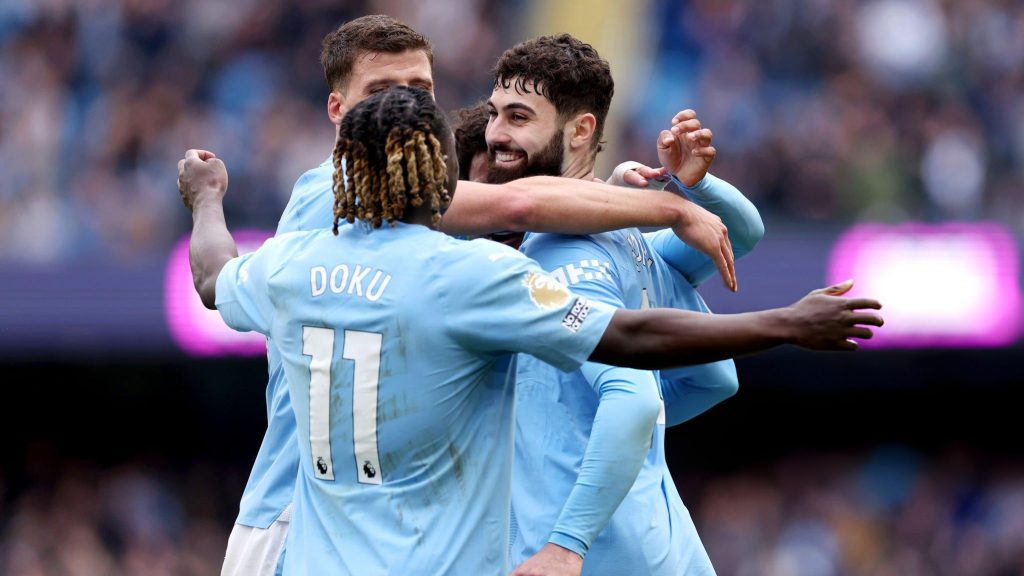
As a left-footed center-back with elite passing ability, he was the perfect profile for Pep Guardiola. Manchester City paid €90 million to sign him, making him the most expensive defender in history. To date, he has made over 100 appearances for the Citizens.
Naturally, he remains a cornerstone of the Croatian national team at every major tournament.
4. Mateo Kovačić
Aside from Luka Modrić, Mateo Kovačić possesses perhaps the most impressive trophy cabinet in Croatian history.
Kovačić graduated from Dinamo’s academy and spent three seasons in the first team, holding the record as the youngest goalscorer in Croatian league history (16 years and 198 days). He joined Inter Milan in early 2013.
In 2015, he moved to Real Madrid for three seasons. Coincidentally, Real Madrid won the Champions League in all three of those seasons. The trophies kept coming when he moved to Chelsea (another Champions League) and then Manchester City (yet another Premier League title).
While his individual contributions may not grab headlines like Modrić, his talent is undeniable. Whether starting or coming off the bench, he is a world-class operator known for his dribbling, press resistance, and tactical discipline. There is a reason the world’s best clubs keep signing him.
3. Davor Šuker
Let’s put aside his post-playing career controversies for a moment.
On the pitch, Davor Šuker was a phenomenon. He exploded at Osijek at age 17, scoring 40 goals in four seasons. Dinamo Zagreb then signed him to refine his skills.
In 1991, Šuker moved to Sevilla in La Liga, scoring 90 goals in five seasons. He then shone at Real Madrid, netting 24 goals (including three hat-tricks) to help them win La Liga in 1997 and the Champions League in 1998.
After stints at Arsenal and West Ham, he retired in the Bundesliga with 1860 Munich.
But when you mention Šuker, you must mention the 1998 World Cup. He scored 6 goals to win the Golden Boot, leading Croatia to a miraculous third-place finish in their first-ever tournament.
2. Zvonimir Boban
Another legend produced by Dinamo in the last century.
Joining the first team at 16 and captaining the side at 19, Boban spent six seasons in Zagreb, scoring 45 goals in 109 games.
AC Milan snapped him up but initially loaned him to Bari due to foreign player limits. Despite Bari’s relegation, Boban impressed enough to return to Milan in 1992.
Over nine seasons at the San Siro, the midfielder born in 1968 became a club icon, winning 4 Serie A titles and the 1994 Champions League. He was nominated for the Ballon d’Or four times.
And of course, the 1998 Croatia team would have been incomplete without him. Boban is remembered as the symbol of Croatia’s golden era, wielding immense influence both on the pitch and in the dressing room.
1. Luka Modrić
To find a Croatian player greater than Luka Modrić is impossible, whether you judge by class, individual awards, or collective trophies.
Starting from the minefields of war-torn Zadar, where the sound of grenades replaced the referee’s whistle, that skinny boy carried the steel will of a refugee into the Dinamo Zagreb academy. From there, he conquered Tottenham, and then climbed to the absolute peak of the sport with Real Madrid.
Modrić plays football like a conductor leading a symphony orchestra. In an era of physical monsters, he is living proof that brain and technique remain supreme. His peak came in 2018, when he broke the Messi-Ronaldo duopoly to win the Ballon d’Or, dragging a tiny nation to the World Cup final.
Now approaching 40, when most of his peers have long retired, Modrić is still playing at an elite level in Serie A with AC Milan. And frankly, the glorious career of Luka Modrić looks like it could go on for a few more years yet.
