
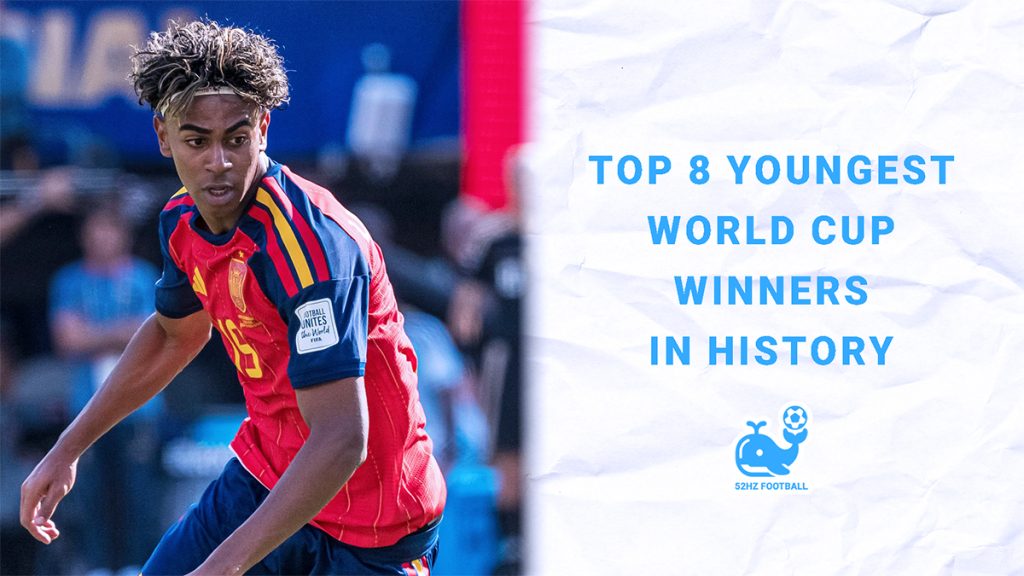
Explore the top 8 youngest World Cup winners in history as Lamine Yamal joins Pelé and Mbappé in football’s most elite teenage pantheon.
Football history is defined by generational talents who conquer the globe at an age when most are still learning the fundamentals of the professional game.
Following Spain’s historic 1-0 triumph over Argentina in the 2026 final, the definitive list of the youngest World Cup winners has been dramatically reshuffled. The emergence of a new golden generation has rewritten the record books, displacing legends and cementing new legacies.
Here is the complete history of the top 8 youngest players to win the World Cup.
8. Kylian Mbappé – France (19 years, 207 days)
Arriving at the 2018 tournament in Russia, Kylian Mbappé was already a recognized prodigy, but he left as a global superstar.
Kyky provided electrifying pace and clinical finishing, scoring four goals during the campaign. His crowning achievement was a stunning strike from outside the box in the 4-2 final victory over Croatia, making him the second teenager in history to score in a World Cup final.
Mbappé’s World Cup story only intensified into pure statistical dominance. After claiming his first Golden Boot in 2022 alongside a historic hat-trick in the final, his performances in the 2026 tournament elevated him to undisputed greatness.
By capturing a remarkable second Golden Boot in 2026, Mbappé officially surpassed Miroslav Klose to become the all-time leading goalscorer in World Cup history with 22 goals.
7. Pau Cubarsí – Spain (19 years, 178 days)
Entering the 2026 tournament, few expected a teenager to anchor a World Cup-winning defense. Pau Cubarsí shattered those expectations. His exceptional reading of the game, precise ball distribution from the back, and composure under pressure were vital in Spain’s run.
In the physical final against Argentina, Cubarsí’s defensive solidity helped secure a clean sheet in a tense 1-0 victory that required extra time.
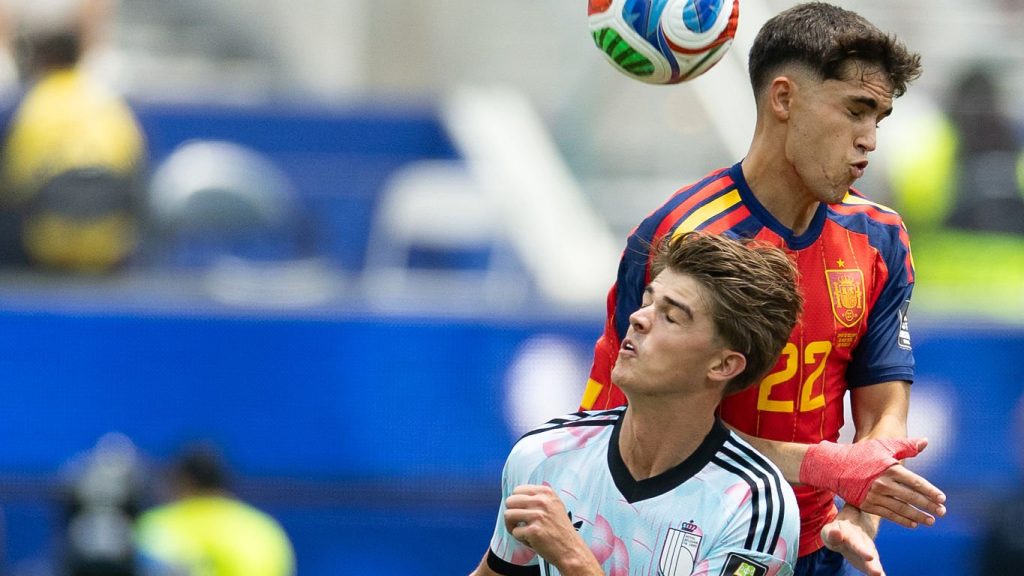
Fresh off his 2026 triumph, Cubarsí’s story is just beginning. As a cornerstone of Barcelona’s defensive line, he is widely projected to be the bedrock of the Spanish national team for the next decade, with multiple World Cup appearances likely lying ahead in his promising career.
6. Marco Antonio – Brazil (19 years, 134 days)
Marco Antonio was a young left-back in the legendary 1970 Brazilian squad – a team frequently cited as the greatest in football history.
While he was primarily an understudy to Everaldo, Marco Antonio played in two matches during the tournament. He provided essential depth, defensive stability, and overlapping attacking support that fit perfectly into Brazil’s expansive style of play.
Antonio was selected for the Brazilian squad again in 1974 but did not see any playing time. Despite a relatively quiet international career post-1970, Marco Antonio enjoyed a stellar domestic club career. He became an idol at Fluminense and later played for Vasco da Gama, winning multiple Campeonato Carioca (state championships) and proving his immense quality in South American football.
5. Lamine Yamal – Spain (19 years, 6 days)
Just six days after celebrating his 19th birthday, Lamine Yamal lifted the most coveted trophy in sports. Yamal was the creative spark for La Roja throughout the 2026 campaign in North America. His dazzling dribbling, tactical maturity, and ability to break low blocks were instrumental in navigating Spain through the knockout stages and overcoming a fiercely resilient Argentine side in the final.
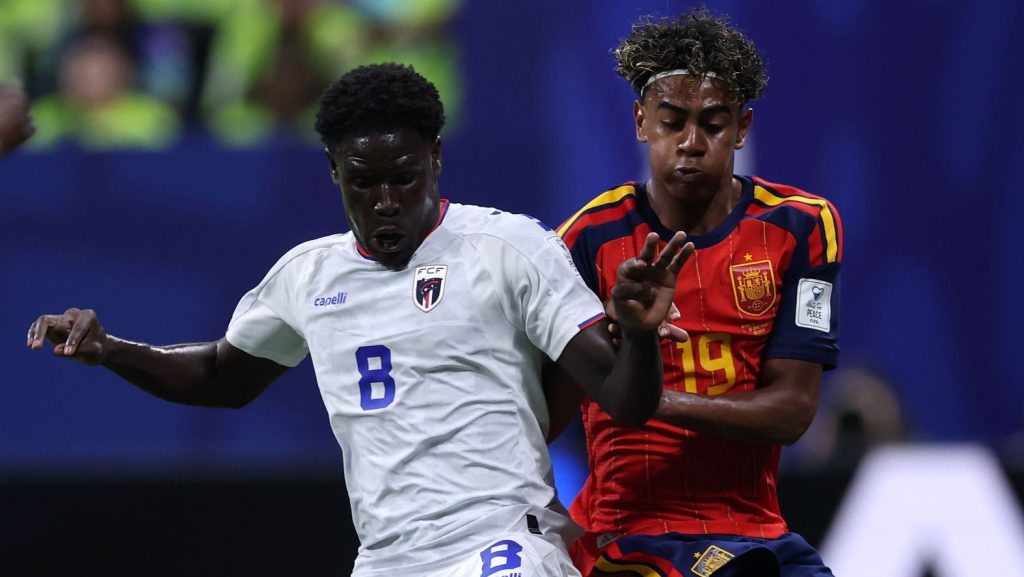
Like his teammate Cubarsí, Yamal’s post-2026 legacy is still unwritten. However, having already secured a World Cup title and established himself as a generational icon at Barcelona, Yamal is on a trajectory to become one of the defining attacking midfielders of the 21st century.
4. Giuseppe Bergomi – Italy (18 years, 201 days)
Affectionately nicknamed “Lo Zio” (The Uncle) because of his impressive mustache and mature demeanor, Giuseppe Bergomi was thrust into the spotlight due to injuries in the Italian squad. The teenage defender played with astonishing composure.
In the final against West Germany at the 1982 World Cup, Bergomi was tasked with man-marking the reigning Ballon d’Or winner, Karl-Heinz Rummenigge, effectively neutralizing the German star in Italy’s 3-1 victory.
🤯 Giuseppe Bergomi incredibly played in 4 World Cups but never in a #WorldCup qualifier.
🇮🇹 Aged 18, he was a late call-up in 1982, while Italy didn’t have to qualify for the 1986 & 1990 World Cups. Then, after 7 years away from the @azzurri, he earned a shock recall for 1998. https://t.co/e8vsWoqOV0 pic.twitter.com/PjIqqwWNth
— FIFA World Cup (@FIFAWorldCup) May 6, 2021
Bergomi’s longevity was incredible. He represented Italy in the 1986, 1990, and remarkably, the 1998 World Cups. A rare one-club man, he spent his entire 20-year professional career at Inter Milan, amassing over 750 appearances, winning multiple UEFA Cups, and cementing his legacy as one of the greatest defenders in Italian football history.
3. Rubén Morán – Uruguay (17 years, 344 days)
Rubén Morán’s contribution to World Cup history is brief but immortal. The 17-year-old left-winger was a surprise inclusion in the starting lineup for the decisive final group stage match at the 1950 World Cup against the heavily favored hosts, Brazil.
In what became known as the Maracanazo, Morán played the full 90 minutes in front of nearly 200,000 hostile fans, helping Uruguay achieve an impossible 2-1 comeback victory to claim the trophy.
Morán never played in another World Cup. His club career was spent predominantly with Club Atlético Cerro in Uruguay. Though his professional career was relatively short-lived and modest compared to others on this list, his participation in the Maracanazo ensures his name will never be forgotten in South American football lore.
2. Ronaldo Nazário – Brazil (17 years, 298 days)
Before he became “O Fenômeno”, Ronaldo was a 17-year-old prodigy soaking in the atmosphere of the 1994 World Cup in the United States. He was part of the Brazilian squad that won the tournament, though his contribution was entirely off the pitch.
He acted as an understudy to established stars like Romário and Bebeto, gaining invaluable experience of a winning championship environment.
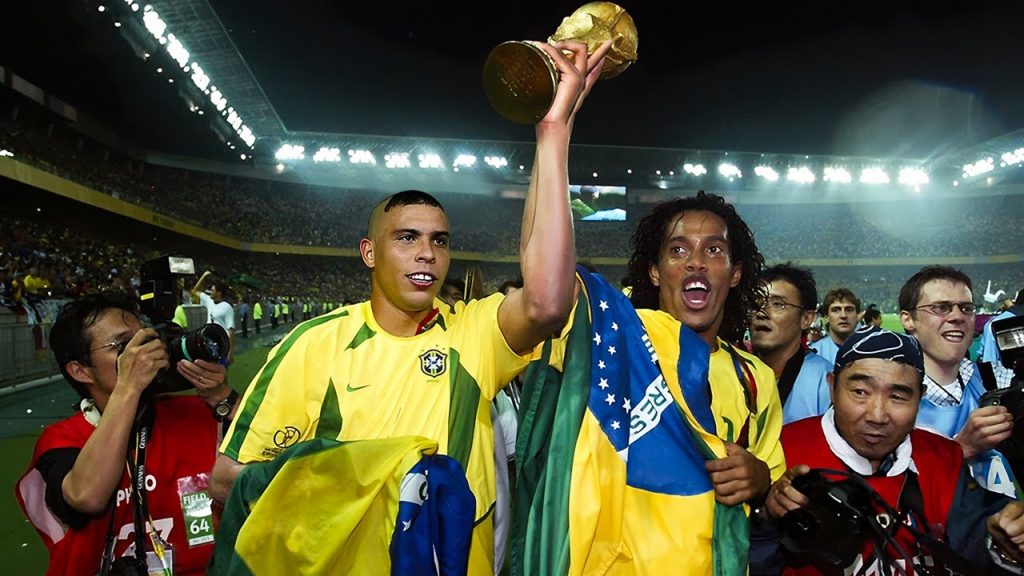
The experience paid massive dividends. Ronaldo reached the final in 1998 (winning the Golden Ball), and achieved ultimate redemption in 2002 by winning the Golden Boot and scoring both goals in the 2-0 final victory over Germany. He also played in 2006, breaking the all-time tournament goalscoring record at the time.
1. Pelé – Brazil (17 years, 249 days)
The benchmark for all players who won the World Cup as teenagers. Pelé arrived in Sweden in 1958 dealing with an injury but exploded onto the scene in the knockout stages.
The 17-year-old scored the winner against Wales in the quarter-final, a hat-trick against France in the semi-final, and a brilliant brace against the hosts, Sweden, in the final. He didn’t just participate; he dominated the global stage.
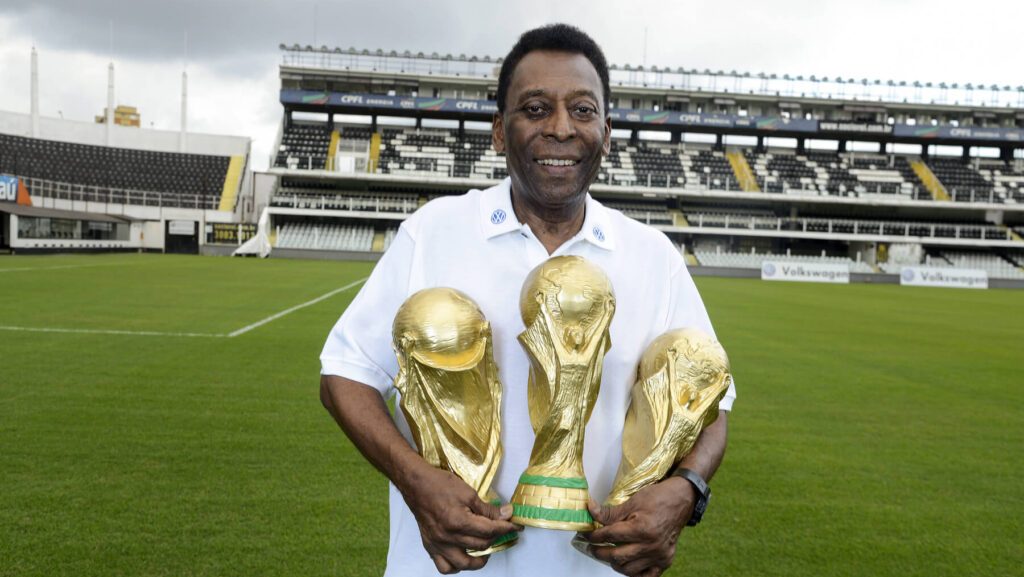
Pelé went on to win two more World Cups (1962 and 1970), making him the only player in history to win three. The 1970 tournament, in particular, showcased him at the peak of his playmaking powers. He scored over 1,000 career goals, spent the majority of his legendary career at Santos, and later popularized the sport in the United States with the New York Cosmos.
Frequently Asked Questions (FAQ)
Q: Is there any youngest player to win a World Cup without playing a single minute?
A: Yes, the most famous example of a youngest player to win a World Cup without playing is the legendary Brazilian striker, Ronaldo Nazário.
At the 1994 tournament in the United States, Ronaldo was just 17 years and 298 days old. While he was included in the 22-man squad due to his immense potential, the Brazilian coach, Carlos Alberto Parreira, relied on the veteran partnership of Romário and Bebeto.
You have just read the article “Top 8 Youngest World Cup Winners in History: Where Lamine Yamal Ranks”. Follow 52Hz Football for more captivating stories, tactical analyses, and historical football deep-dives.
READ MORE:
Top 6 Clubs With the Most World Cup Winners: Where Is Real Madrid?
