
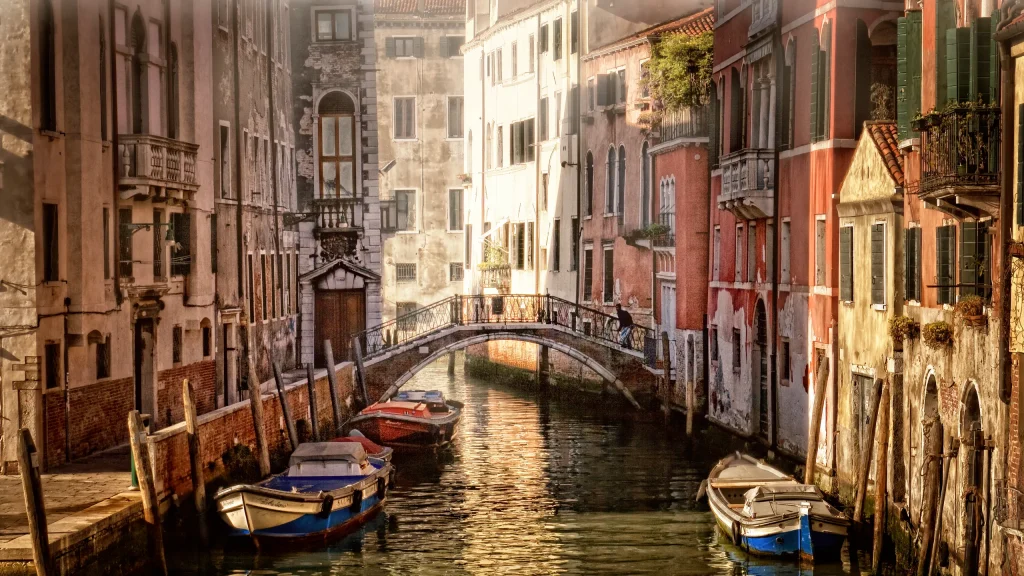
Venice is a city unlike any other, globally celebrated for its romantic gondola rides, Renaissance art, and a labyrinth of stunning canals. However, beyond the classic tourist locations, this floating city hides a deeply passionate, everyday sports culture.
For groundhoppers and traveling fans, Venice offers a surreal “Away Days”, experience where the journey to the stadium happens entirely on water. While the local club – Venezia FC – has recently caught the eye of the footballing world with its stylish aesthetics, the true magic lies in navigating the city itself.
Where is Venice? How to Get to Venice? This article will guide you through 7 essential things every football fan must know about the city where Venezia FC is located.
1. History
Between the 5th and 8th centuries, Venice was formed when mainlanders fled barbarian invasions, building the first water settlements on wooden piles in the Adriatic marshlands. They sought refuge in the remote, marshy areas along the Adriatic coast, beginning to drive massive wooden piles into the mud to build the first settlements on water.
From the 9th to the 15th centuries, thanks to its prime geographical location between Europe and the Byzantine Empire, Venice quickly developed into an independent commercial powerhouse known as the “Republic of Venice”. By dominating Mediterranean trade routes, it reached the pinnacle of its wealth, earning the title “La Serenissima”, funding magnificent Renaissance architecture and expanding its territorial control over numerous islands and coastal regions in Europe.
However, between the 16th and 18th centuries, Venice’s decline began. The rising Ottoman Empire and the discovery of new global maritime routes completely shattered its trade monopoly.
In 1797, Napoleon conquered the city, officially ending over 1,000 years of independence. After changing hands between France and Austria, Venice was finally annexed into Italy in 1866.
Today, it stands as a global tourism hub actively battling rising sea levels and overtourism.
2. Geography
Venice is a geographical marvel in northeastern Italy, built upon 118 small islands within the shallow Venetian Lagoon. While the entire municipality encompasses 250,000 people, the vast majority reside on mainland boroughs like Mestre. This leaves the iconic floating city – known as the “Centro Storico” – facing a starkly different demographic reality.
Because the historic center is entirely devoid of roads and cars, daily life is dictated by a complex network of canals and over 400 bridges. However, this water-bound geography and the overwhelming pressures of “overtourism” have caused a drastic exodus. The island’s population plummeted from over 120,000 in the 1950s to under 48,000 by 2026.
Fleeing soaring living costs, tourist rentals, and the relentless “acqua alta” (high water) floods, young families continually relocate to the mainland. This shift leaves the historic islands increasingly resembling an open-air museum, heavily outnumbered by transient visitors.
3. Economy
The modern economy of Venice remains heavily dominated by the tourism and hospitality sectors, drawing tens of millions of global visitors annually. This massive influx fuels a multi-billion-euro industry supporting countless businesses across the “Centro Storico”.
To mitigate the impacts of mass tourism, local authorities introduced a peak-season day-tripper entry fee. This generates essential revenue for city management and the costly upkeep of canals and public infrastructure.
Beyond tourism, the city continuously strives to preserve its historical economic pillars. The islands of Murano and Burano sustain specialized luxury markets through their centuries-old glassmaking and lacemaking traditions. Meanwhile, the Port of Venice remains an important commercial shipping hub in the Adriatic, while large cruise ships are restricted from the historic center.
Despite these efforts into 2026, the government faces significant challenges in diversifying the economy. Creating sustainable, non-tourism employment opportunities is crucial to encourage younger residents to remain in – or return to -the lagoon.
4. Sports
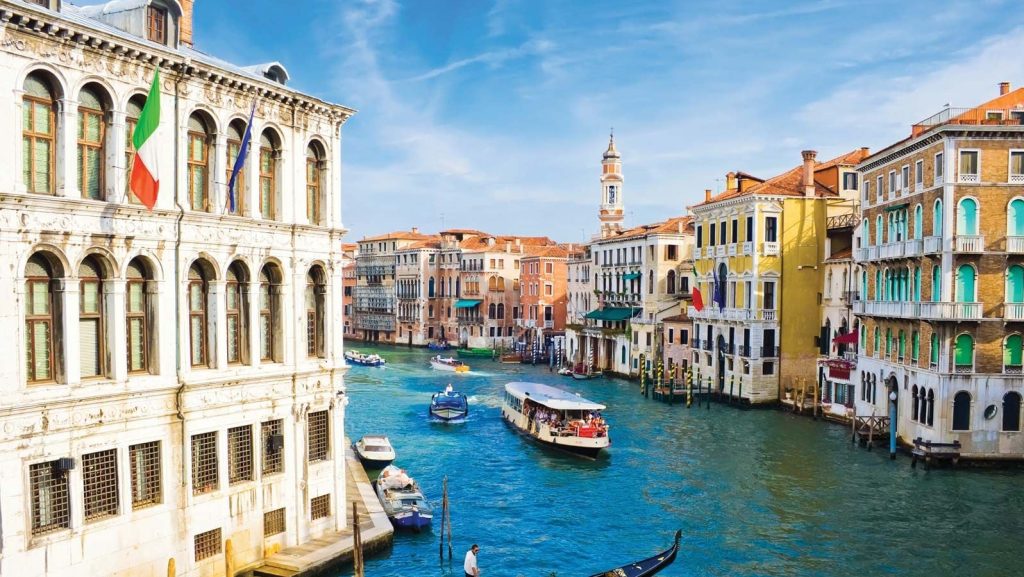
Beyond the classic tourist locations, Venice hides a deeply passionate, everyday sports culture. For groundhoppers and traveling fans, Venice offers a surreal “Away Days” experience where the journey to the stadium happens entirely on water.
While the local club – Venezia FC (currently playing at 2025/26 Serie B) – has recently caught the eye of the footballing world with its stylish aesthetics and world-class fashion branding, the true magic lies in the club’s deep connection to the city’s soul. Known as the “Arancioneroverdi” for their unique combination of orange, black, and green, the team represents a bridge between the historic island and the mainland.
Navigating the lagoon to reach the iconic Stadio Pier Luigi Penzo, one of the oldest and most atmospheric waterfront grounds in Europe, is a pilgrimage that every football enthusiast should experience at least once.
5. Places to Visit
-
Castello District: As the largest and most peaceful neighborhood in the “Centro Storico”, it offers a true local lifestyle and serves as the perfect, scenic walking route to the stadium.
-
Traditional “Bacaro” Taverns: A mandatory pre-match cultural ritual where you can sip a refreshing Spritz and enjoy “Cicchetti” appetizers alongside passionate local supporters.
-
Venezia FC Flagship Store: Situated near the iconic Rialto Bridge, this stylish boutique is the ultimate spot to purchase the “most fashionable football shirts in the world”,.
-
Giardini della Biennale: A stunning public garden complex that provides a beautiful, serene 20-minute stroll from the crowded city center straight to the gates of Stadio Pier Luigi Penzo.
6. Notable People
-
Marco Polo (15/9/1254 – 8/1/1324): Famous for his 13th-century book “Il Milione”, this legendary merchant and explorer documented his groundbreaking 24-year journey across Asia along the Silk Road.
-
Antonio Vivaldi (4/3/1678 – 28/7/1741): Operating in the early 18th century, this brilliant Baroque composer and violinist gifted the world with his timeless masterpiece “The Four Seasons”.
-
Tiziano Vecelli / Titian (c. 1488/1490 – 27/8/1576): As the greatest 16th-century painter of the Venetian Renaissance school, he was globally renowned for his masterful use of color in works like “Assumption of the Virgin”.
-
Giacomo Casanova (2/4/1725 – 4/6/1798): This famous 18th-century Venetian writer and adventurer immortalized his name as a legendary charmer through his autobiography “Histoire de ma vie”,.
-
Tintoretto (late September 1518 – 31/5/1594): Renowned for his dramatic, high-speed painting style in the 16th century, he created monumental masterpieces that still decorate the “Doge’s Palace”, today.
-
Paolo Poggi (16/2/1971 – present): Representing the modern era of the 1990s and 2000s, this locally born striker became the ultimate icon for Venezia FC and once held the record for the fastest goal in Serie A history.
7. How to Get There
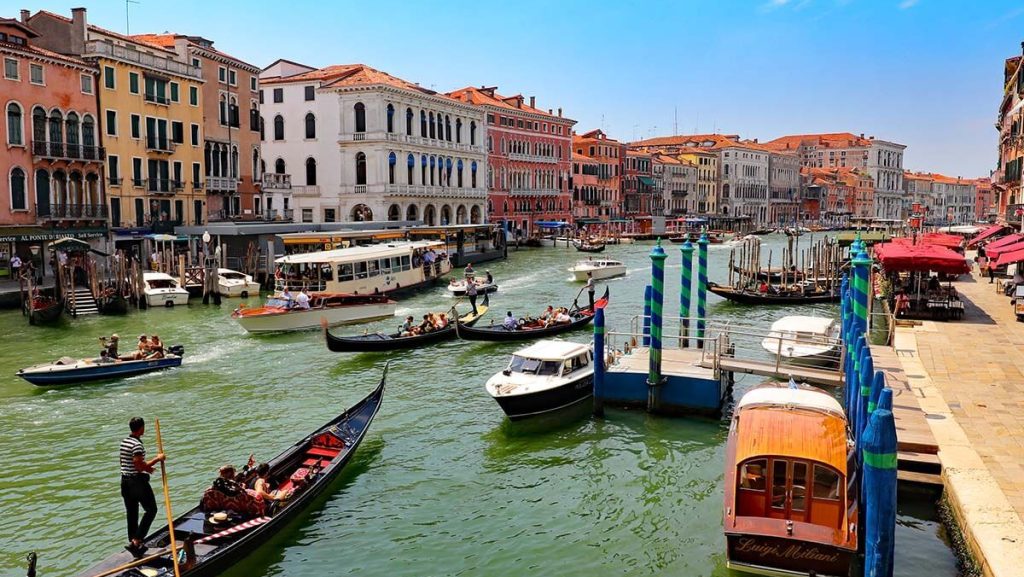
To begin your journey, after landing at Marco Polo International Airport (VCE), the most cinematic way to enter the city is by using the Alilaguna water bus.
On Matchday, to travel to the Penzo, use the public ferry system “Vaporetto” (lines 4.1, 5.1, or 6) and get off at the Sant’Elena stop. If you prefer walking, from the city center, it takes about 20–30 minutes to stroll through the beautiful Giardini della Biennale gardens.
Because Venice is one of Europe’s most visited destinations, booking flights, trains, and accommodation well in advance (conveniently reserved via Agoda or similar booking platforms) is strongly recommended.
Remember to learn a few slang words like “Andemo” (Let’s go!) or “Dai!” (Come on!) to quickly blend into the fiery atmosphere of the most resilient islanders in Italy.
You have just read the article “Where is Venice? 7 Things You Must Know About the Home of Venezia FC”. Follow 52Hz Football for more captivating stories about football, geography and culture.
