
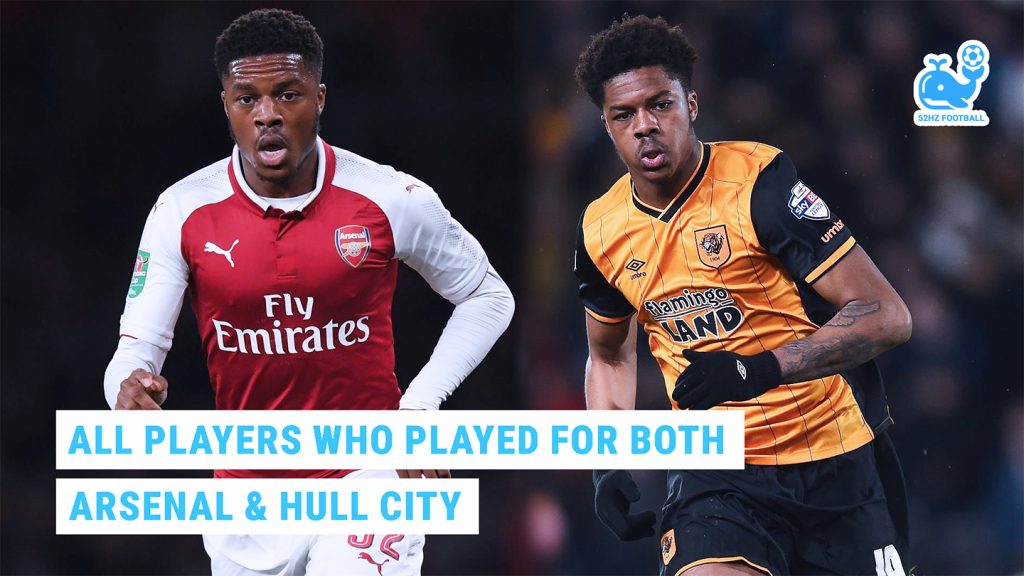
Arsenal and Hull City share more than the dramatic 2014 FA Cup final. Their overlapping history includes title-winning midfielders, a future Arsenal manager and academy prospects who needed regular football away from north London.
Some became household names at Highbury. Others made their strongest impression in Hull’s colours. Here are 14 players who played for both Arsenal and Hull City, starting with the most memorable connections.
Statistics cover competitive first-team matches.
1. Ray Parlour
- Arsenal: 1992–2004 (Apps: 466 | Goals: 32)
- Hull City: 2007 (Apps: 15 | Goals: 0)
Few names on this list carry more weight with Arsenal supporters than Ray Parlour. The “Romford Pelé” combined relentless running with underrated technique.
He won three Premier League titles and four FA Cups at Arsenal, scoring a spectacular opener against Chelsea in the 2002 final. He also belonged to the Invincibles squad that completed the 2003/04 league season unbeaten.
Hull encountered a different chapter of his career. After leaving Middlesbrough, Parlour joined Phil Brown’s side in February 2007 and contributed experience to their Championship survival campaign.
His stay lasted only 15 matches, but the timing matters. Parlour helped Hull stay in the division before their promotion the following season. He was part of the groundwork, rather than the team that eventually won at Wembley.
2. David Rocastle
- Arsenal: 1985–1992 (Apps: 277 | Goals: 34)
- Hull City: 1997, loan (Apps: 11 | Goals: 1)
David Rocastle brought imagination, acceleration and confidence to George Graham’s Arsenal.
He helped Arsenal win the 1987 League Cup and the league championships of 1989 and 1991. His academy background and wholehearted performances gave supporters a connection that survived his departure for Leeds United.
Rocastle reached Hull much later, joining on loan from Chelsea in October 1997. Injuries had interrupted his career, but the move still brought an England international and Arsenal favourite into fourth-tier football.
He marked his Hull debut with a goal against Scarborough. The spell was brief, yet its appeal remains obvious: supporters at Boothferry Park could watch a player whose finest performances had helped define an entirely different level of English football.
3. Brian Marwood
- Arsenal: 1988–1990 (Apps: 61 | Goals: 17)
- Hull City: 1980–1984 (Apps: 191 | Goals: 53)
Brian Marwood offers one of the strongest connections because his contributions mattered substantially to both clubs.
He developed at Hull and became an influential attacking player during their recovery from financial trouble and relegation. His goals helped the Tigers climb out of the Fourth Division in 1982/83, before Sheffield Wednesday took him into the top flight.
Arsenal signed him in March 1988. His crossing, set-piece delivery and understanding with Alan Smith quickly became important weapons in Graham’s attack.
Marwood contributed nine league goals during the 1988/89 championship campaign. Injury prevented him from playing in the decisive victory at Anfield, but his absence that night should not obscure the work that helped Arsenal reach that position.
Hull had helped develop the winger who later supplied a title-winning attack.
4. Terry Neill
- Arsenal: 1960–1970 (Apps: 275 | Goals: 10)
- Hull City: 1970–1973 (Apps: 122 | Goals: 4)
Terry Neill’s story connects the clubs through both the pitch and the dugout.
The Northern Ireland defender became Arsenal captain at just 20 and accumulated more than a decade of experience around the club before accepting an unusual opportunity at Hull in 1970: becoming player-manager while still only 28.
He continued playing until 1973 and remained Hull’s manager until 1974. Those overlapping responsibilities made the Tigers an important stage in his transition from footballer to coach.
After managing Tottenham, Neill returned to Arsenal in 1976. He guided the Gunners to three consecutive FA Cup finals, winning the competition against Manchester United in 1979.
Hull gave Neill the managerial experience that would later shape his return to Arsenal.
5. Sebastian Larsson
- Arsenal: 2004–2007 (Apps: 12 | Goals: 0)
- Hull City: 2017–2018 (Apps: 40 | Goals: 2)
Sebastian Larsson is more closely associated with Birmingham City and Sunderland, but his English career began in Arsenal’s academy.
First-team opportunities proved limited, and his 12 senior appearances produced no goals. Leaving Arsenal allowed him to establish the consistent league career that had been difficult to build behind more established players.
By the time Hull signed him in 2017, Larsson was an experienced Sweden international. His 40 Championship appearances and two goals came in a single season before he returned home to join AIK.
His journey illustrates how differently the clubs encountered the same footballer: Arsenal saw the developing prospect; Hull recruited the seasoned professional.
6. Vito Mannone
- Arsenal: 2009–2013 (Apps: 23 | Goals: 0)
- Hull City: 2010–2012, loans (Apps: 33 | Goals: 0)
Vito Mannone’s outstanding performance at Fulham in 2009 remains a memorable part of his Arsenal career. Sustaining a place in the starting XI was harder, with competition limiting his opportunities.
Loan football at Hull gave the Italian goalkeeper something north London could not consistently provide: responsibility across a run of senior matches.
He made 33 competitive appearances for the Tigers, including 31 in the Championship. The distinction matters because league-only records understate his total involvement.
Mannone later left Arsenal permanently for Sunderland. His Hull spells had already shown why a goalkeeper’s development often requires more than training alongside established internationals.
7. Chuba Akpom
- Arsenal: 2013–2018 (Apps: 12 | Goals: 0)
- Hull City: 2015–2016, loan (Apps: 41 | Goals: 7)
Chuba Akpom arrived at Hull with promise but little sustained senior experience. His Arsenal appearances were limited, and earlier loans had not yet produced a settled place in a first team.
Steve Bruce’s Hull offered a longer opportunity during their 2015/16 promotion campaign. Akpom scored seven times, including an FA Cup hat-trick against Bury, as the Tigers eventually returned to the Premier League through the play-offs.
Those seven goals show why his Hull spell deserves more attention than his Arsenal scoring record might suggest.
Hull’s wider network of shared players also stretches to Manchester United. Our guide to players who played for both Manchester United and Hull City explores another set of familiar faces and contrasting career paths.
Other Players Who Played for Arsenal and Hull City
The connection also includes these seven players. Figures are shown as appearances / goals.
| Player | Arsenal | Hull City |
|---|---|---|
| Isaac Hayden | 2 / 0 | 24 / 1 |
| Jay Simpson | 3 / 2 | 86 / 13 |
| John Hawley | 21 / 3 | 140 / 26 |
| John Roberts | 81 / 5 | 31 / 1 |
| Jimmy McGill | 12 / 0 | 177 / 4 |
| Ian McKechnie | 25 / 0 | 284 / 0 |
| Horace Cumner | 14 / 3 | 12 / 4 |
Hayden joined Hull alongside Akpom, while Simpson moved permanently after scoring twice for Arsenal in the League Cup. McKechnie’s much longer Hull record is another reason to look beyond Arsenal’s most familiar names.
Academy Links and Wartime Guests
Jon Toral, Semi Ajayi and Matt Wicks belong in a separate category. All had Arsenal connections before playing for Hull, but none made a competitive first-team appearance for the Gunners.
Toral moved directly from Arsenal to Hull in 2017. Ajayi’s route included Cardiff and West Bromwich Albion, while Wicks had spells in both Arsenal’s and Manchester United’s youth systems.
Stan Mortensen requires another distinction: he appeared for Arsenal as a wartime guest. That makes him part of the broader connection, but outside this 14-player competitive list.
You have just read the article “14 Players Who Played for Both Arsenal and Hull City”. Follow 52Hz Football for more football stories, club connections and analysis.
