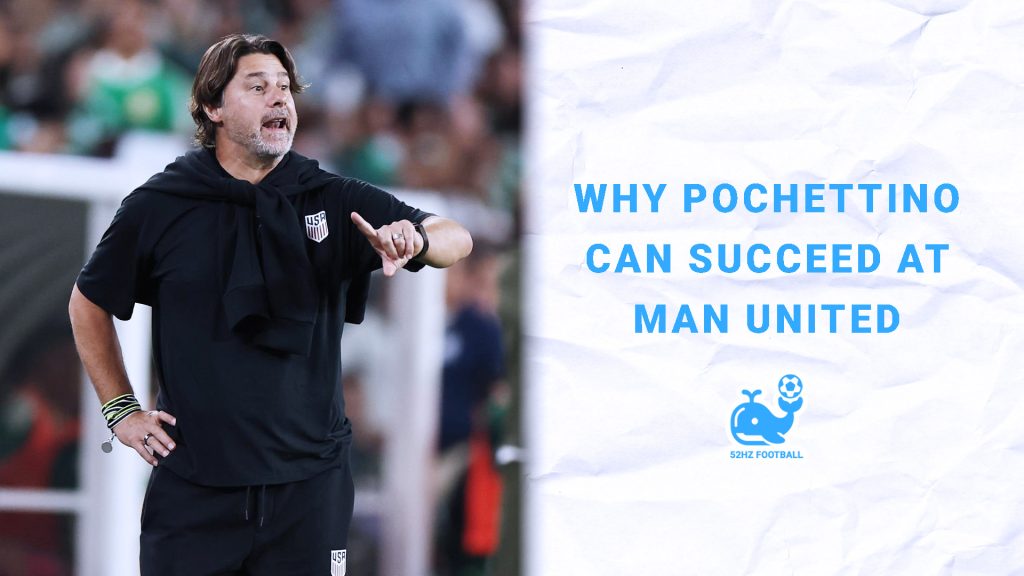
Manchester United have finally appointed a coach whose strongest work offers a recognisable route out of their problems. Mauricio Pochettino will begin his role on 18 November, following the conclusion of his commitments with the United States.
His appointment brings a clear question: can the methods that transformed Tottenham produce a lasting recovery at Old Trafford?[1]
There is a convincing case for optimism. Pochettino has experience of building competitive Premier League teams, improving young players and organising ambitious attacking football.
For United, the opportunity lies in connecting those strengths. Better coaching could improve results, increase the value of the existing squad and reduce the need for another expensive overhaul.
1. The Tottenham Blueprint
The strongest evidence for Pochettino is Tottenham’s 2016/17 season. Spurs finished second with 86 points, scored 86 league goals and conceded only 26. Their goal difference was an extraordinary plus 60.[2]
Those figures describe a team that could attack consistently while controlling what happened behind the ball. Pochettino’s reputation for intensity should be understood in that context.
A successful press involves coordinated decisions. When a forward closes down a defender, teammates must restrict the available passes, midfielders must support the pressure and the defensive line must manage the space behind them. Running harder without that coordination can make a team easier to play through.
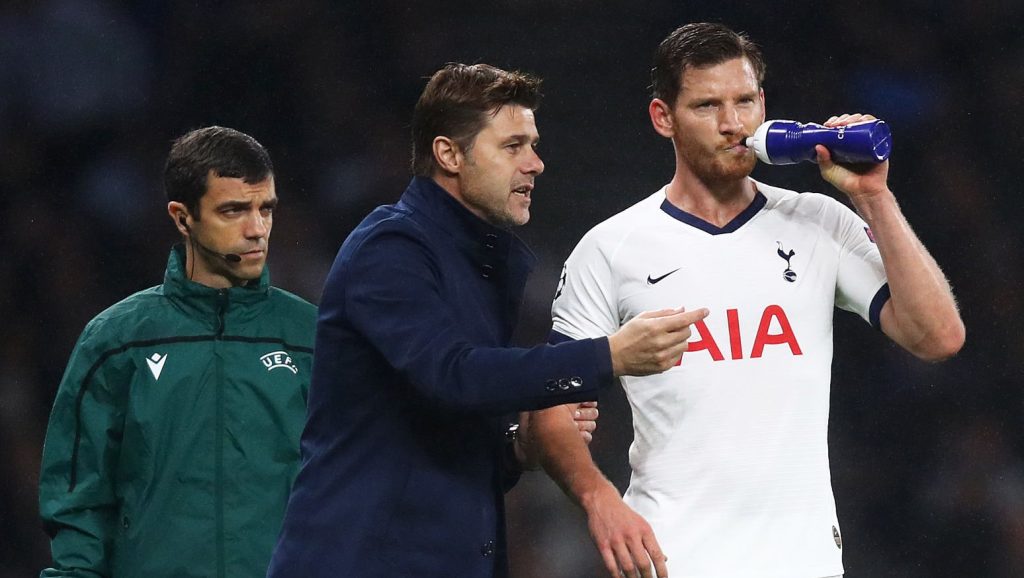
For United, this collective organisation offers a substantial opportunity. A team that regains possession with players already close together can create attacks before opponents rebuild their defensive shape.
The aim should be to generate more situations in which United’s attacking players receive the ball against a disorganised defence. Pochettino has built that kind of team before.
2. Bruno and the 4-2-3-1
It would be misleading to present a 4-2-3-1 as Pochettino’s revolutionary solution. Michael Carrick had already used that formation after replacing Ruben Amorim.[3]
The potential improvement concerns the relationships within it.
Pochettino has used several structures, including a back three, but his teams have frequently combined a central creator, forwards moving infield and full-backs supplying width. That flexibility matters when assessing United’s existing players.[4]
One plausible approach would keep Bruno Fernandes close to the centre-forward, where he can attempt decisive passes without also carrying responsibility for organising every stage of possession.
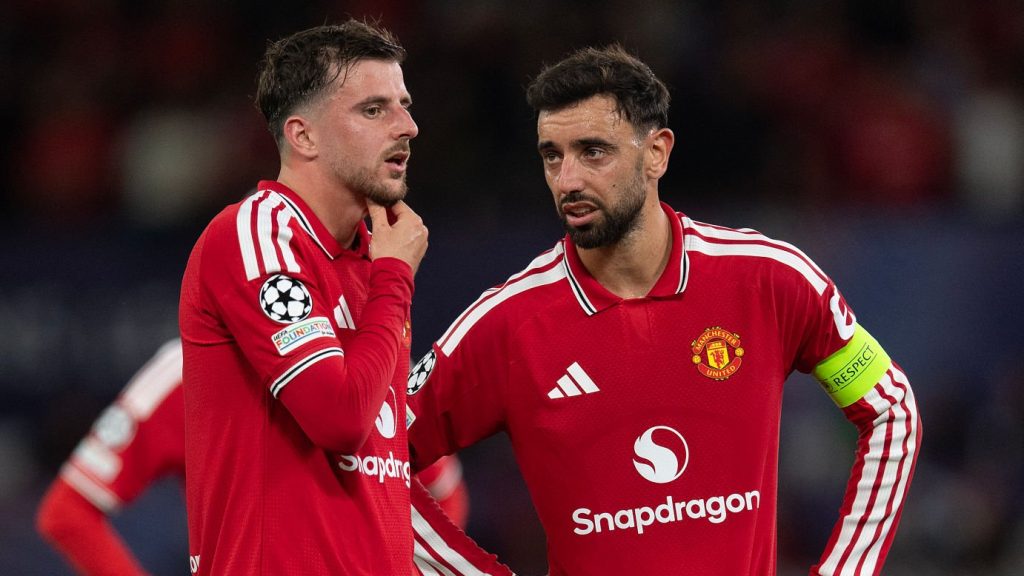
Matheus Cunha could begin from the left and move into central areas. For that to work, the left-back would need to provide width and a midfielder would need to cover the space left behind.
On the opposite flank, Bryan Mbeumo and Amad offer different selection possibilities. Their presence should allow rotation and tactical choices; Pochettino does not need to start every talented attacker simultaneously.
The benefit would come from clearer responsibilities. Players should know who stretches the defence, who receives between the lines and who protects the team when possession breaks down.
3. Mainoo and Baleba give a midfield platform
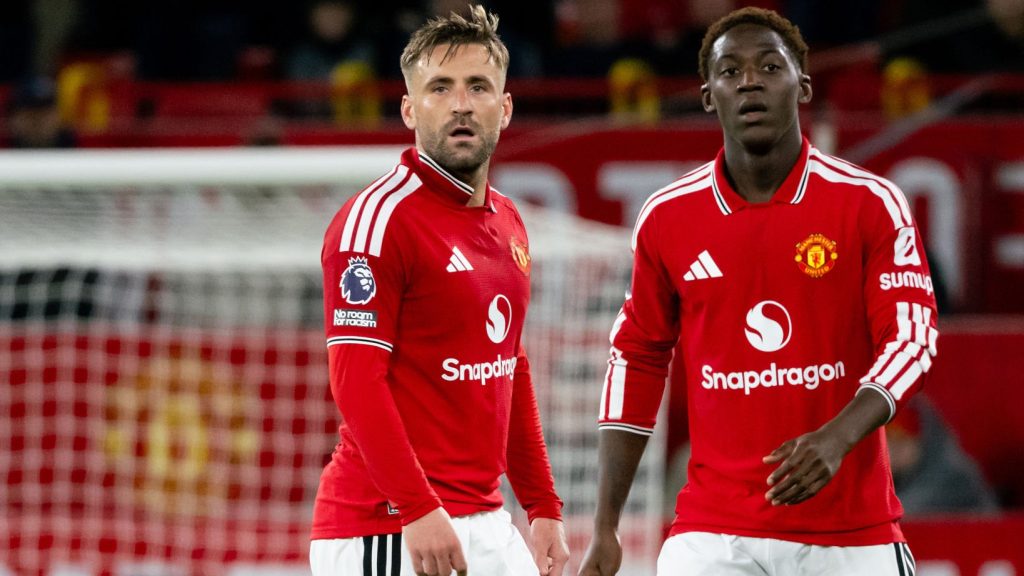
Kobbie Mainoo and Carlos Baleba offer a plausible foundation for that approach. The Premier League’s assessment of Pochettino’s appointment identifies both players’ ability to escape pressure and move the ball forward as potentially useful qualities for his football.[5]
Our proposed partnership would give Mainoo opportunities to receive under pressure and connect midfield with Fernandes. Baleba could contribute ball progression and help cover the spaces around him.
The success of that combination would depend on disciplined positioning. If both midfielders move towards the ball while the full-backs advance, United could leave their centre-backs exposed.
Pochettino would therefore need a clear rule for who stays behind an attack. One midfielder might hold his position while the other advances; alternatively, a full-back could remain deeper to support them.
Youri Tielemans offers another option when the priority is controlling possession and choosing the right forward pass. Selection should reflect the opponent and the demands of the match.
United have several midfield profiles to work with. Pochettino’s task is to turn those options into combinations that make one another more effective.
4. Player development would have a financial benefit
The financial context makes improvement within the squad particularly valuable.
United reported record revenue of £677.6 million for the year ended 30 June 2026. They also recorded an operating profit of £22.6 million, but finished with a net loss of approximately £43 million after financing and other items. Record turnover therefore cannot be treated as an unrestricted transfer budget.[6]
The club’s financial statements provide context rather than a precise figure for what Pochettino can spend. Cash commitments, existing contracts and future income all affect recruitment decisions.
READ MORE:
A coach who improves players can ease some of that pressure. If Benjamin Šeško becomes more effective through better service and coordinated movement, United gain an improvement without purchasing another centre-forward. If Mainoo becomes a more complete midfielder, an expensive replacement becomes less urgent.
Those are potential sporting savings, not accounting profits or cash immediately available to spend.
For a fuller look at the numbers, read our analysis of Manchester United’s financial statements. Pochettino’s capacity to develop the squad could help United get a better sporting return from their existing commitments.
5. Carrington’s Next Generation
Harry Kane and Dele Alli emerged as major Premier League players during Pochettino’s Tottenham tenure. Both were nominated for PFA awards in 2017, with Kane shortlisted for the senior and young-player awards and Alli for the latter.[7]
Their success provides evidence of a productive environment for young talent. It does not mean every prospect Pochettino coaches will follow the same path.
At United, the useful question is how development becomes part of the first-team plan. Mainoo and Leny Yoro need responsibilities that allow their strengths to influence matches. Younger players such as Shea Lacey and Harry Amass need a credible route from training to appropriate competitive minutes.
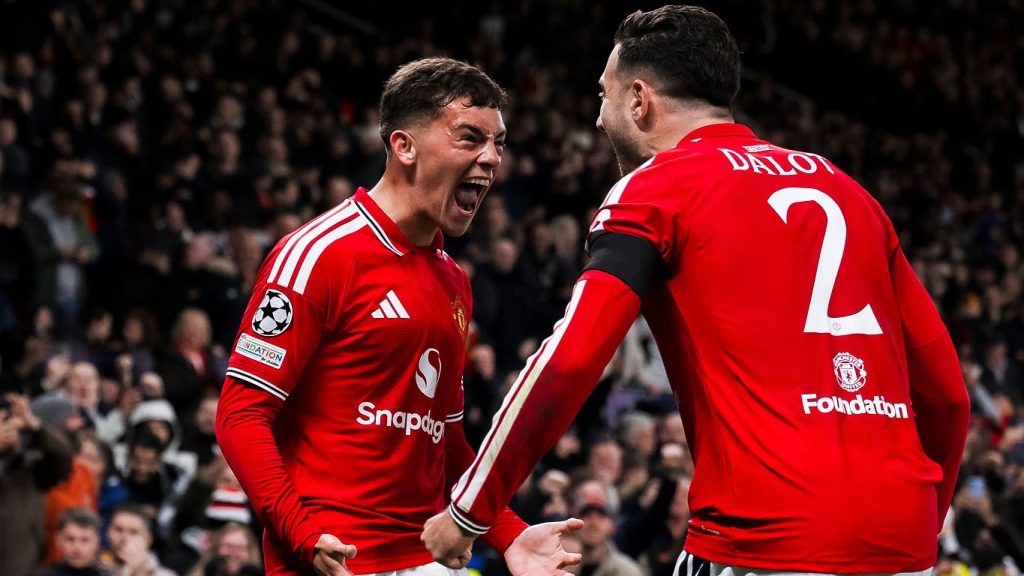
A practical development plan would identify the role a prospect is learning, the senior player supporting him and the situations in which he can contribute.
That would also help recruitment. Once an academy player can reliably perform a squad role, United can direct resources towards positions where the internal options are weaker.
Pochettino’s record gives supporters a reasonable basis to expect progress in this area. The club must provide the coaching support and patience required to make it happen.
6. Lessons from Chelsea
Pochettino’s Chelsea season deserves a more careful reading than its sixth-place finish alone.
Chelsea ended 2023/24 with 63 points, a 19-point improvement on the previous campaign. They scored 77 league goals and won their final five Premier League matches. Those results followed a difficult opening period and substantial injury problems.[8]
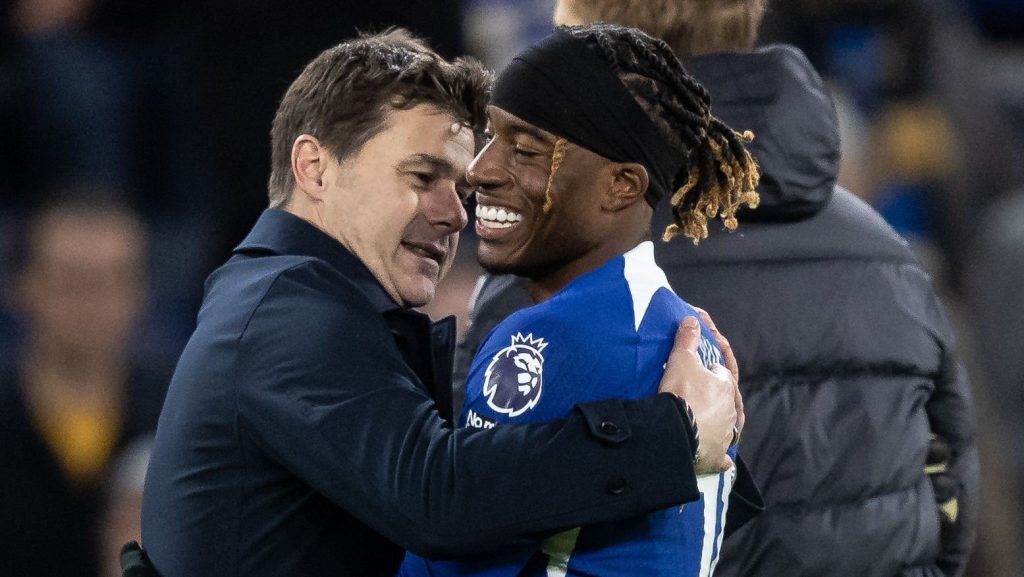
There was also evidence of tactical adjustment. In the comeback draw at Aston Villa in April 2024, Pochettino moved Marc Cucurella into midfield during possession, helping Chelsea recover from two goals down.[9]
The relevance for United is his willingness to alter the support around attacking players. Moving one player can improve passing options, protection and the ability to sustain pressure across the team.
Chelsea’s late progress does not prove Pochettino had solved every problem. It does support the argument that his work can produce meaningful improvement over a season.
United should look for that progression in repeatable performances: better chances, fewer exposed defensive situations and a clearer structure when opponents resist the first attack.
7. The First Tests
There are practical obstacles to this optimistic assessment.
Pochettino’s preference for width from full-backs places demands on their positioning, fitness and recovery runs. United will need an approach that works with the players available each week.
One solution could be to vary the two sides: an overlapping full-back on one flank and a more restrained role on the other. That would allow an attacking winger to hold the width when necessary.
The initial schedule offers limited time to establish those details. United are scheduled to visit Liverpool on 22 November and Sporting on 25 November, before hosting Brentford on 28 November.[10]
Pochettino’s early priorities should therefore be manageable: organise the team’s shape without the ball, establish reliable ways to progress possession and clarify the attackers’ responsibilities.
There are also limits in his record. Tottenham dismissed him in November 2019 after deteriorating domestic results, while his Paris Saint-Germain side lost a two-goal aggregate advantage against Real Madrid in the 2022 Champions League round of 16.[11]
His appointment gives United a credible opportunity. Turning that opportunity into sustained success will require good decisions from the coach and the people above him.
8. Final Verdict
Pochettino can succeed at Manchester United because several of his demonstrated strengths address valuable areas of improvement: collective organisation, attacking combinations and player development.
The first evidence should appear in how the team functions. Fernandes should have useful passing options closer to goal. The midfield should support attacks while protecting the defence. Young players should make measurable progress within clearly defined roles.
Over time, those improvements should translate into stronger results and more effective recruitment. United can then spend to strengthen a functioning team.
READ MORE:
There is a strong case that Pochettino can build a competitive United side. His success will depend on making the quality already at Old Trafford work together, then receiving the support to improve it further.
Sources
- Manchester United corporate announcement, 13 November 2026.
- Tottenham Hotspur: 2016/17 in numbers.
- Premier League: How Carrick’s tactics have got Šeško firing.
- Coaches’ Voice: Mauricio Pochettino, tactics and formations.
- Premier League: How Man Utd could look under Pochettino, 13 November 2026. Current player membership also checked against Manchester United’s men’s squad.
- Manchester United FY2026 Form 20-F.
- Tottenham Hotspur: Kane and Alli’s PFA nominations, 2017.
- Premier League: Pochettino leaves Chelsea by mutual consent, 21 May 2024.
- Chelsea: Mixed emotions for Pochettino after Villa draw.
- Manchester United’s November 2026 fixtures. Fixture listing checked on 14 November 2026.
- Tottenham’s announcement of Pochettino’s departure, 19 November 2019 and UEFA’s Real Madrid–PSG match report, 9 March 2022.
You have just read “Why Mauricio Pochettino Can Succeed at Manchester United.” Follow 52Hz Football for more football analysis and stories beyond the scoreline.
