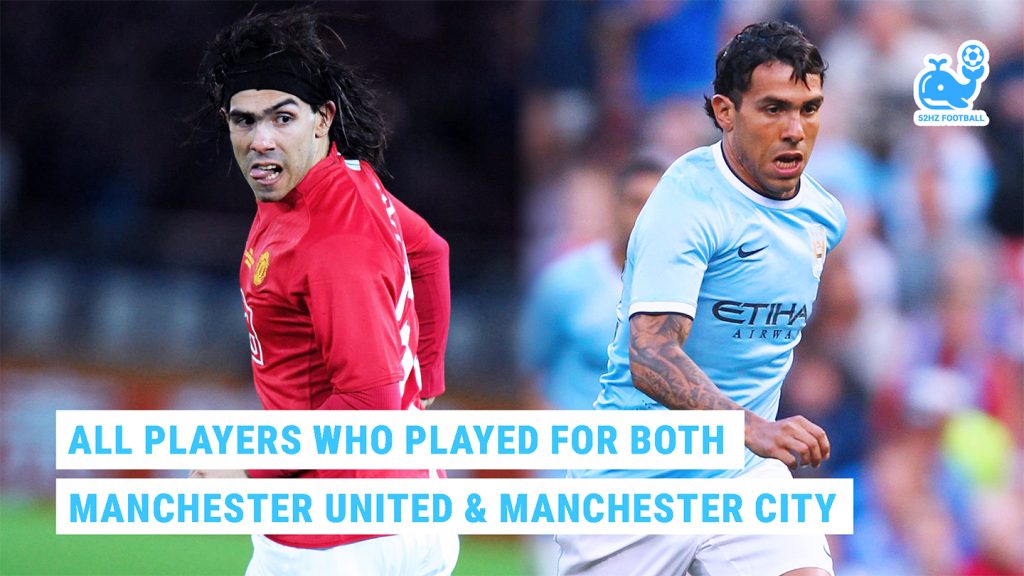
Carlos Tevez’s “Welcome to Manchester” billboard made crossing the city look like football’s ultimate act of betrayal. Yet the Argentine was only one of 39 players who played for both Manchester United and Manchester City.
The complete list stretches back to the days when the clubs were known as Ardwick and Newton Heath. It includes early football superstars, prolific goalscorers, Premier League champions and several players whose time on one side of Manchester lasted only a few matches.
This article counts players who made at least one senior competitive appearance for both clubs. Academy players who never reached the first team, including Jadon Sancho at Manchester City, are not included.
Statistics in the individual player profiles cover all official senior competitions. Last updated: 10 September 2026.
Players Who Represented Both Man United and Man City in the Premier League Era
Seven players belong in the modern section of the list. Mark Robins is a borderline case: his Manchester United career ended immediately before the first Premier League season, but he later appeared for Manchester City in 1999.
1. Carlos Tevez
- Manchester United: 2007–2009 (Apps: 99 | Goals: 34) | Manchester City: 2009–2013 (Apps: 148 | Goals: 73)
No player made the journey across Manchester more controversial than Carlos Tevez.
The Argentine spent two seasons at Manchester United, winning consecutive Premier League titles and the 2008 Champions League. He scored in the penalty shootout against Chelsea in Moscow and became popular for his aggression, work rate and ability to deliver in important matches.
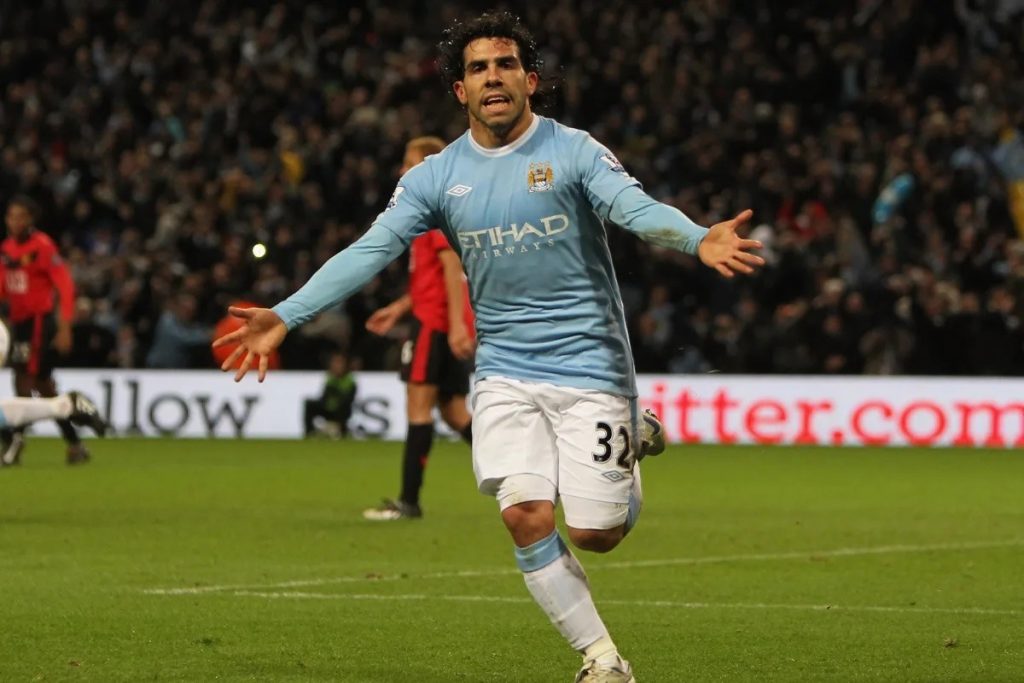
Manchester United did not complete a permanent agreement for Tevez, allowing Manchester City to secure him in 2009. City celebrated the signing with the famous “Welcome to Manchester” billboard overlooking Deansgate.
Tevez became captain at his new club and lifted the 2011 FA Cup before helping Manchester City win their first Premier League title the following season. He finished his City career with 73 goals in 148 appearances, as recorded by his official Manchester City profile.
2. Peter Schmeichel
- Manchester United: 1991–1999 (Apps: 398 | Goals: 0) | Manchester City: 2002–2003 (Apps: 31 | Goals: 0)
Peter Schmeichel established himself as one of football’s greatest goalkeepers during eight seasons at Manchester United.
He won five Premier League titles and captained the team in the 1999 Champions League final, completing the treble before leaving England. After spells with Sporting CP and Aston Villa, Schmeichel returned to Manchester with City in 2002.
His decision was difficult for some Manchester United supporters to accept. Gary Neville famously refused to shake Schmeichel’s hand in the tunnel before the final derby played at Maine Road.
City won that match 3–1 and drew the return fixture at Old Trafford. Remarkably, Schmeichel never finished on the losing side in a Manchester derby while representing either club.
3. Andy Cole
- Manchester United: 1995–2001 (Apps: 275 | Goals: 121) | Manchester City: 2005–2006 (Apps: 23 | Goals: 10)
Andy Cole arrived at Manchester United from Newcastle United in January 1995 and became one of the most productive forwards in the club’s history.
His partnership with Dwight Yorke was central to the 1998/99 treble. Cole scored 121 goals in 275 competitive appearances for Manchester United and won five Premier League titles.
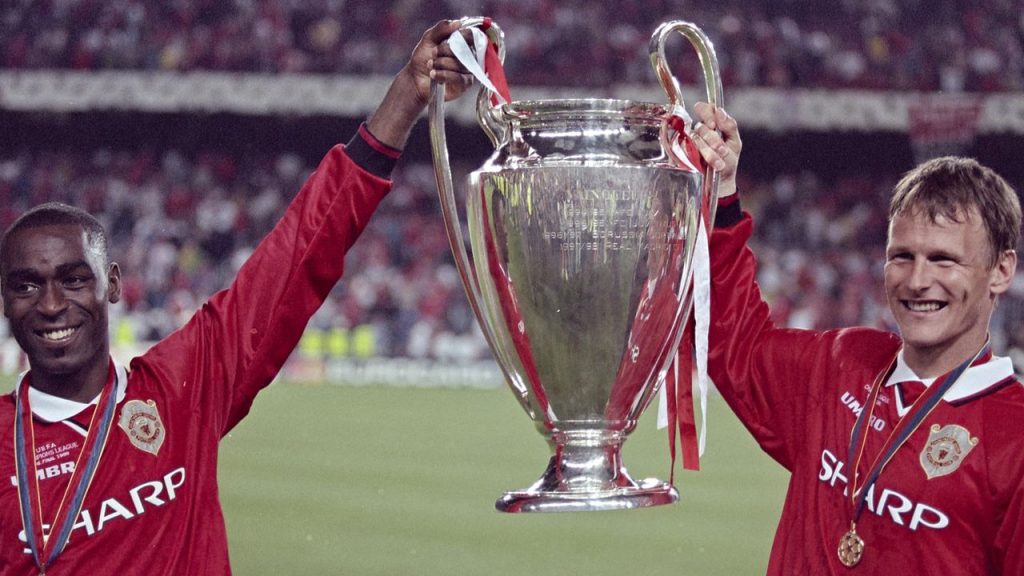
The striker later represented Blackburn Rovers and Fulham before signing for Manchester City in 2005. Although already approaching the end of his career, he scored ten times in 23 appearances before injury ended his season.
Cole did not move directly between the clubs, but his established Manchester United reputation made the sight of him in City colours unusual.
4. Andrei Kanchelskis
- Manchester United: 1991–1995 (Apps: 161 | Goals: 36) | Manchester City: 2001 (Loan) (Apps: 11 | Goals: 1)
Quick, direct and capable of scoring spectacular goals, Andrei Kanchelskis was one of Manchester United’s leading attacking players during the early 1990s.
He won two Premier League titles and scored a hat-trick in Manchester United’s 5–0 derby victory in November 1994. His Old Trafford career ended the following year, after which he played for Everton, Fiorentina and Rangers.
Kanchelskis returned to Manchester on loan at City in 2001. His only goal for the club came in an FA Cup defeat against Liverpool. The short spell occurred while City were outside the Premier League and was far less successful than his years in red.
5. Owen Hargreaves
- Manchester United: 2007–2011 (Apps: 39 | Goals: 2) | Manchester City: 2011–2012 (Apps: 4 | Goals: 1)
Manchester United signed Owen Hargreaves from Bayern Munich in 2007. His first season ended with Premier League and Champions League medals, but persistent knee injuries subsequently restricted him to only a handful of appearances.
After being released by Manchester United in 2011, Hargreaves unexpectedly signed a one-year contract with Manchester City.
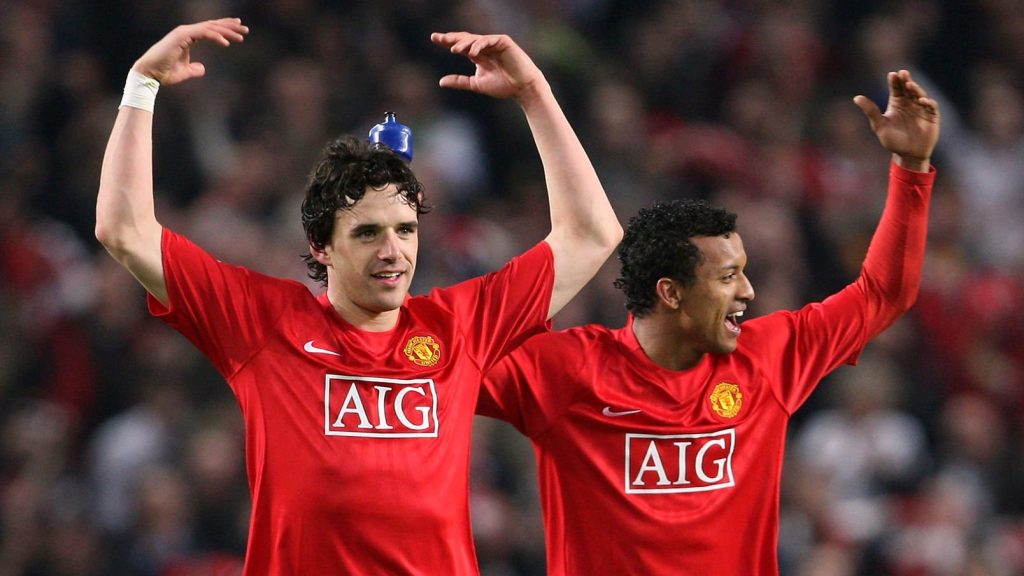
He scored on his City debut against Birmingham City in the League Cup but made only four competitive appearances. His single league outing was insufficient to qualify for a medal when Manchester City won the 2011/12 Premier League title.
6. Terry Cooke
- Manchester United: 1994–1999 (Apps: 8 | Goals: 1) | Manchester City: 1999–2002 (Apps: 41 | Goals: 8)
Terry Cooke emerged from Manchester United’s celebrated youth system but found David Beckham blocking his route into the first team.
He made eight competitive appearances for Manchester United and scored once before joining Manchester City on loan in January 1999. Cooke immediately became important during City’s promotion campaign, contributing seven goals as the club climbed out of the third tier through the play-offs.
The move was subsequently made permanent. Unlike most modern names on this list, Cooke completed a conventional transfer directly between the two clubs.
7. Mark Robins
- Manchester United: 1988–1992 (Apps: 72 | Goals: 19) | Manchester City: 1999 (Loan) (Apps: 2 | Goals: 0)
Mark Robins never appeared for Manchester United in the Premier League, having joined Norwich City just before its inaugural season. However, his short Manchester City loan occurred in 1999, placing him within the wider Premier League era.
Robins is remembered for scoring the 1990 FA Cup goal against Nottingham Forest often credited with helping Sir Alex Ferguson survive a difficult period at Manchester United.
His Manchester City career was far less significant. He played twice during a short loan from Greek club Panionios while City were in the third tier.
Notable Players Before the Premier League Era
Most of the shared history between the clubs predates 1992. Four names stand above the rest because of their achievements, longevity or place in Manchester derby folklore.
8. Denis Law
- Manchester City: 1960–1961 and 1973–1974 (Apps: 79 | Goals: 35) | Manchester United: 1962–1973 (Apps: 404 | Goals: 237)
Denis Law first joined Manchester City from Huddersfield Town for a British-record fee in 1960. After one season and a short spell with Torino, he returned to England with Manchester United.
Law became an Old Trafford icon, scoring 237 goals in 404 appearances. He won the 1964 Ballon d’Or and formed Manchester United’s famous attacking trio with George Best and Bobby Charlton.
The Scottish forward returned to City in 1973 and scored a backheel against Manchester United on the penultimate weekend of the season.
That goal is regularly described as the strike that relegated Manchester United. In reality, results elsewhere meant the club would have gone down even if Law had not scored. It was nevertheless a painful final chapter to one of Manchester’s greatest careers.
9. Billy Meredith
- Manchester City: 1894–1906 and 1921–1924 (Apps: 393 | Goals: 151) | Manchester United: 1906–1921 (Apps: 335 | Goals: 36)
Often described as football’s first superstar, Billy Meredith was the central figure in one of the earliest major movements between the Manchester clubs.
The Welsh winger captained Manchester City to the 1904 FA Cup, the first major trophy in the club’s history. Two years later, a financial scandal resulted in Meredith and several teammates being suspended and banned from representing City again.
He subsequently joined Manchester United and helped the club win its first league championship in 1908, followed by the FA Cup in 1909 and another league title in 1911.
Meredith eventually returned to Manchester City in 1921, when he was already in his late forties. His career connected the formative years of both institutions.
10. Sandy Turnbull
- Manchester City: 1902–1906 (Apps: 119 | Goals: 60) | Manchester United: 1906–1915 (Apps: 247 | Goals: 101)
Sandy Turnbull was another member of the successful Manchester City side dismantled following the 1905 financial investigation.
He moved to Manchester United alongside Meredith, Jimmy Bannister and Herbert Burgess. Turnbull became a crucial goalscorer and helped Manchester United win their first two league titles.
He also scored the only goal against Bristol City in the 1909 FA Cup final and registered the first goal ever scored at Old Trafford.
Turnbull’s life ended tragically during the First World War. He was killed in France in 1917 while serving with the British Army.
11. Brian Kidd
- Manchester United: 1967–1974 (Apps: 266 | Goals: 70) | Manchester City: 1976–1979 (Apps: 128 | Goals: 50)
Manchester-born Brian Kidd scored for Manchester United against Benfica in the 1968 European Cup final on his 19th birthday.
He left after the club’s relegation in 1974 and joined Arsenal before moving to Manchester City two years later. Kidd remained an effective goalscorer at Maine Road and scored three times against Manchester United during the 1977/78 season.
His connection with the two clubs continued in coaching. He worked under Sir Alex Ferguson at Manchester United and later spent more than a decade on Manchester City’s coaching staff, serving under Roberto Mancini, Manuel Pellegrini and Pep Guardiola.
Other Players Who Played for Manchester City and Manchester United
The following 28 men complete the list. These figures cover league appearances and goals, while the earliest records include the clubs’ former identities of Ardwick and Newton Heath.
| Player | Manchester City league record | Manchester United league record |
|---|---|---|
| William Douglas | 36 apps, 0 goals | 56 apps, 0 goals |
| Bob Milarvie | 69 apps, 12 goals | 22 apps, 4 goals |
| Adam Carson | 7 apps, 3 goals | 13 apps, 3 goals |
| Alf Edge | 1 app, 0 goals | 19 apps, 7 goals |
| Bert Read | 115 apps, 2 goals | 35 apps, 0 goals |
| Fred Williams | 124 apps, 38 goals | 8 apps, 0 goals |
| Stockport Smith | 54 apps, 22 goals | 16 apps, 0 goals |
| Joe Cassidy | 32 apps, 14 goals | 174 apps, 100 goals |
| Frank Barrett | 5 apps, 0 goals | 118 apps, 0 goals |
| Hugh Morgan | 12 apps, 1 goal | 20 apps, 4 goals |
| Daniel Hurst | 15 apps, 0 goals | 16 apps, 4 goals |
| John Christie | 10 apps, 0 goals | 1 app, 0 goals |
| Jimmy Bannister | 45 apps, 21 goals | 57 apps, 7 goals |
| Herbert Burgess | 85 apps, 2 goals | 49 apps, 0 goals |
| George Livingstone | 81 apps, 19 goals | 43 apps, 4 goals |
| Horace Blew | 1 app, 0 goals | 1 app, 0 goals |
| Herbert Broomfield | 4 apps, 0 goals | 9 apps, 0 goals |
| Mickey Hamill | 118 apps, 1 goal | 57 apps, 2 goals |
| Wilf Woodcock | 15 apps, 2 goals | 58 apps, 20 goals |
| George Albinson | 3 apps, 0 goals | 1 app, 0 goals |
| Len Langford | 112 apps, 0 goals | 15 apps, 0 goals |
| Bill Ridding | 9 apps, 4 goals | 42 apps, 14 goals |
| Bill Dale | 237 apps, 0 goals | 64 apps, 0 goals |
| Harry Rowley | 18 apps, 4 goals | 173 apps, 51 goals |
| Wyn Davies | 45 apps, 8 goals | 16 apps, 4 goals |
| Sammy McIlroy | 13 apps, 1 goal | 342 apps, 57 goals |
| Peter Barnes | 123 apps, 15 goals | 20 apps, 2 goals |
| John Gidman | 53 apps, 1 goal | 95 apps, 4 goals |
The complete historical records can be compared through the shared player history of the Manchester derby.
Why Did Manchester City and Manchester United Share More Players in the Past?
The number of early crossovers appears strange when viewed through the intensity of the modern Manchester derby. Football in the late 19th and early 20th centuries, however, operated very differently.
The rivalry was once less hostile
Supporters did not always treat Manchester City and Manchester United as mutually exclusive identities. It was common for local fans to watch one team one weekend and the other the next.
The clubs were geographical rivals, but the tribal divide had not yet reached its modern level. A player joining the other Manchester team was therefore less likely to be treated as a betrayal.
The 1905 financial scandal created an unusual transfer rush
Manchester City were found guilty of making illegal payments to players. Seventeen members of the squad were suspended and prevented from representing the club again.
When the bans ended, Manchester United signed Billy Meredith, Sandy Turnbull, Jimmy Bannister and Herbert Burgess. Those four players subsequently helped Manchester United win their first league title in 1908.
It was an exceptional event rather than evidence of a normal transfer relationship, but it accounts for several of the most important names on the list.
Clubs depended more heavily on local connections
Recruitment networks were smaller and international scouting was limited. Signing a proven footballer who already lived in Manchester was practical for both the player and the club.
Contracts also offered players less protection and control than they do today. Squads changed frequently, wages were restricted and moving between nearby clubs carried fewer financial or logistical complications.
The teams were not always competing for the same trophies
Manchester City and Manchester United spent long periods operating at different levels. Both experienced relegation, financial uncertainty and uneven spells of success.
Selling or releasing a player to the other club did not always mean strengthening a direct title rival. Older players such as Denis Law could cross Manchester because their previous club believed their best years had already passed.
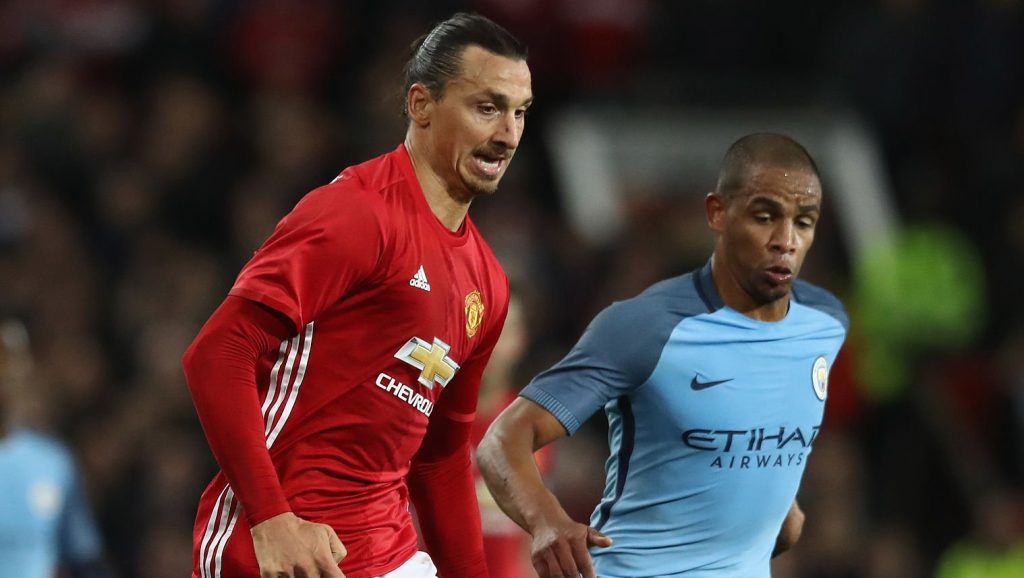
Why Are Transfers Between Manchester City and Manchester United So Rare Now?
The relationship changed substantially after Manchester City’s 2008 takeover. The clubs became direct rivals for Premier League titles, domestic cups, commercial growth and many of the same elite players.
Allowing a valuable footballer to join the other side would carry several risks:
- The selling club could directly strengthen a title rival.
- Supporters would place enormous pressure on the player and both boards.
- A successful transfer could damage the reputation of the club that approved it.
- Both teams have global scouting networks and can usually find alternatives elsewhere.
Even the recent crossovers were rarely straightforward club-to-club sales. Schmeichel, Cole and Kanchelskis represented several other teams between their Manchester spells. Hargreaves joined City after being released, while Tevez’s arrangement at Manchester United had expired before Manchester City signed him.
Terry Cooke in 1999 remains the most recent conventional senior transfer directly between the clubs. With both teams now possessing the money and reach to recruit almost anywhere, another direct move would require an unusual combination of circumstances.
Frequently Asked Questions
Q: How many male players have played for Manchester City and Manchester United?
A: A total of 39 male players have made senior competitive appearances for both clubs, including appearances made under their former names, Ardwick and Newton Heath.
Q: Who was the last player to represent both Manchester clubs?
A: Owen Hargreaves is the most recent player to make a senior appearance for both teams. He joined Manchester City in 2011 after being released by Manchester United.
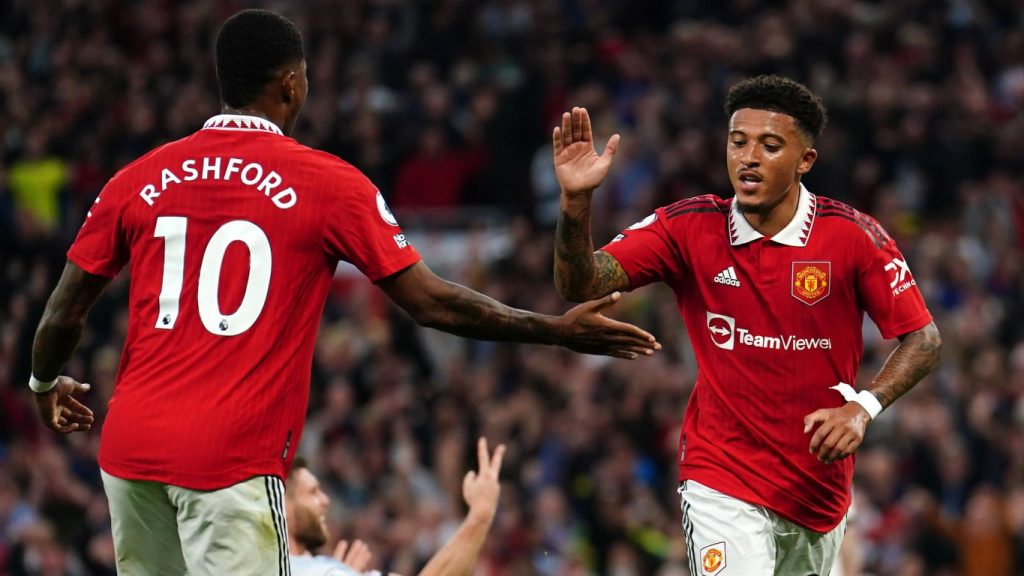
Q: Does Jadon Sancho count as a player for both clubs?
A: No. Jadon Sancho developed in Manchester City’s academy but never made a senior competitive appearance for the club. He therefore does not qualify for the main list, although he can be considered an academy connection.
You have just read “All Players Who Played for Both Manchester United and Manchester City”. Follow 52Hz Football for more football history, Premier League records and cross-club player stories.
READ MORE:
Enzo to Man City! All Players Who Played for Both Chelsea and Manchester City
Dibu Joins Chelsea: All Players Who Played for Both Chelsea and Aston Villa
