
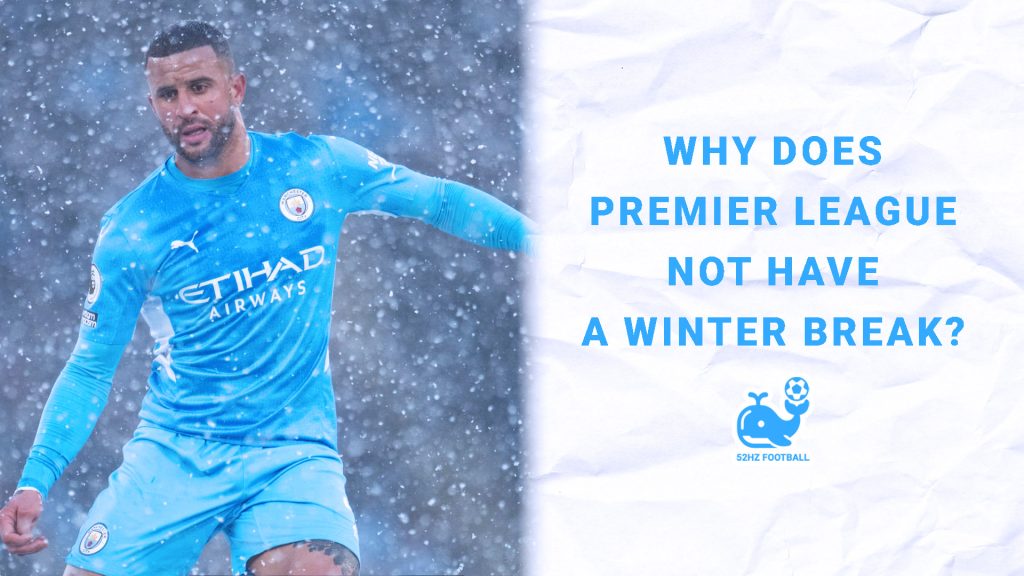
The Premier League does not have a traditional winter break because English football continues through Christmas and New Year, while an already crowded calendar leaves little room for a long pause.
The league has experimented with shorter mid-season breaks in the past. However, it now prioritises a longer summer holiday and greater recovery time between festive fixtures instead of stopping the competition for several weeks in winter.
1. Does the Premier League Have a Winter Break?
No. The Premier League does not currently have a league-wide winter break comparable to the one used in Germany.
Matches continue throughout December and January, including the traditional Boxing Day programme. An individual club may occasionally receive a free weekend because of the fixture schedule, domestic cup results or television selections, but the entire league does not stop at the same time.
This distinction matters. A team having ten or 12 days between matches does not mean the Premier League is officially on a winter break.
2. Why Does the Premier League Not Have a Winter Break?
There is no single reason. The decision is shaped by tradition, the number of competitions involving English clubs and the difficulty of finding unused dates.
Each Premier League team must complete 38 league matches between August and May. Many clubs also compete in the FA Cup, EFL Cup and one of UEFA’s club competitions. International breaks remove further weekends from the domestic calendar.
Creating a two or three-week winter break would normally require the season to start earlier, finish later or contain more midweek fixtures. Each option would merely move the workload to another part of the year.
When the Premier League removed its previous mid-season break before the 2024/25 campaign, it explained that the change would help clubs provide players with three consecutive weeks of rest during the summer.
According to the Premier League’s official announcement, medical and technical departments considered a longer period of complete summer rest more valuable than a short winter pause.
The league also promised to improve the spacing of festive fixtures, with no club scheduled to play twice within 60 hours.
The Premier League therefore did not simply remove rest from the calendar. It chose to place more of that rest in the summer.
3. Why Does the Premier League Play at Christmas?
Christmas football has been part of the English game since long before the Premier League was founded in 1992.
Boxing Day became a particularly popular date because December 26 is a public holiday in the United Kingdom. Supporters were free from work, while local fixtures allowed large crowds to attend without travelling across the country.
The tradition has changed considerably. English clubs once played on Christmas Day, and teams were occasionally asked to complete two matches within 24 hours. That would be almost unthinkable in the modern Premier League.
Boxing Day football nevertheless survived. It is now one of the most recognisable parts of the English season, especially for international viewers when several other major European leagues are inactive.
The festive programme is also commercially valuable. Stadiums are usually full, broadcasters can schedule matches across several time slots and supporters often have more time to watch football.
Removing it would affect television schedules, matchday income and a tradition still valued by many fans.
4. Has the Premier League Ever Had a Winter Break?
Yes, although it was officially described as a mid-season player break rather than a traditional winter shutdown.
The first break was introduced during the 2019/20 season. One round of Premier League fixtures was divided across two weekends in February, giving each club a short period without a match.
It was not the same as the Bundesliga winter break. The Premier League continued operating because some matches were played on the first weekend and the remainder on the second.
Clubs were also discouraged from using the period for lucrative overseas tours. Its stated purpose was to allow players to recover rather than create another commercial opportunity.
The arrangement returned when the calendar allowed, but it could not be used consistently. The 2020/21 campaign was compressed following the disruption caused by the COVID-19 pandemic, while the 2022 World Cup created an unusual six-week interruption during the following season.
The regular mid-season player break was eventually removed from the calendar in 2024.
5. Is the English Weather Too Mild for a Winter Break?
The weather is a factor, but it is not the main explanation.
Germany, Austria and several northern and eastern European countries traditionally pause during periods when snow, frozen pitches and severe temperatures can make football difficult.
England has a comparatively mild winter climate. Snow and freezing conditions can still cause postponements, but modern drainage systems, undersoil heating and improved pitches allow most Premier League fixtures to proceed.
A winter break could still benefit players even when the pitches remain playable. The debate is therefore mainly about recovery and scheduling rather than whether English stadiums can host matches in January.
6. Why Can the Bundesliga Have a Winter Break?
The Bundesliga has traditionally operated with 18 clubs. Each team plays 34 league matches rather than the 38 completed by a Premier League club.
Germany also has one main domestic cup competition, the DFB-Pokal. English clubs may have to accommodate both the FA Cup and EFL Cup.
Those differences create more space in the German calendar. The Bundesliga can stop for part of the winter without having to add the same number of midweek league matches later in the season.
Germany’s colder climate also gave the break a practical purpose before modern stadium technology became widespread.
Other countries use different arrangements. La Liga and Serie A may pause briefly around Christmas, but the length of those breaks can change from one season to another. There is no standard winter-break system used across European football.
7. Would a Winter Break Reduce Injuries?
It could help, but a short break would not solve the wider workload problem.
Players involved in European competitions and international football can be active for most of the year. Their workload includes matches, travel, training and increasingly short gaps between seasons.
A winter break would provide temporary relief after the congested Christmas programme. Its benefit would be reduced, however, if the postponed matches were simply moved into already crowded midweek periods.
The spacing of matches may be just as important as the name given to a break. Guaranteeing sufficient recovery time, limiting unnecessary travel and providing a meaningful summer holiday can all help manage player workload.
Supporters tracking players affected by heavy schedules can also follow the latest Premier League injury news and return dates.
8. Could the Premier League Bring Back a Winter Break?
Yes. There is no permanent rule preventing the Premier League from restoring a mid-season break.
Its return would depend on the domestic calendar, UEFA competition dates, international tournaments and agreements involving clubs and broadcasters.
The expansion of European competitions has made finding empty dates increasingly difficult. FIFA tournaments can also reduce the summer break available to leading players.
A future winter break remains possible, but another part of the calendar would probably have to change first.
For now, the Premier League has chosen to protect its Boxing Day tradition, spread 38 league matches across the season and provide a longer period of recovery during the summer.
That is why England may occasionally offer clubs a quiet weekend, but still does not have the long, league-wide winter break seen in Germany.
You have just read the article “Why Does the Premier League Not Have a Winter Break?”. Follow 52Hz Football for more stories explaining football’s rules, traditions and unusual details.
READ MORE:
- Which Football Leagues Have Official Fantasy Games?
- Can a Footballer Refuse a Transfer?
- Why Do Footballers Walk Out With Children?
- Premier League Injury News Today
