
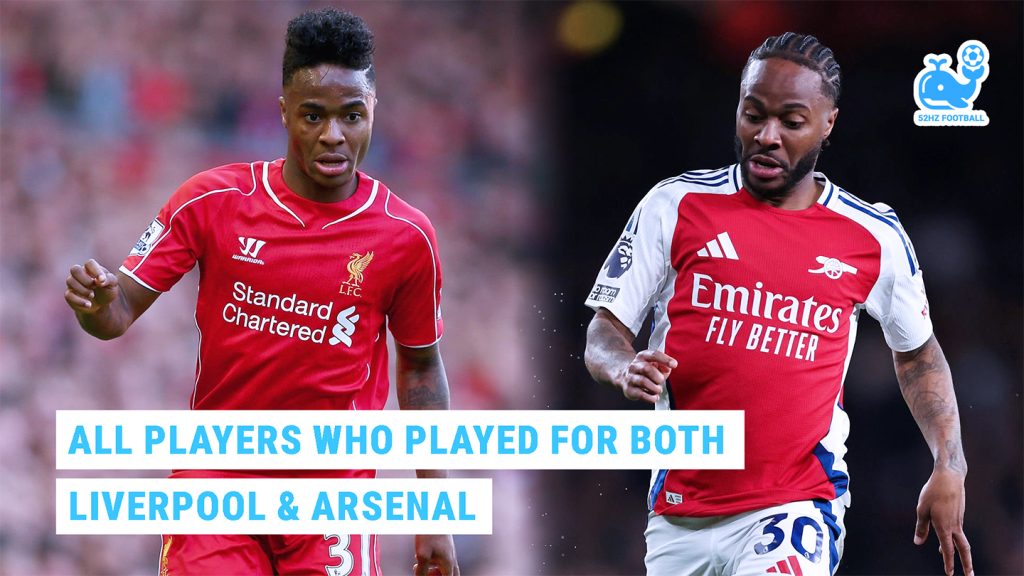
The players who played for both Liverpool and Arsenal include title-winning legends, promising youngsters and one man who broke Anfield’s heart before making it his home: Michael Thomas.
Last updated: 31 October 2026.
In May 1989, Thomas scored the late goal that delivered the league title to Arsenal at Liverpool’s expense. Just over two years later, he became a Liverpool player. Few careers capture the connection between these clubs quite so dramatically.
Others followed less direct routes. Nicolas Anelka arrived at Anfield on loan from Paris Saint-Germain. Kolo Touré came through Manchester City. Raheem Sterling eventually reached Arsenal after spells with both City and Chelsea.
Here are 11 notable men’s first-team players who represented both clubs, followed by an explanation of why Alex Manninger belongs in a separate category. This is a selection across different eras, rather than a complete historical register.
Statistics refer to competitive first-team appearances and goals across all competitions; friendlies and youth-team matches are excluded. Club spells can include development years or time away on loan.
1. Michael Thomas
- Liverpool: 1991–1998 (Apps: 163 | Goals: 12)
- Arsenal: 1984–1991 (Apps: 206 | Goals: 30)
Thomas has perhaps the most extraordinary story of anyone on this list.
His stoppage-time goal at Anfield in 1989 secured Arsenal’s decisive 2–0 victory and the First Division championship. For Liverpool supporters, he became inseparable from one of the most painful finishes to a title race.
Yet Liverpool signed him in December 1991.
Thomas soon gave his new supporters a different Wembley memory, scoring in the 1992 FA Cup final victory over Sunderland. Liverpool’s official career profile records 163 appearances and 12 goals for the club.
His career offers a remarkable double perspective: an Arsenal hero for what he did against Liverpool, and a Liverpool cup winner for what he later achieved with them.
2. Ray Kennedy
- Liverpool: 1974–1982 (Apps: 393 | Goals: 72)
- Arsenal: 1968–1974 (Apps: 212 | Goals: 71)
If Thomas provides the dramatic twist, Kennedy provides the strongest case for lasting success at both clubs.
He helped Arsenal win the league and FA Cup Double in 1971 before moving to Liverpool in July 1974. His arrival coincided with Bill Shankly’s announcement that he was stepping down as manager.
Kennedy had established himself as a forward at Arsenal. Under Bob Paisley, he became an outstanding left-sided midfielder.
That change helped make him central to Liverpool’s dominant teams of the late 1970s and early 1980s. His honours included five league titles and three European Cups, as recorded in Liverpool’s profile.
Kennedy did more than wear both shirts: he became part of the history of two great sides.
3. Alex Oxlade-Chamberlain
- Liverpool: 2017–2023 (Apps: 146 | Goals: 18)
- Arsenal: 2011–2017 (Apps: 198 | Goals: 20)
Oxlade-Chamberlain is the clearest modern example of a player moving directly from Arsenal to Liverpool.
After six years in north London, he joined Jürgen Klopp’s side in August 2017. His ability to carry the ball through midfield, accelerate into space and shoot from distance gave Liverpool a different attacking option.
Injuries repeatedly interrupted his progress, making his Liverpool career a mixture of influential spells and lengthy absences.
Nevertheless, the achievements were substantial. He made 146 appearances, scored 18 goals and belonged to teams that won the Champions League, Premier League and other major honours. Liverpool confirmed those totals in their 2023 departure announcement.
His place in this connection rests on six seasons at each club, rather than a brief stop at either.
Oxlade-Chamberlain opens the scoring in Liverpool’s 4–3 win over Manchester City in 2018. Video: Liverpool FC.
4. Kolo Touré
- Liverpool: 2013–2016 (Apps: 71 | Goals: 1)
- Arsenal: 2002–2009 (Apps: 326 | Goals: 14)
Touré is most closely associated with Arsenal’s Invincibles, having been part of the team that completed the 2003/04 Premier League season unbeaten.
His route to Liverpool was indirect. He left Arsenal for Manchester City in 2009 before joining Liverpool on a free transfer in 2013.
At Anfield, he brought experience to Brendan Rodgers’ squad and became a popular figure during a three-year stay.
He did not repeat his Arsenal trophy success with Liverpool, but his role was different by then: an experienced defender contributing to a team trying to establish itself among England’s strongest sides.
Touré illustrates why a shared-player list and a direct-transfer list can produce very different answers. His Manchester City years were an important chapter between the two.
5. Nicolas Anelka
- Liverpool: 2001–2002 (loan) (Apps: 22 | Goals: 5)
- Arsenal: 1997–1999 (Apps: 90 | Goals: 28)
Anelka’s Arsenal career was short but significant. He helped the club win the 1998 league and FA Cup Double before leaving for Real Madrid in 1999.
His return to English football came through Liverpool, who borrowed him from Paris Saint-Germain in December 2001.
The loan lasted until the end of the 2001/02 season. Liverpool did not make the arrangement permanent, leaving supporters to wonder how his career at Anfield might have developed.
Crucially, Liverpool did not sign Anelka from Arsenal. Real Madrid and PSG stood between the two English spells.
A loan still counts as playing for a club, however, so his inclusion is straightforward. Liverpool’s official record credits him with 22 appearances and five goals.
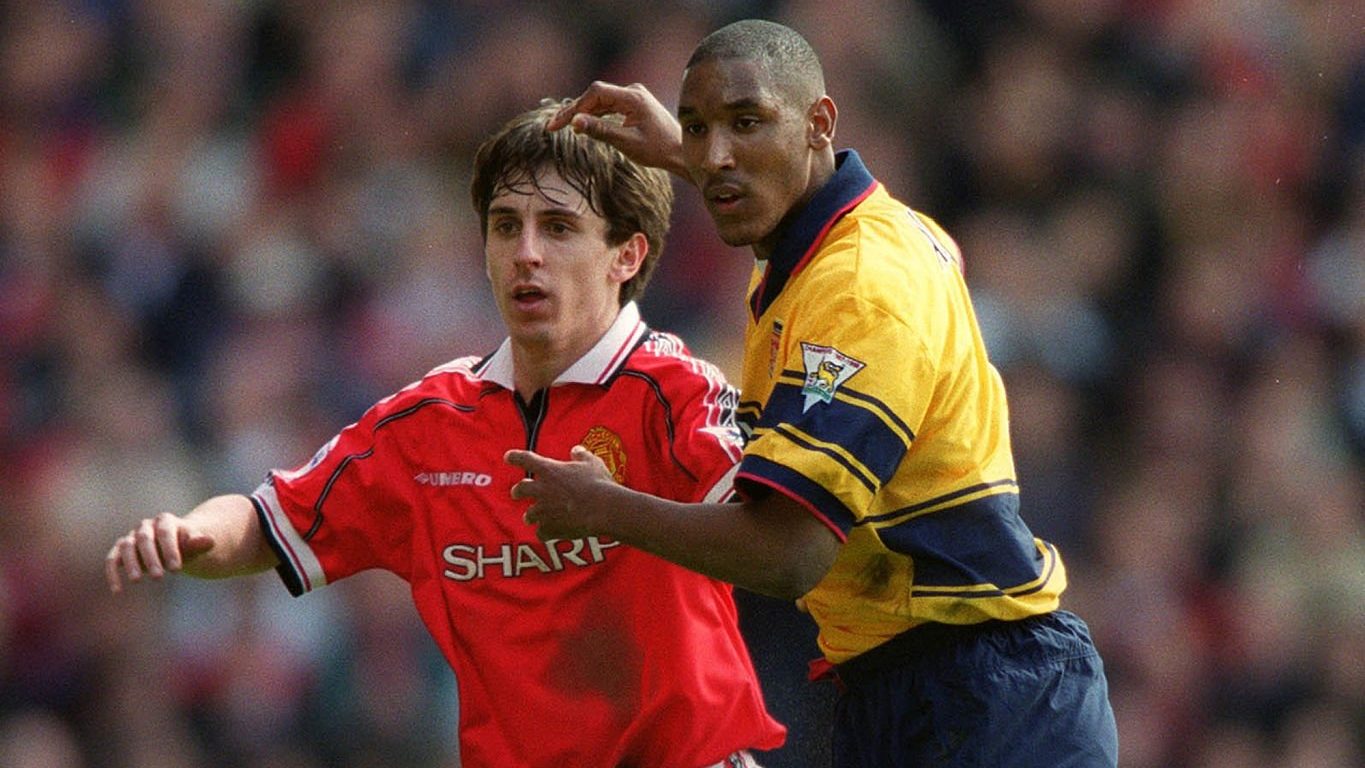
6. Jermaine Pennant
- Liverpool: 2006–2009 (Apps: 81 | Goals: 3)
- Arsenal: 1999–2005 (Apps: 26 | Goals: 3)
Arsenal signed Pennant from Notts County while he was still a teenager, but he struggled to turn that early promise into a regular first-team place.
Several loans followed, and Birmingham City became his next permanent club.
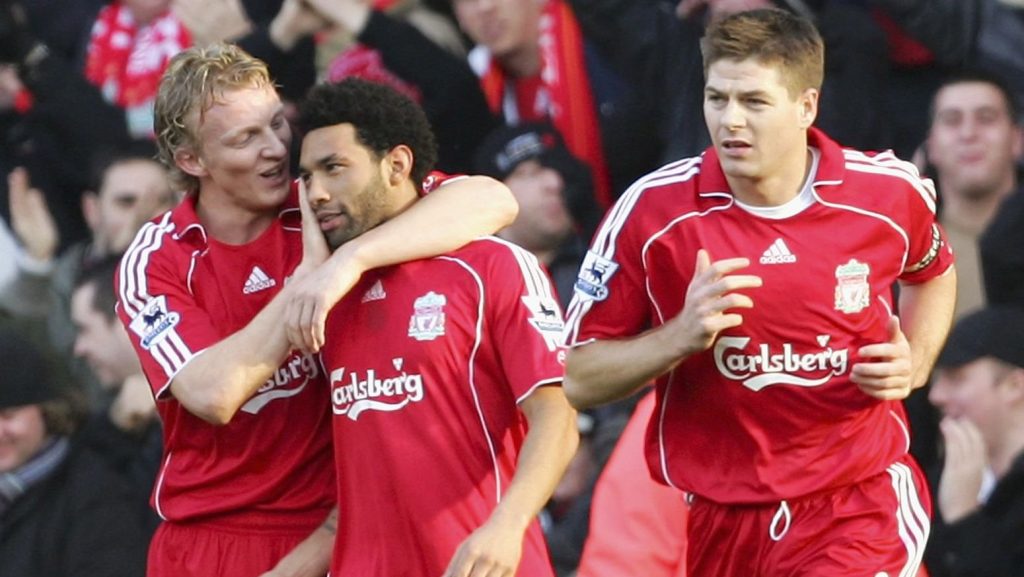
Liverpool signed him from Birmingham in July 2006, giving him another opportunity at a club competing near the top of English football.
His Liverpool spell included a prominent role in the run to the 2007 Champions League final, in which he played against AC Milan.
Pennant’s story is another reminder that appearing for both clubs does not necessarily mean moving directly between them. Birmingham was an essential part of the journey.
7. Yossi Benayoun
- Liverpool: 2007–2010 (Apps: 134 | Goals: 29)
- Arsenal: 2011–2012 (loan) (Apps: 25 | Goals: 6)
Benayoun spent three seasons at Liverpool after arriving from West Ham in 2007.
The creative midfielder made 134 appearances for the Reds, offering movement, close control and an ability to find space around the penalty area.
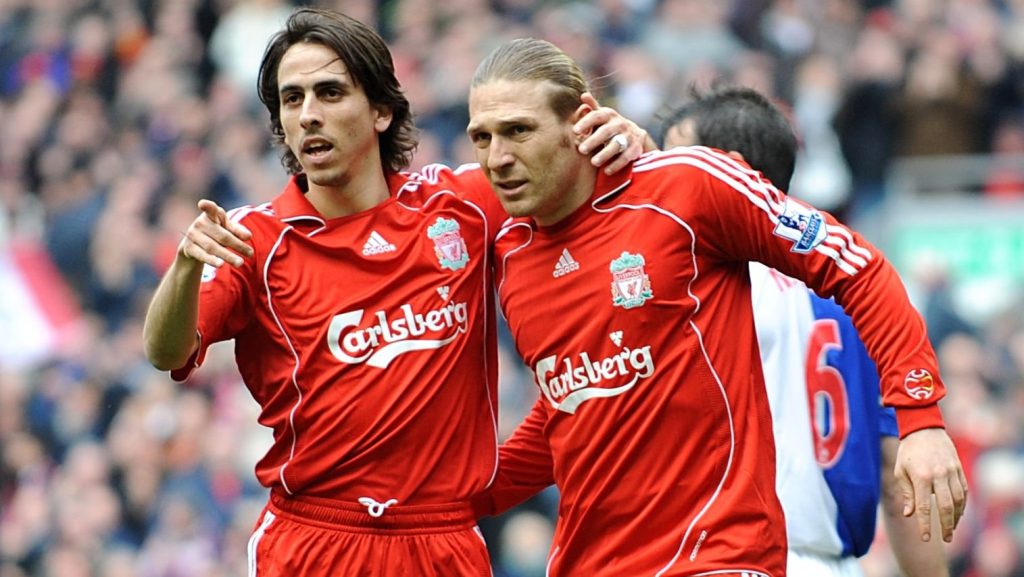
His route to Arsenal went through Chelsea. After leaving Liverpool for Stamford Bridge in 2010, he joined Arsenal on loan for the 2011/12 season.
That makes him one of the players connecting three major English clubs, rather than just two.
His career also overlaps with several names in our guide to players who represented both Chelsea and Arsenal, showing how closely these footballing paths can intersect.
8. Raheem Sterling
- Liverpool: 2012–2015 (Apps: 129 | Goals: 23)
- Arsenal: 2024–2025 (loan) (Apps: 28 | Goals: 1)
Sterling’s place on the list became complete much later than his Liverpool breakthrough.
He joined Liverpool’s academy from Queens Park Rangers in 2010 and made his competitive senior debut in March 2012. His pace and attacking movement helped him become an important player under Brendan Rodgers before his departure for Manchester City in 2015.
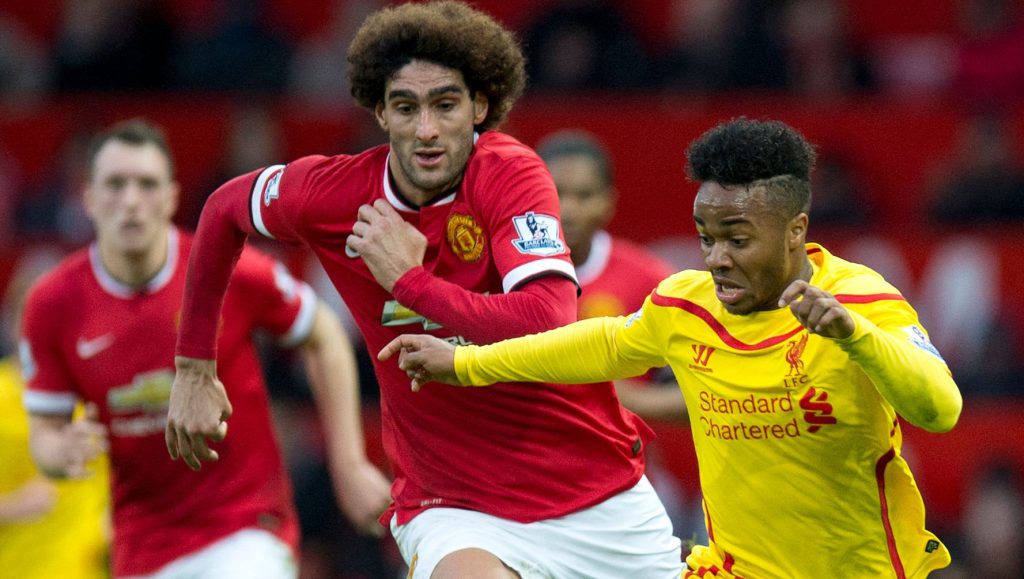
After City and Chelsea, Arsenal borrowed him for the 2024/25 season. His Arsenal arrival also reunited him with Mikel Arteta, who had worked with him at City.
More than a decade separated Sterling’s Liverpool debut and Arsenal loan. The connection was made through a long career across several clubs, rather than a direct switch between Anfield and north London.
9. Geoff Strong
- Liverpool: 1964–1970 (Apps: 201 | Goals: 33)
- Arsenal: 1957–1964 (Apps: 137 | Goals: 77)
Strong was already an effective forward at Arsenal when Bill Shankly signed him for Liverpool in November 1964.
At Anfield, his versatility became particularly valuable. He could contribute in attack, midfield and defence, giving Shankly options across the team.
Strong helped Liverpool win their first FA Cup in 1965 and the league championship the following season. He eventually made 201 appearances for the club.
His career provides an early example of a direct Arsenal-to-Liverpool transfer that worked well for the buying club.
It also broadens the story beyond the Premier League years: this connection existed long before modern transfer windows and deadline-day coverage.
10. Jimmy Carter
- Liverpool: 1991 (Apps: 8 | Goals: 0)
- Arsenal: 1991–1995 (Apps: 29 | Goals: 2)
Carter is one of the easier names to miss.
Kenny Dalglish signed the winger from Millwall in January 1991. His Liverpool opportunity proved brief, however, and he made only eight appearances before moving to Arsenal in October of the same year.
Unlike Sterling or Benayoun, Carter went directly from Liverpool to Arsenal.
He is also a useful example of why the definition matters. A player does not need to become a star, spend several seasons at a club or win a major trophy to qualify.
Carter played competitive first-team football for both clubs, so he belongs on the list.
11. Jim Furnell
- Liverpool: 1962–1963 (Apps: 28 | Goals: 0)
- Arsenal: 1963–1968 (Apps: 167 | Goals: 0)
Furnell’s connection dates to the early years of Shankly’s Liverpool rebuild.
The goalkeeper arrived from Burnley in 1962 and helped Liverpool secure promotion to the First Division. His opportunity narrowed after an injury allowed Tommy Lawrence to establish himself in goal.
Liverpool subsequently sold Furnell to Arsenal in November 1963.
He spent several years with the Gunners, making his a much longer Arsenal chapter than Liverpool one.
Alongside Carter, Furnell offers a clear counterexample to the idea that this route only runs from Arsenal to Liverpool. Direct moves have taken place in both directions.
Why Alex Manninger needs a separate mention
- Liverpool: 2016–2017 (Apps: 0 | Goals: 0)
- Arsenal: 1997–2002 (Apps: 64 | Goals: 0)
Manninger had a genuine association with both clubs, but his case differs from the 11 players above.
He played for Arsenal and helped the club win the 1998 Double. Liverpool later signed him in 2016 as an experienced addition to their goalkeeping group.
However, he did not make a competitive first-team appearance for Liverpool.
Liverpool’s retirement interview makes that distinction clear while describing his contribution in training and his support for the other goalkeepers.
For a list of players who signed for both clubs, Manninger belongs. For a list requiring competitive appearances for both, he should be explained separately.
READ MORE:
- Players Who Played for Both Arsenal and Everton
- Players Who Played for Both Liverpool and Man City
- Players Who Played for Both Liverpool and Bournemouth
You have just read the article “11 Players Who Played for Both Liverpool and Arsenal”. Follow 52HzFootball for more captivating stories about football, geography and culture.
