Scan the league tables across Eastern Europe, and you will see a recurring pattern.
Dinamo Zagreb in Croatia. Dynamo Kyiv in Ukraine. Dynamo Moscow in Russia. There is even a Houston Dynamo in the USA.
Why do so many clubs share this specific name? Is it a coincidence, or is there a deeper, darker meaning behind the “D” on their chests?
The answer lies in the history of the Soviet Union, the secret police, and the concept of “Power in Motion”.
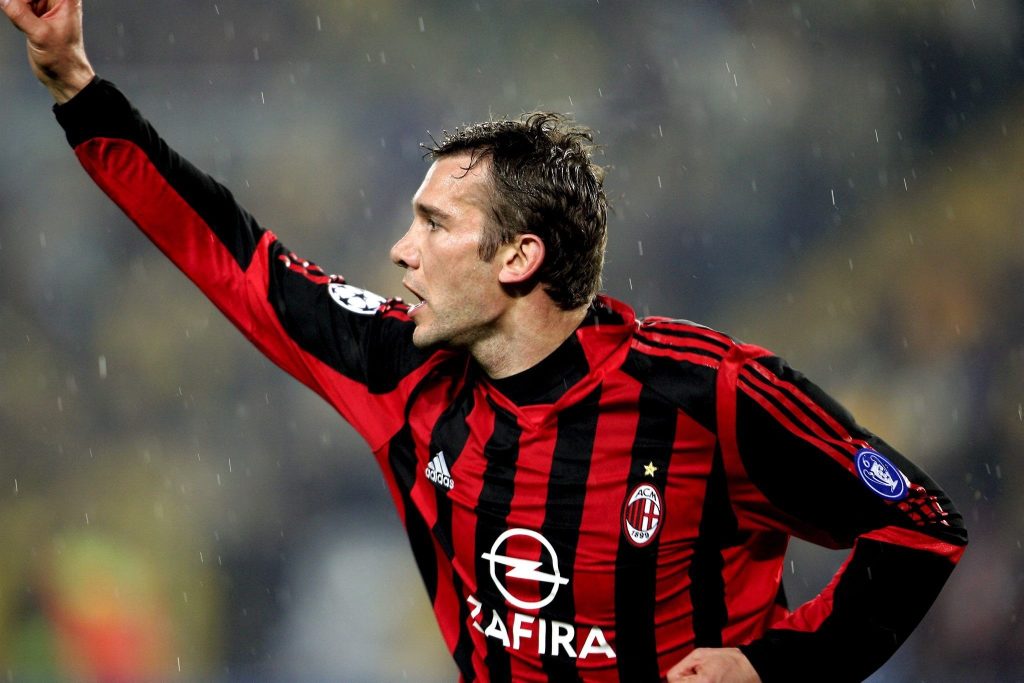
2004 Ballon d’Or winner Andriy Shevchenko is a product of the Dynamo Kyiv academy. Image: Getty
1. “Power in Motion”
To understand the name, one must first understand the obsession of the early Soviet Union. In 1920, Vladimir Lenin famously declared that:
“Communism is Soviet power plus the electrification of the whole country.”
Electricity was viewed not just as a utility, but as the magic force that would transform Russia from a backward agrarian society into a modern industrial superpower.
On April 18, 1923, when the state security forces formed their own sports society in Moscow, they needed a name that reflected this modern ideology.
It was Maxim Gorky, the renowned proletarian writer, who proposed “Dynamo“. Derived from the Greek word dynamis, meaning power, it referred to the electrical generator. The athlete was conceptualized as a machine – a human generator producing constant energy for the state – encapsulated by the slogan “Power in Motion“.
It was meant to symbolize the energy, industrialization, and unstoppable force of the new Soviet state.
However, “Dynamo” wasn’t just about electricity. It was the official sports society of the GPU, which later evolved into the NKVD and eventually the KGB.
In simple terms: Dynamo clubs were the police teams.
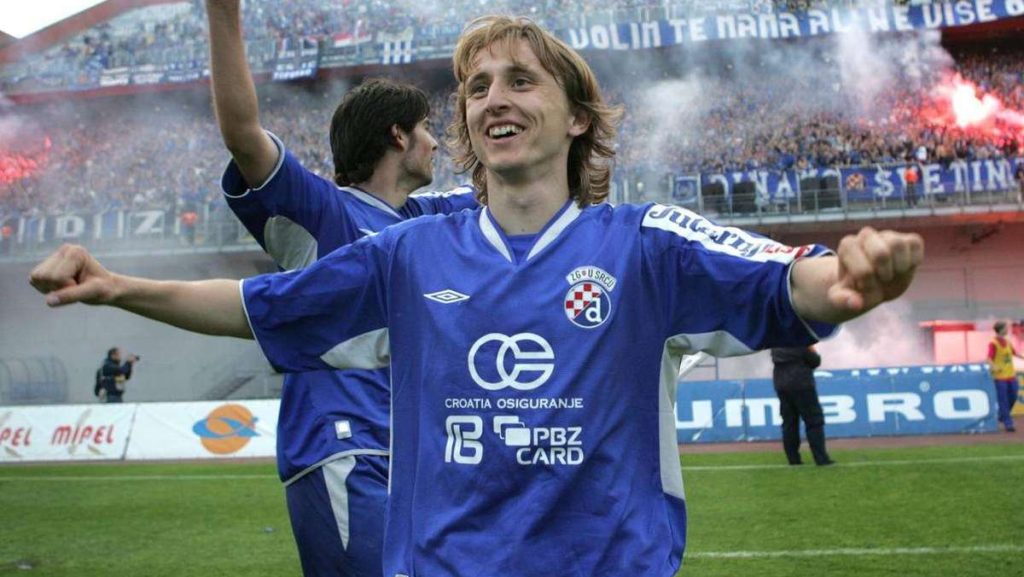
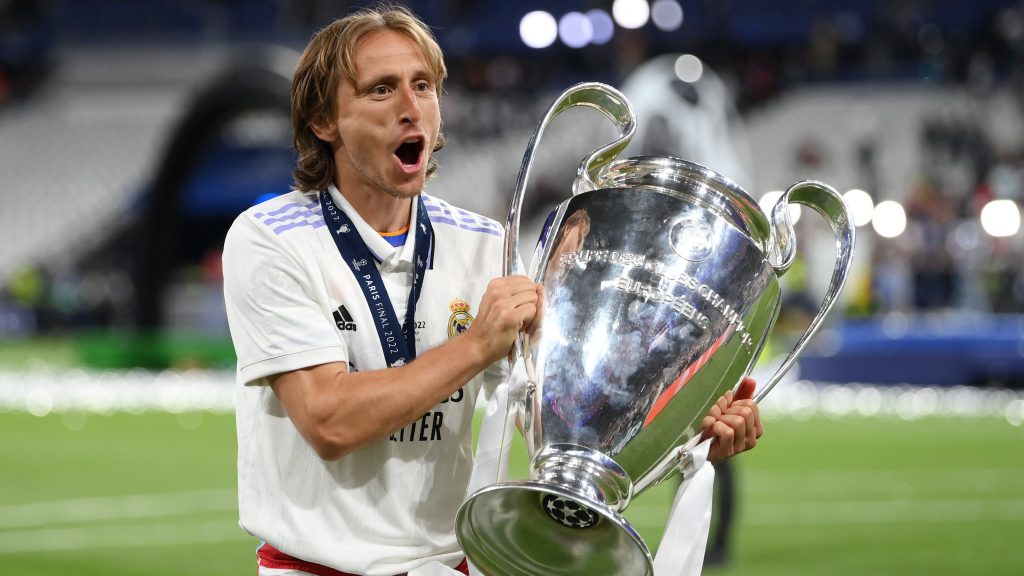
2018 Ballon d’Or winner Luka Modrić played for Dinamo Zagreb from 2003 to 2008. Image: Getty Images
Founded by Felix Dzerzhinsky, head of the secret police, Dynamo Moscow became the first of many.
Being a Dynamo player meant you were technically an officer on the payroll of the state security apparatus. This gave them immense power but also made them feared and often hated by rival fans since players from other clubs like Torpedo or Lokomotiv were listed as factory or railway workers.
After World War II, as the Iron Curtain descended, the Soviet Union exported its social models to its satellite states in Eastern Europe, and the “Dynamo” franchise went global.
-
Dinamo Bucharest (1948): Founded by the Romanian Ministry of Interior.
-
Dynamo Dresden (1953): Affiliated with the East German secret police (Stasi).
-
Dinamo Zagreb (1945): Formed in communist Yugoslavia (though the political affiliation there was more complex, the name followed the trend).
Today, the political context has largely faded. When football fans watch Luka Modrić, a graduate of Dinamo Zagreb, or marvel at Khvicha Kvaratskhelia, a product of Dinamo Tbilisi, they rarely think of the KGB or the Stasi.
However, the name remains a living fossil of history. It stands as a reminder of an era when football was used to demonstrate the “electrical power” of the state, and when the players on the pitch carried the badges of officers.
2. The Dynamo Brotherhood
Here is the complete breakdown of the most notable clubs sharing the name.
| Club Name | Country | Region | Interesting Fact |
| Dynamo Moscow | Russia | Eastern Europe | The first Dynamo club (1923). |
| Dynamo Kyiv | Ukraine | Eastern Europe | Most successful club in Eastern Europe. |
| Dinamo Tbilisi | Georgia | Eastern Europe | 1981 Cup Winners’ Cup Champions. |
| Dinamo Zagreb | Croatia | Balkans | Produced Luka Modrić & Gvardiol. |
| Dinamo Bucharest | Romania | Balkans | The “Red Dogs” of Romanian football. |
| Dinamo Tirana | Albania | Balkans | 18-time Albanian champions. |
| Dynamo Dresden | Germany | Central Europe | Former Stasi (Secret Police) club. |
| BFC Dynamo | Germany | Central Europe | Won 10 consecutive East German titles. |
| Houston Dynamo | USA | North America | Named after the energy industry. |
| Dynamos FC | Zimbabwe | Africa | The most popular club in Zimbabwe. |
| Power Dynamos | Zambia | Africa | 1991 African Cup Winners’ Cup champions. |
| Loughborough Dynamo | England | Western Europe | Named after a local electrical generator. |
While there are dozens of clubs sharing the name, a few have risen above the rest to become European heavyweights.
Dynamo Moscow (Russia)
-
Status: The original. Founded in 1923, they set the template for all others. While they haven’t won a league title since 1976, their historical significance is unmatched.
-
Iconic Legend: Lev Yashin. “The Black Spider” spent his entire 20-year career here and remains the only goalkeeper in history to win the Ballon d’Or.
Dynamo Kyiv (Ukraine)
-
Status: The undisputed giant of the name. Under the legendary manager Valeriy Lobanovskyi, they were the first Soviet club to win a European trophy (Cup Winners’ Cup 1975) and dominated the Soviet Top League.
-
Iconic Legends: Oleg Blokhin (1975 Ballon d’Or winner), Andriy Shevchenko (2004 Ballon d’Or winner).
Dinamo Zagreb (Croatia)
- Status: The talent factory of the Balkans. Dominant in Croatia, they are famous worldwide for producing technically gifted midfielders.
- Iconic Legends: Zvonimir Boban, Davor Šuker, and Luka Modrić (Read more: The Balkan Talent Factory – 10 Iconic Players Formed at Dinamo Zagreb).
Dynamo Dresden (Germany)
-
Status: The pride of East Germany (GDR). They won 8 East German titles before the reunification of Germany caused them to struggle financially against the wealthy Western clubs.
-
Iconic Legend: Matthias Sammer. The 1996 Ballon d’Or winner started his career here before moving to Dortmund.
BVB Legend #TBT Spotlight: Matthias Sammer
👕 Appearances (153)
⚽️ Goals (23)
🅰️ Assists (24)
🏆 Trophies (5)1996 European Player of the Year 🌟 pic.twitter.com/2HVAG18Q8g
— Borussia Dortmund (@BlackYellow) March 7, 2019
Dinamo Bucharest (Romania)
-
Status: One of the two giants of Romanian football. Known as “The Red Dogs”, they have won the Romanian league 18 times.
-
Iconic Legend: Dudu Georgescu, winner of the European Golden Shoe (top scorer in Europe) twice in the 1970s.
Dinamo Tbilisi (Georgia)
- Status: The “Brazilians of the Soviet Union”. Famous for their artistic, technical style of play, they achieved what few Soviet clubs could: winning a European trophy (the 1981 Cup Winners’ Cup). They remain the most successful club in Georgian history.
- Iconic Legends: Kakha Kaladze, the legendary defender who won two Champions League titles with AC Milan started his career here; Khvicha Kvaratskhelia, the modern-day superstar known as “Kvaradona”, who dazzled at Napoli, is the latest jewel of the Tbilisi academy.
3. The Rivalries: Police vs. The People
This political origin created some of the fiercest rivalries in football history.
-
Spartak vs. Dynamo (Russia): Spartak Moscow was the “people’s team”, founded by a trade union and independent of the government. Their rivalry with Dynamo wasn’t just about football; it was the people versus the police.
-
Steaua vs. Dinamo (Romania): Steaua was the Army’s team. Dinamo was the Secret Police’s team. Their clashes were proxy wars between the two most powerful branches of the government.
4. Exception: Houston Dynamo
So, what about Houston Dynamo in Major League Soccer? Did the KGB infiltrate Texas?
Not quite. Established in 2005, the American club chose the name for two reasons: (1) to honor the energy industry (Houston is the “Energy Capital of the World”); (2) To pay homage to the older, traditional “Dynamo” teams of Europe, giving the new franchise a classic footballing sound.
Today, the word “Dynamo” is synonymous with legendary players like Lev Yashin, Andriy Shevchenko, and Luka Modrić. But strip away the glory, and you find a fascinating origin story: a name born from the desire to project the electrical, unstoppable power of the state.
