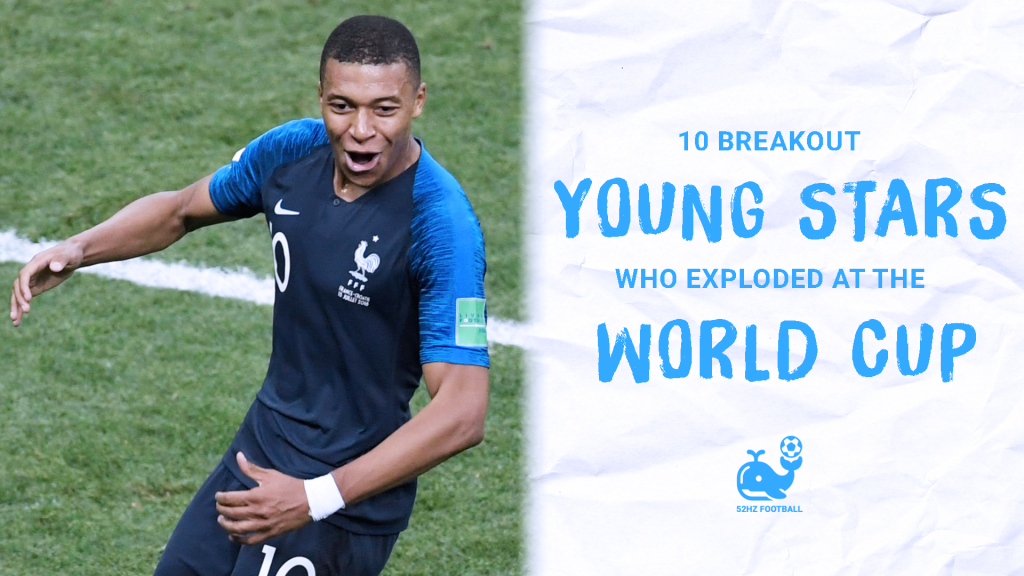
The FIFA World Cup is far more than just a gathering of the sport’s established elite. While it is the playground where icons cement their legacies, it serves a perhaps even more thrilling purpose: it is the ultimate launchpad for the next generation. It is a crucible of pressure where raw potential is forged into global superstardom overnight.
Every four years, the world watches as established narratives are rewritten by fresh faces. These young talents arrive at the tournament carrying moderate expectations, often overshadowed by the veterans in their squads. Yet, by the time the final whistle blows, they leave the stage with their names etched into history, their reputations skyrocketing to global renown.
History has proven that the World Cup is the most effective accelerator for a footballing career. A single goal, a solo run, or a commanding performance in a knockout game can transform a prospect into a legend. Below is an in-depth look at the 10 most explosive young stars in World Cup history who utilized this global stage as the starting pistol for a peak career.
1. Pelé – Brazil (World Cup 1958)
It is no coincidence that Pelé is universally recognized as the “King of Football”.
However, before the summer of 1958 in Sweden, Brazil was a nation still traumatized by the “Maracanazo” – the heartbreaking loss in the 1950 World Cup final. They needed a savior, but few expected it to be a scrawny teenager.
Born in 1940, Edson Arantes do Nascimento – known to the world as Pelé – arrived at the World Cup before he had even turned 18. He began the tournament on the bench, nursing a knee injury, but his introduction to the starting lineup changed the sport forever.
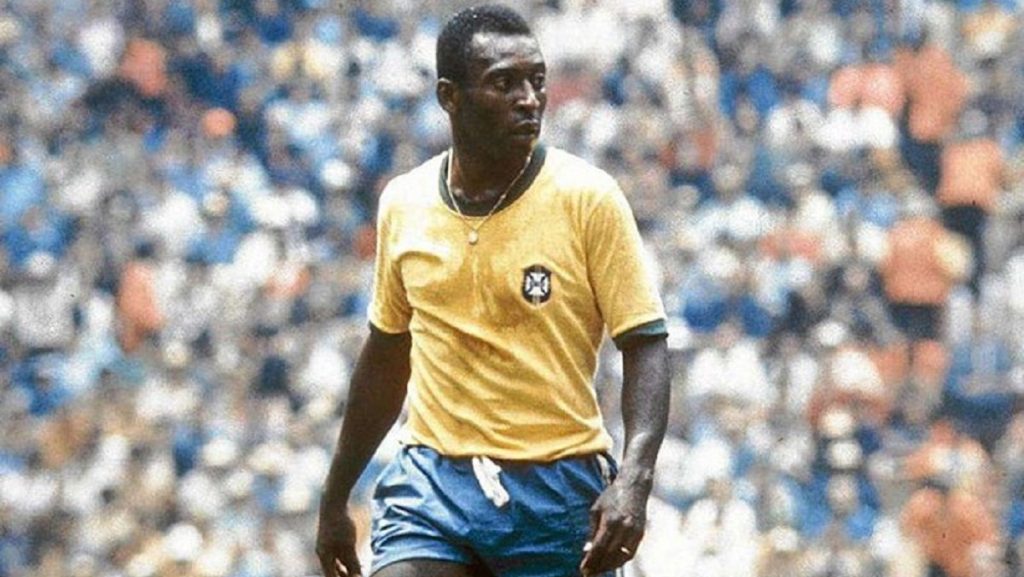
Pelé’s impact was not just in the goals he scored, but in the sheer audacity of his play. He scored a total of 6 goals in the knockout stages alone. It began with a crucial, technically brilliant goal against Wales in the quarter-finals. But the world truly took notice in the semi-finals against a strong French side, where the 17-year-old scored a stunning hat-trick, dismantling the European defense with speed and improvisation that had never been seen before.
In the final against the host nation Sweden, Pelé produced moments of magic that defied physics. His first goal involved chesting the ball, flipping it over a defender’s head (the sombrero), and volleying it home without it touching the ground. He added a second header in the dying moments to seal a 5-2 victory.
He remains the youngest player ever to score in World Cup history and the youngest to win the trophy. As the final whistle blew, the image of a weeping Pelé being carried on the shoulders of his teammates became iconic.
And yes, what unfolded in the years that followed – two more World Cup titles and over 1,000 career goals – has gone down as the greatest legend the sport has ever known.
2. Franz Beckenbauer – West Germany (World Cup 1966)
If Pelé is the “King”, then Franz Beckenbauer is undeniably the “Emperor”.
Before he redefined the position of the sweeper (libero), Beckenbauer announced himself to the world as a dominant, box-to-box force at the 1966 World Cup in England.
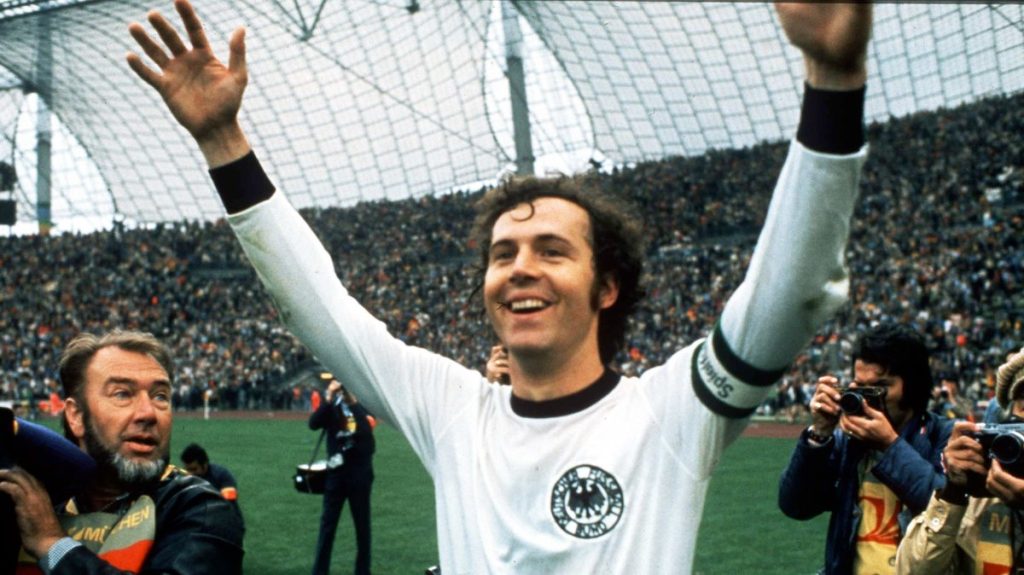
Participating in his first World Cup at just 20 years old, Beckenbauer was a revelation. Unlike the defensive orchestrator he would later become, the 1966 version of Beckenbauer was an attacking threat from midfield. He made an immediate impression in his first match against Switzerland, scoring twice. One of these goals was a classy solo effort that showcased his elegance on the ball – a trait that would define German football for decades.
He finished the tournament with 4 goals, an astonishing return for a player who was not a striker. His ability to carry the ball out of defense and join the attack terrified opponents and provided West Germany with a unique tactical advantage.
It was a pity for Beckenbauer and West Germany in the final at Wembley. Tasked with marking English legend Bobby Charlton, Beckenbauer nullified the threat, but his own attacking influence was limited. Germany eventually fell 2-4 to the hosts in a controversy-filled match decided in extra time.
However, that silver medal was merely the prologue. That tournament laid the foundation for a majestic career for the legend born in 1945, who would go on to captain West Germany to victory in 1974 and manage them to glory in 1990.
3. Jairzinho – Brazil (World Cup 1970)
When discussing Brazil’s 1970 World Cup championship in Mexico, the narrative is often dominated by the greatness of Pelé in his final tournament. However, strictly in terms of performance and consistency, there was a young element who was arguably the team’s most lethal weapon.
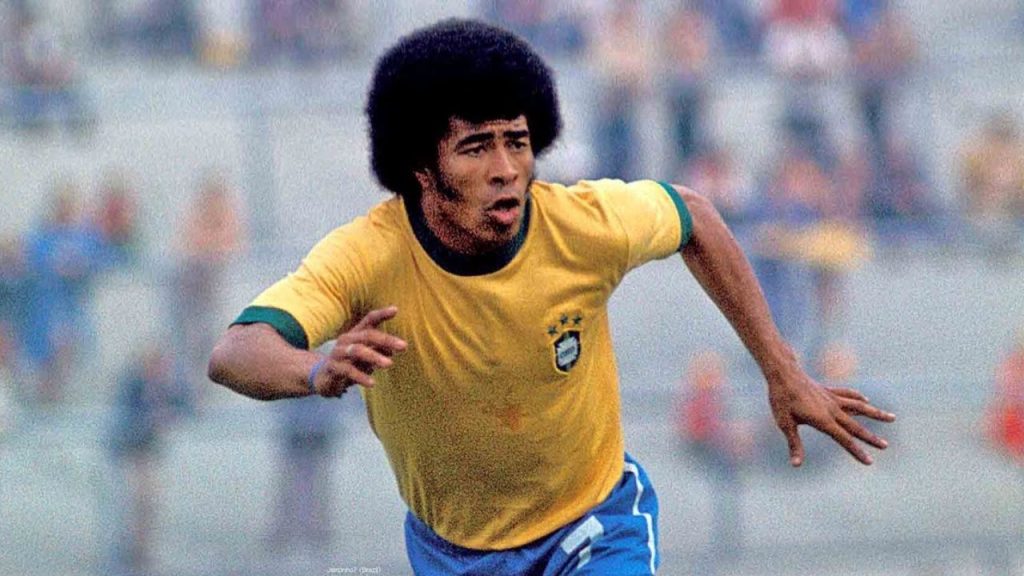
Jairzinho, at age 22, achieved something statistically perfect. He scored in every single match Brazil played at that World Cup, from the opening group game to the final against Italy. This is a feat – scoring in every round of a World Cup winning campaign – that no player has managed to replicate to this day.
Known as “O Furacão” (The Hurricane), Jairzinho played 6 matches and tallied 7 goals. While Pelé was the conductor, Jairzinho was the dagger. His goal against England, powering past the defense to beat Gordon Banks, was critical. His finish in the final, capitalizing on a headed assist from Pelé, broke Italian spirits.
Why do we sometimes overlook Jairzinho when discussing the pantheon of greats? Perhaps it is because the 1970 team was so stacked with talent like Tostão, Rivelino, and Carlos Alberto that individual brilliance (outside of Pelé) got diluted. Or perhaps it is because Jairzinho’s club career, though successful, did not have the same global marketing as others. regardless, his 1970 performance remains the gold standard for wingers in international football.
4. Paolo Rossi – Italy (World Cup 1978)
Most football fans associate Paolo Rossi entirely with the 1982 World Cup in Spain, where his hat-trick against Brazil and goals in the final secured the trophy for Italy. However, the real breakout – the moment the world realized his talent – occurred four years prior in Argentina.
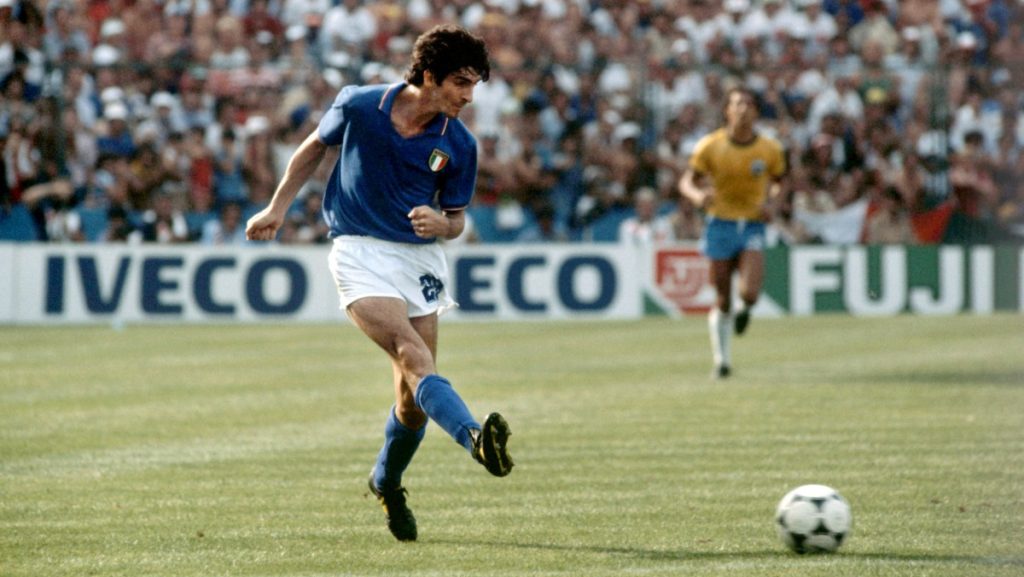
In 1978, Rossi was 21 years old and playing for Vicenza. He was slight of frame and did not look like a traditional center-forward. Yet, at the World Cup, he proved to be one of the most intelligent players on the pitch. Rossi scored 3 goals and provided 4 assists, playing a pivotal role in an Italian side that played arguably the most attractive football of the tournament.
He was dubbed “Pablito” by the Argentine press. His movement off the ball was a nightmare for defenders; he wasn’t the fastest or strongest, but he was always in the right place. He helped Italy finish fourth, signaling to the world that a new premier goalscorer had arrived.
This tournament was the crucial turning point. It proved he could handle the international stage. Although he would face a major suspension scandal (Totonero) in the years between, the confidence and reputation built in 1978 were the direct foundation for his legendary redemption arc in 1982.
5. Michael Owen – England (World Cup 1998)
Mentioning the name Michael Owen evokes a complex mix of nostalgia and regret for English fans. Before injuries took their toll, Owen was an electric phenomenon, and the 1998 World Cup in France was his coming-out party.
Owen arrived in France as a fresh-faced 18-year-old, initially starting on the bench behind veterans like Teddy Sheringham and Alan Shearer. However, a goal off the bench against Romania in the group stage forced manager Glenn Hoddle’s hand. He became England’s youngest-ever World Cup scorer, but the best was yet to come.
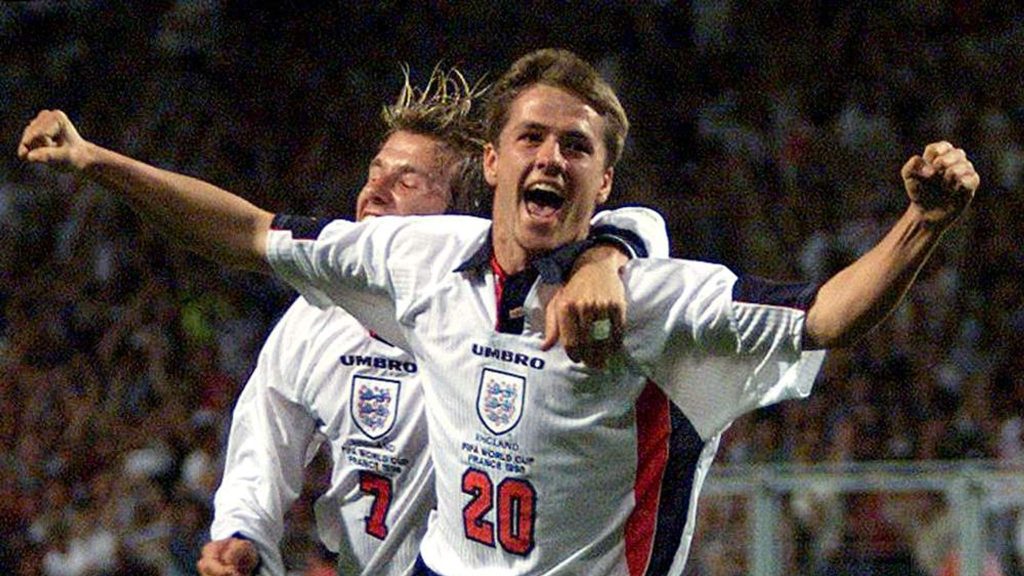
Owen’s career is defined by the Round of 16 match against Argentina. In the first half, he received a pass from David Beckham near the center circle. What happened next was pure instinct and blistering pace. Owen controlled the ball with a soft touch, then exploded past José Chamot. As veteran defender Roberto Ayala tried to close the angle, Owen drifted right and unleashed a perfect finish into the top corner past Carlos Roa.
It remains one of the greatest individual goals in World Cup history. It captured the essence of youth: fearless, fast, and direct.
Although England lost on penalties (following David Beckham’s red card after a clash with Diego Simeone), Owen returned home a hero. He would go on to win the Ballon d’Or in 2001. While he scored at the 2002 World Cup as well, muscle injuries eventually robbed him of that explosive pace, leaving fans to wonder just how high his ceiling could have been.
6. Ronaldo Nazário – Brazil (World Cup 1998)
Four years prior, a 17-year-old Ronaldo was part of the Brazil squad that won the 1994 World Cup in the USA, but he watched from the sidelines. By 1998, he wasn’t just a starter; he was the undisputed best player on the planet.
The 1998 World Cup was marketed around Ronaldo. Wearing the iconic silver, blue, and yellow Nike Mercurial boots, “R9” was unstoppable. His combination of strength, dribbling, and finishing was something the world had effectively never seen before. With teammates like Rivaldo, Bebeto, and Cafu, Brazil tore through the tournament.
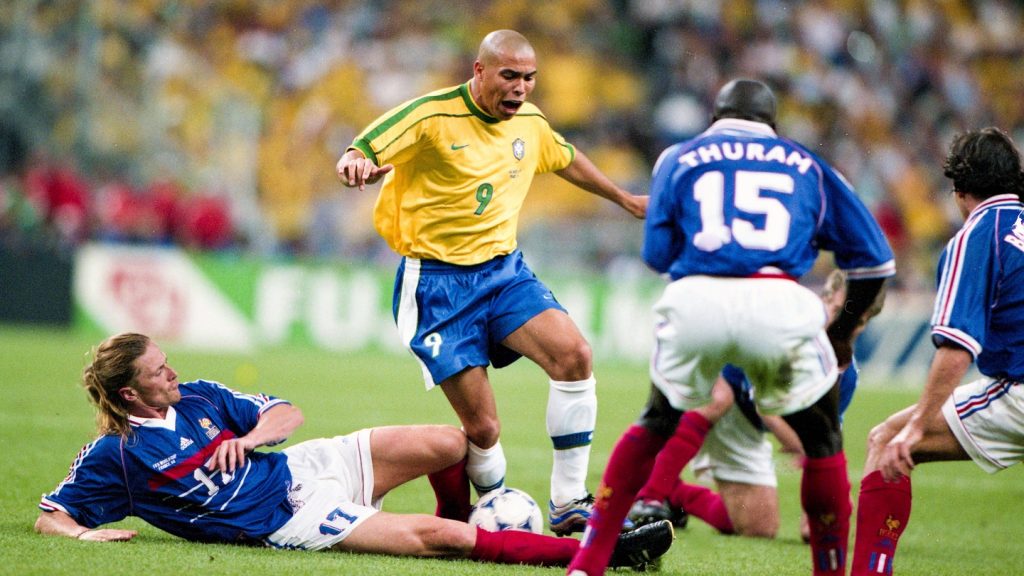
Ronaldo scored 4 goals and created countless chances. His performance against the Netherlands in the semi-final was a masterclass, scoring the opener and tormenting the Dutch defense before Brazil won on penalties.
However, the tournament is remembered for the tragic and mysterious events of July 12, 1998. Hours before the final against France, Ronaldo suffered a convulsive fit in the team hotel. The initial team sheet released to the media did not include his name, sending shockwaves through the stadium.
Forty minutes before kickoff, he was reinstated by coach Mario Zagallo after pleading to play. But on the pitch, he was a shadow of himself – lethargic and disconnected. Brazil lost 0-3 to Zinedine Zidane’s France. While the final was a disaster, the tournament itself confirmed Ronaldo’s status as a generational talent, setting the stage for his redemption in 2002.
7. Thomas Müller – Germany (World Cup 2010)
Leading up to the 2010 World Cup in South Africa, few outsides of Germany knew much about Thomas Müller. Just months prior, he had been mistaken for a ball boy by Diego Maradona during a press conference. By the end of the tournament, Maradona – and the rest of the world – knew exactly who he was.
Müller was thrust into the starting lineup due to an injury to captain Michael Ballack, which forced a tactical reshuffle. This young German side, playing a thrilling counter-attacking style, suited Müller perfectly. He scored his first international goal in the opening 4-0 demolition of Australia.
However, his true explosion came in the knockout stages. He scored twice against England in the Round of 16 and opened the scoring in the quarter-final rout of Maradona’s Argentina. Müller finished the tournament with 5 goals and 3 assists, winning the Golden Boot and the Best Young Player award.
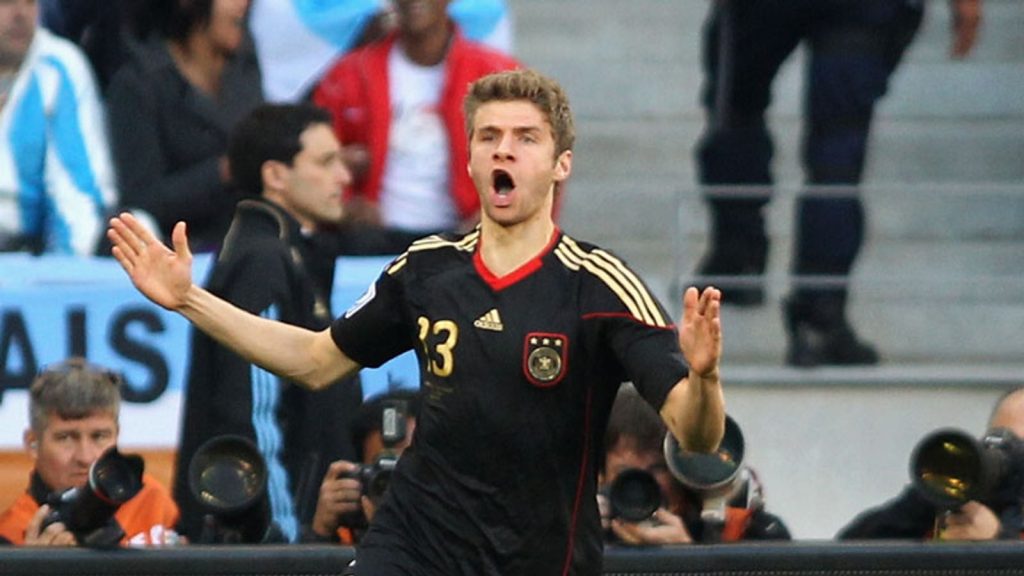
Müller introduced the world to the role of the Raumdeuter (Space Investigator). He wasn’t the fastest or the most skillful, but his football IQ was off the charts. His breakout in 2010 was the catalyst for Germany’s dominance, culminating in their World Cup victory four years later in Brazil.
8. James Rodríguez – Colombia (World Cup 2014)
James Rodríguez‘s career trajectory is a unique case, but for one month in the summer of 2014, he was arguably the best player on Earth.
Going into the World Cup in Brazil, Colombia was devastated by the injury loss of their superstar striker, Radamel Falcao. The burden of creativity and scoring fell on the shoulders of the 22-year-old James. He responded with a performance of pure artistic brilliance.
James scored in every game he played, tallying 6 goals to win the Golden Boot, outscoring Messi, Neymar, and Müller. He guided Colombia to their first-ever quarter-final, where they narrowly lost to the hosts.
His defining moment came in the Round of 16 against Uruguay. James controlled a header with his chest, swiveled, and unleashed a ferocious volley that crashed off the underside of the crossbar and into the net. It was voted the Goal of the Tournament and later won the FIFA Puskás Award.
While his performance earned him a move to Real Madrid, James struggled to maintain that stratospheric level over the next decade. However, his resurgence at the 2024 Copa América (winning Player of the Tournament) reminded everyone that the class he showed in 2014 was permanent.
9. Kylian Mbappé – France (World Cup 2018)
Kylian Mbappé arrived in Russia in 2018 as a highly-rated prospect who had impressed with AS Monaco and PSG. He left Russia as the rightful heir to the throne of world football.
Mbappé’s performance was defined by terrifying, electric speed. In a French team built on defensive solidity by Didier Deschamps, Mbappé was the outlet that made the system work.
The match that signaled his transition from “talent” to “superstar” was the Round of 16 clash against Argentina. In a chaotic 4-3 victory, Mbappé was unstoppable. His 60-yard sprint, which resulted in a penalty after Marcos Rojo was forced to foul him, was clocked at Olympic sprinter speeds. He then scored two goals, dismantling the Argentine defense with clinical efficiency.
In the final against Croatia, Mbappé scored a long-range goal to seal the victory. In doing so, he became only the second teenager in history, after Pelé in 1958, to score in a World Cup final. The comparison was apt: a new era had begun. Looking back at his career since 2018 – including a hat-trick in the 2022 World Cup final – it is clear that 2018 was merely the opening chapter of a legendary book.
10. Julián Álvarez – Argentina (World Cup 2022)
Every World Cup winning team needs a surprise package – a player who wasn’t in the starting XI plans but becomes indispensable. For Argentina in Qatar, that was Julián Álvarez.
Entering the tournament, Álvarez was the backup to Inter Milan star Lautaro Martínez. However, after Argentina’s shock loss to Saudi Arabia and a struggle against Mexico, coach Lionel Scaloni looked for more energy. Álvarez provided it.
His breakout wasn’t just about goals; it was about his relentless work rate. He pressed defenders tirelessly, creating space for Lionel Messi to operate. He cemented his spot in the decisive match against Poland and never looked back.
His crowning moment came in the semi-final against Croatia. He won a penalty, then scored an extraordinary goal where he carried the ball from his own half. He finished the tournament with 4 goals – a tally bettered only by Messi and Mbappé.
Born in 2000, “La Araña” (The Spider) left Qatar as a world champion and a global star. While he still has a long road ahead to reach the heights of the other names on this list, his explosion in 2022 was vital to securing Messi’s destiny and launching his own promising career.
