
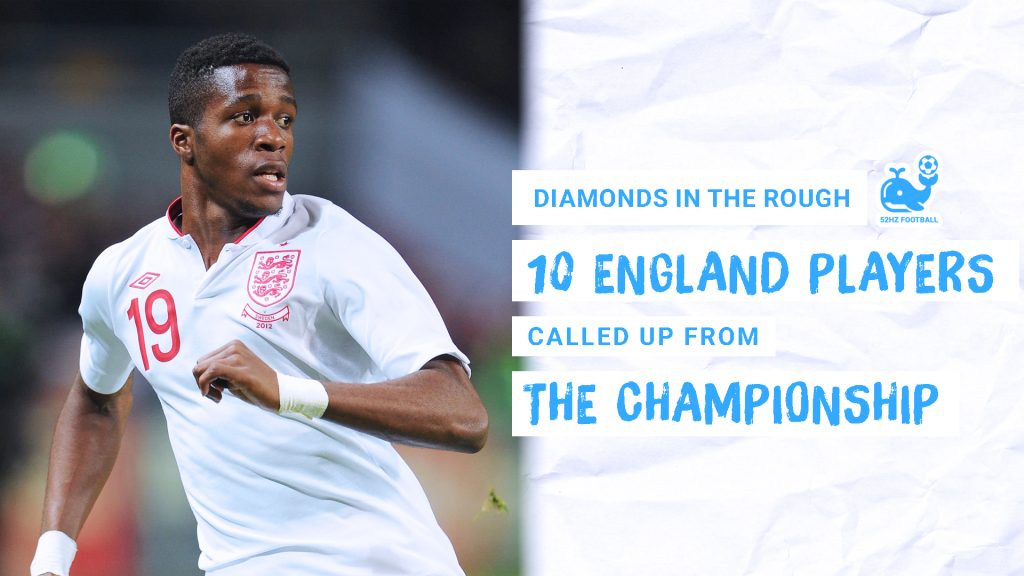
In the modern era of football, the path to the England national team seems predetermined: shine in the Premier League, secure a move to a “Big Six”, and wait for the call from St George’s Park. The gap between the top flight and the second tier is often described as a chasm, both financially and technically. Managers like Gareth Southgate, Fabio Capello, and Sven-Göran Eriksson have historically been reluctant to look downwards, fearing that the pace of the second division doesn’t translate to international football.
However, history is peppered with exceptions. Occasionally, a talent shines so brightly in the EFL that they become impossible to ignore. Whether due to relegation loyalty, meteoric rises, or sheer goal-scoring volume, a select few have broken the glass ceiling.
Here is the definitive ranking of the top 10 England players called up from the Championship (and the old First Division), proving that you don’t need Premier League status to wear the famous Three Lions on your chest.
1. Steve Bull (Wolverhampton Wanderers)
If there is a patron saint of England players called up from the Championship, it is Steve Bull.
What makes Bull’s story truly unique is that he holds a distinction that may never be matched: he is an England legend who never played a single minute in the Premier League. While he had a brief spell in the old First Division with West Bromwich Albion in 1986, his entire prime – and the entirety of his international career – took place outside the top flight.
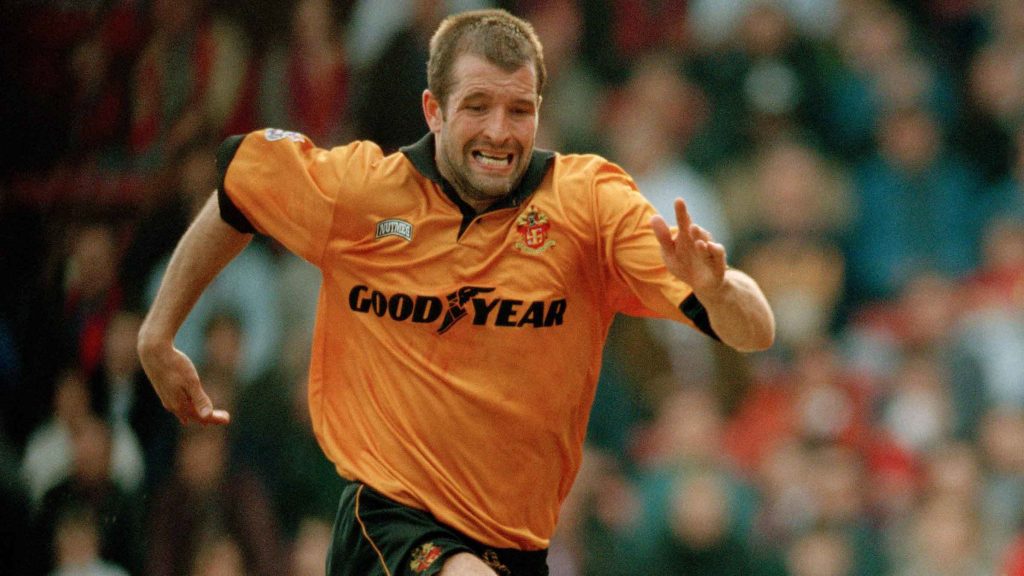
Bull wasn’t even in the second tier when he first caught Bobby Robson’s eye – he was tearing up the Third Division. After scoring 50 goals for Wolves in consecutive seasons, he was called up in 1989. He scored on his debut against Scotland at Hampden Park, silencing the doubters instantly. He went on to play at Italia ’90 (World Cup 1990) while still a Wolves player in the second tier.
By the time Wolves finally reached the Premier League in 2003, their greatest-ever scorer had already retired, leaving behind a legacy as the ultimate “One-Man Army” of the lower leagues.
- Caps: 13 (4 in the 1990 World Cup), Goals: 4
2. Stuart Pearce (Nottingham Forest)
Usually, when a player of Stuart Pearce’s caliber gets relegated, they leave. Pearce was England’s first-choice left-back and captain when Nottingham Forest finished bottom of the Premier League in 1993.
Instead of seeking a transfer to stay in contention for the national team, “Psycho” stayed at the City Ground to help Forest fight back. Remarkably, this did not harm his international career. He continued to captain England while playing in the second tier, a testament to his ferocious leadership and the lack of viable alternatives at left-back.
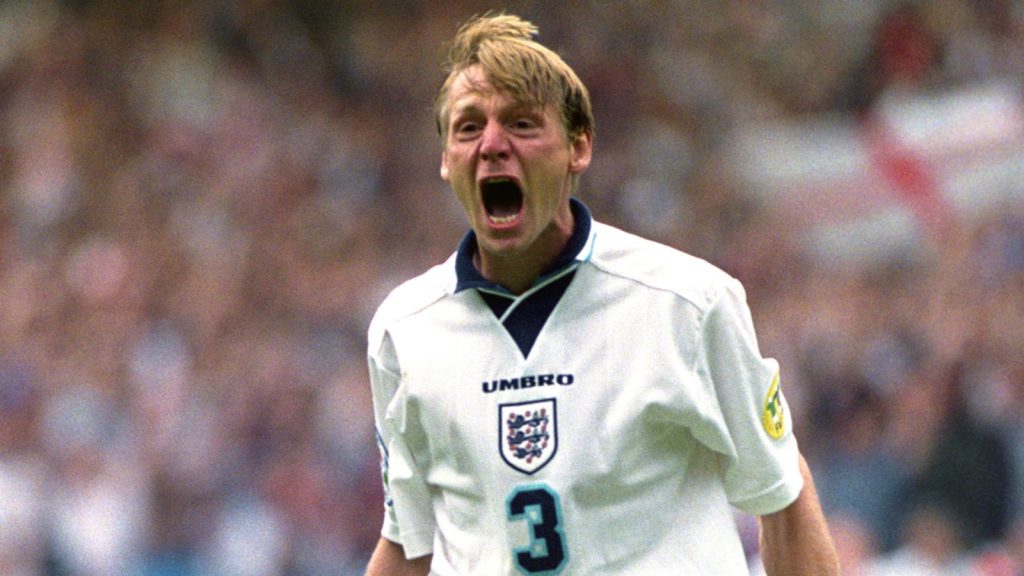
He led Forest to immediate promotion and kept his place in the England squad for Euro 96, proving that class is permanent, regardless of the division.
- Caps: 78, Goals: 5
3. Paul Merson (Middlesbrough)
Paul Merson’s move from Arsenal to Middlesbrough in 1997 was a shock to the system. Dropping down to the Division One (Championship) seemed like a signal that his international days were over. Instead, Merson played some of the best football of his life.
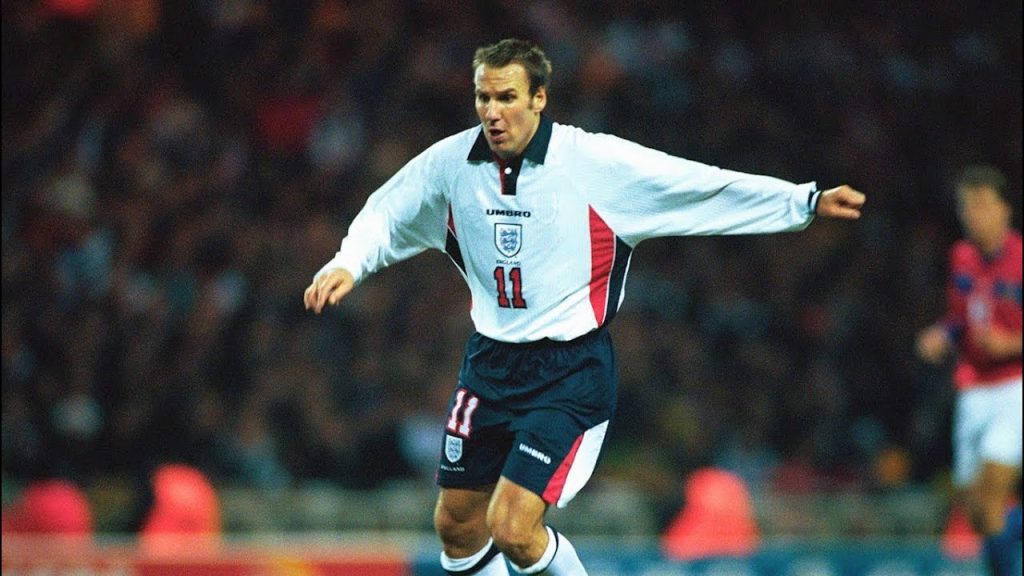
“Merse” was the creative fulcrum of a Boro side that reached the League Cup final and secured promotion. His form was so undeniable that Glenn Hoddle – a manager who prized technical ability above all else – included him in the squad for the 1998 World Cup in France. Merson is the only player in the modern era to be selected for a World Cup squad based entirely on performances in England’s second tier.
- Caps: 21, Goals: 3
4. Wilfried Zaha (Crystal Palace)
Before he declared for the Ivory Coast, Wilfried Zaha was the hottest property in English football. In 2012, he was terrorizing Championship full-backs with a blend of pace and trickery that was clearly “Premier League ready”.
Roy Hodgson couldn’t ignore the noise coming from Selhurst Park. Zaha was called up for a friendly against Sweden in November 2012 – the famous night Zlatan Ibrahimović scored that bicycle kick. Zaha became the first Championship outfield player to be capped by England since Jay Bothroyd two years prior.

While his England career didn’t last (eventually switching allegiance), his call-up remains a benchmark for young EFL talents dreaming of the top.
- Caps: 2, Goals: 0
5. Jack Butland (Birmingham City)
In 2012, Jack Butland was viewed as the future of English goalkeeping. At just 19 years old, and playing for Birmingham City in the Championship, he was thrust into the spotlight.
Roy Hodgson selected him for the Euro 2012 squad (though he didn’t play), and he made his debut shortly after in a friendly win against Italy. This made Butland the youngest-ever goalkeeper to play for England, a record that stood for decades.
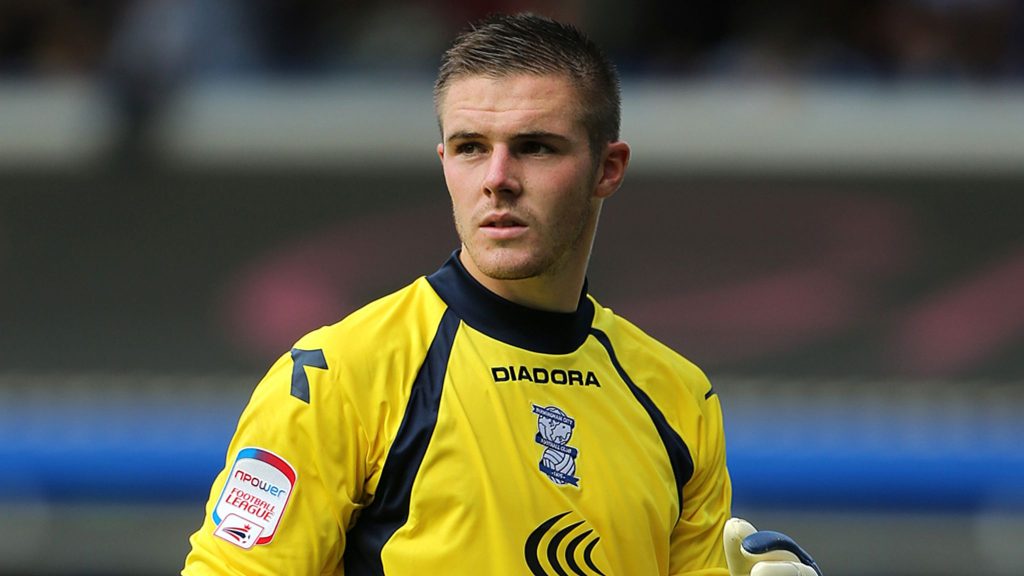
His inclusion highlighted a rare moment where England’s goalkeeping depth was so shallow that scouts were forced to look at England players called up from the Championship to fill the void.
- Caps: 9, Goals: 0
6. David Nugent (Preston North End)
David Nugent’s short-lived England career is the stuff of pub quiz legend, primarily because of the sheer audacity of his only international goal. In March 2007, Nugent was scoring for fun at Preston North End, prompting Steve McClaren to give him a cameo in a Euro 2008 qualifier against Andorra.
With England leading comfortably 2–0 in stoppage time, Jermain Defoe fired a low shot that beat the goalkeeper and was trickling destined for the bottom corner. It was, for all intents and purposes, Defoe’s goal. However, Nugent – desperate to make his mark – sprinted after the ball and slid in to smash it into the net from literally one inch out, “stealing” the glory from his teammate right on the goal line.
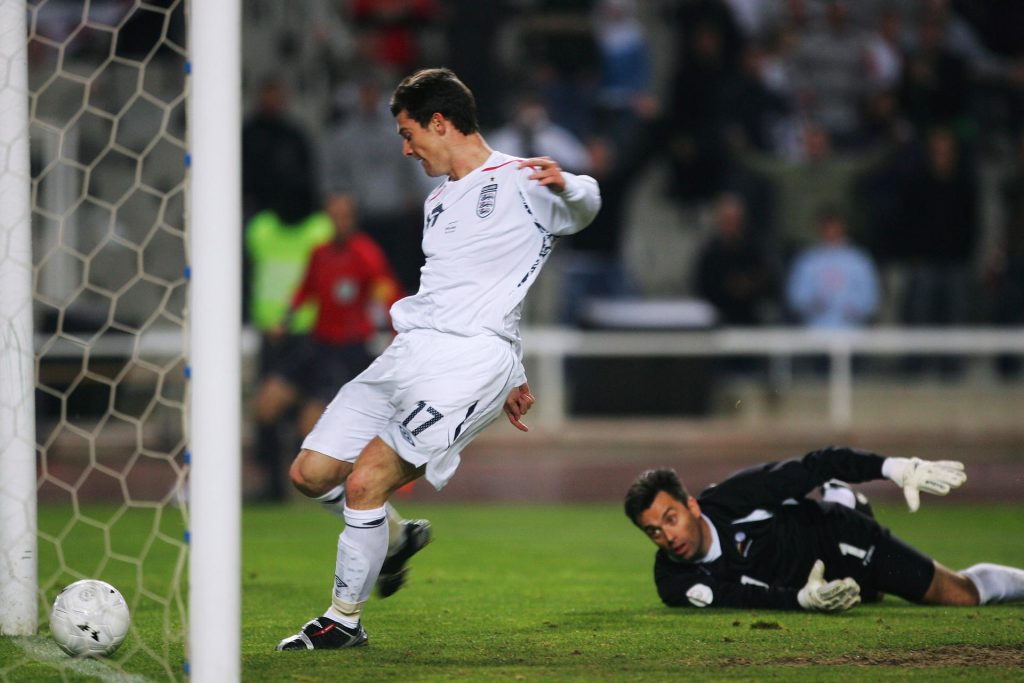
While Defoe threw his hands up in disbelief (half-annoyed, half-amused), Nugent celebrated wildly as if he had scored a 30-yard screamer. That “poacher’s instinct” ensured Nugent retired with a perfect international record: 1 cap, 1 goal, 100% strike rate.
To this day, fans still debate whether it was the “greatest goal-line clearance” against his own teammate or just a striker doing what strikers do.
- Caps: 1, Goals: 1
7. David James (West Ham United)
Similar to Stuart Pearce, David James was an established international who found himself in the second tier following West Ham’s relegation in 2003.
Usually, a relegated goalkeeper loses their spot immediately (see: Aaron Ramsdale or Sam Johnstone in recent years). However, Sven-Göran Eriksson stuck by “Calamity James”. He remained England’s number one choice for much of the season while playing Championship football, until a move to Manchester City in January 2004 secured his status ahead of Euro 2004.
- Caps: 53, Goals: 0
8. Jay Bothroyd (Cardiff City)
Perhaps the most surprising name on this list. In 2010, Fabio Capello was desperately searching for a target man to replicate the role of Emile Heskey. Jay Bothroyd was in the form of his life for Cardiff City, scoring goals for fun in the Championship.
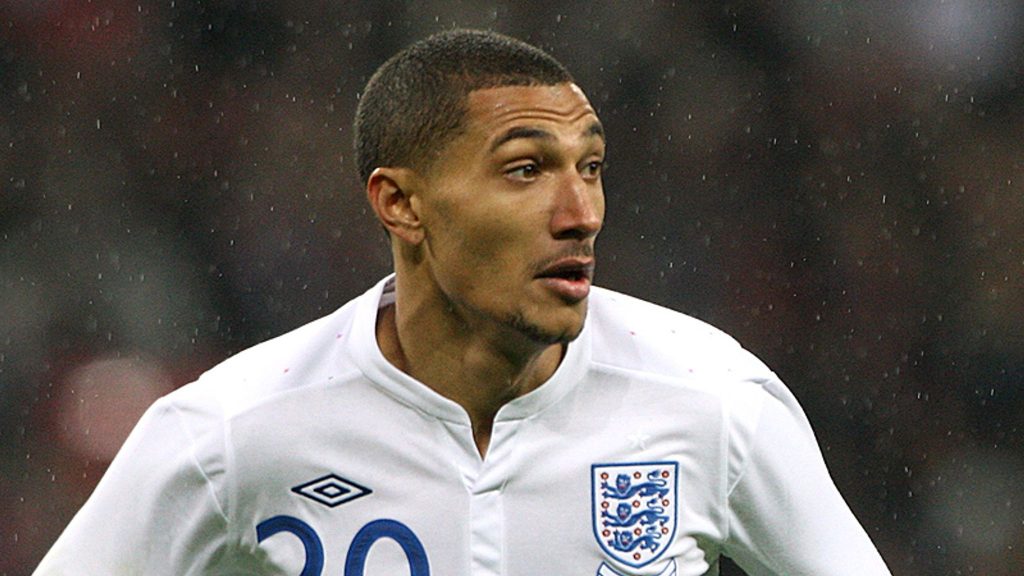
Capello shocked the nation by calling him up for a friendly against France at Wembley. Bothroyd came off the bench in a 1–2 defeat, looking somewhat out of his depth against top-tier French defenders. He never played for England again, but for 20 minutes, he lived the dream of every EFL striker.
- Caps: 1, Goals: 0
9. Sam Johnstone (West Bromwich Albion)
Gareth Southgate has often been criticized for having “favorites”, but he has also shown a willingness to stick by players he trusts, regardless of their club status.
When West Brom was relegated in 2021, Sam Johnstone had been one of the few shining lights. Instead of dropping him, Southgate kept him in the squad. Johnstone eventually made his debut against Andorra, keeping a clean sheet and even providing an assist (a quick throw-out) for Jack Grealish.
He proves that in the modern era, data analytics allow England managers to assess performance beyond just the league table.
- Caps: 4, Goals: 0
10. Michael Gray (Sunderland)
In 1999, Sunderland stormed the First Division (Championship) with a record-breaking points tally. Their football was so electric that Kevin Keegan felt compelled to call up their dynamic left-back, Michael Gray.
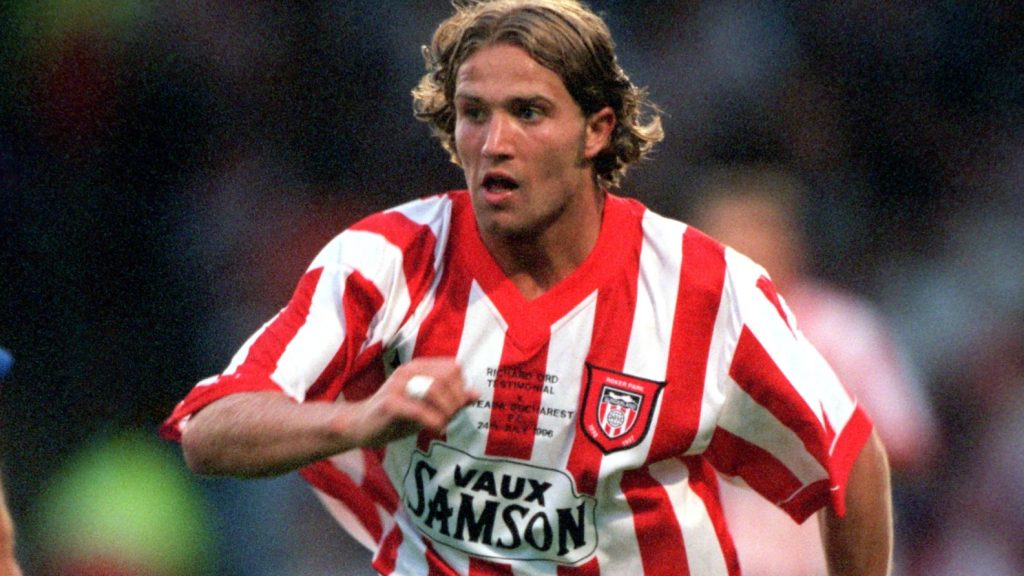
Gray made his debut against Hungary, becoming the first outfield player from the second tier to play for England in nearly a decade. While he didn’t become a regular, his call-up was a reward for one of the most dominant Championship team performances in history.
- Caps: 3, Goals: 0
Why Is It So Rare? (The “Championship Curse”)
Looking at this list of England players called up from the Championship, a pattern emerges. Most of these call-ups happen in specific circumstances:
-
An established star (Pearce, James) gets relegated but is too important to drop.
-
A young talent (Zaha, Butland) is so obviously destined for the top that the manager wants to secure them early.
-
A lack of depth in a specific position (Bothroyd, Nugent) forces the manager to cast a wider net.
The chasm between the top flight and the second tier is a universal reality in modern football, not just confined to the Premier League. Whether in England, Spain, or Italy, international managers share a common fear: that a player dominating a lower division might struggle with the elite tactical discipline and “speed of thought” required against world-class opposition like France, Germany, or Brazil.
However, the gap is closing. With the Championship now being one of the richest leagues in the world, the quality of coaching and physical conditioning means the transition is smoother than it was in the 1990s.
Honorable Mentions and The “Uncapped” Club
-
Mason Mount (Derby County): Before becoming a Chelsea regular, Mount was called up by Southgate in October 2018 while on loan at Derby. He didn’t play, but it signaled his future importance.
-
Kalvin Phillips (Leeds United): The “Yorkshire Pirlo” is often cited in this conversation. However, he actually made his England debut after Leeds achieved promotion to the Premier League (September 2020), though his call-up was earned through his Championship dominance.
-
Nathaniel Chalobah (Watford): Called up while at Watford in the Championship but remained an unused substitute.
