
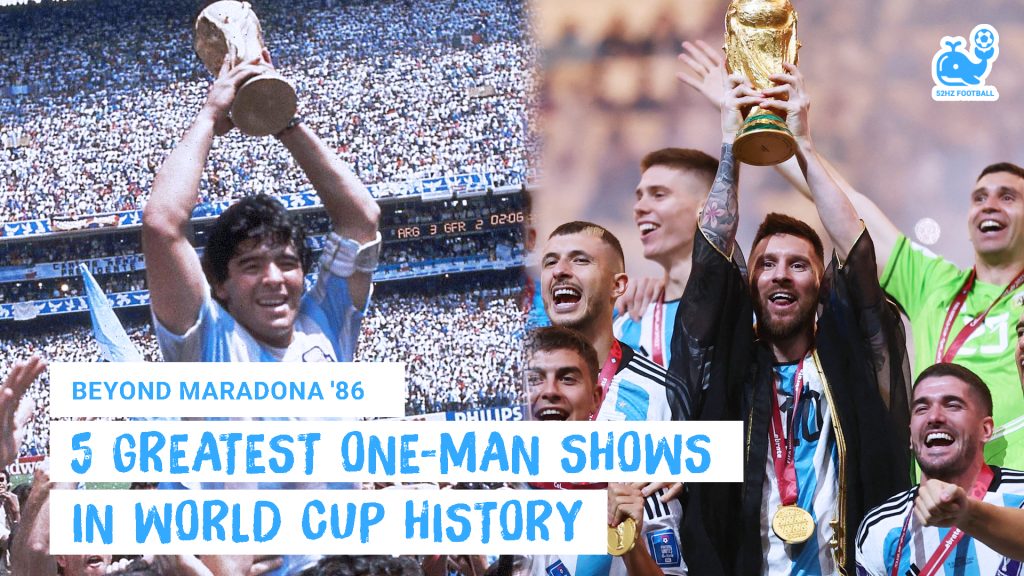
Football, they say, is a team sport. It is a game of systems, pressing traps, and collective structure. But every once in a while, the World Cup stage becomes too small for a team and perfectly sized for a single individual.
These are the rare moments where a player doesn’t just contribute; they transcend. They grab the tournament by the scruff of the neck, defy the logic of “11 vs 11”, and single-handedly drag their nation to immortality.
From the sands of Mexico to the deserts of Qatar, here are the 5 greatest individual campaigns in World Cup history.
5. Garrincha – Brazil (World Cup 1962)
This was the rarest of things: a true, unadulterated “one-man show”.
Going into the 1962 World Cup in Chile, Brazil was the favorite. But disaster struck early when Pelé – the king, the icon – tore a thigh muscle in the group stage and missed the rest of the tournament. The world expected Brazil to collapse.
Instead, Garrincha stepped out of the shadow.
“The Little Bird” was so magnificent that Brazil actually changed their entire tactical setup to serve him. The strategy was simple: give the ball to Garrincha on the right wing and let him do whatever he wanted. The rest of the team shifted to cover him so he could take risky 1v1 dribbles. In a high-stakes tournament like the World Cup, allowing a player to play on pure instinct is almost unheard of.
He finished as joint-top scorer with 4 goals, scoring decisive braces in the quarter-final and the semi-final against hosts Chile. But his value went beyond goals. When Brazil was stuck, the ball went to Garrincha. He was the outlet, the creator, and the finisher.
Garrincha didn’t shine alongside a superstar; he replaced the superstar.
Why is he often forgotten in GOAT debates? Perhaps because his career didn’t have the longevity of Pelé, or perhaps because his life off the pitch was tragic. But for three weeks in 1962, he was the best player on Earth.
4. Lionel Messi – Argentina (World Cup 2022)
The debate is over. The “Messi vs. Ronaldo” war that raged for 15 years ended the moment Messi lifted that trophy in Qatar.
Lionel Messi’s 2022 campaign was a masterclass in evolution. At 35 years old, he didn’t have the legs to run past five defenders anymore. Instead, he used his brain.
Critics will point to the four penalties he scored (out of 7 total goals), but focusing on penalties misses the point entirely. Argentina’s system was built to orbit around Messi. He walked to find space, dropped deep to collect the ball and dictated the tempo, switching play and threading passes that no other human could see (that assist against the Netherlands… are you kidding me?).
In the final against France, he didn’t just score twice; he was the spiritual anchor. When France equalized twice, it was Messi who kept the team calm.
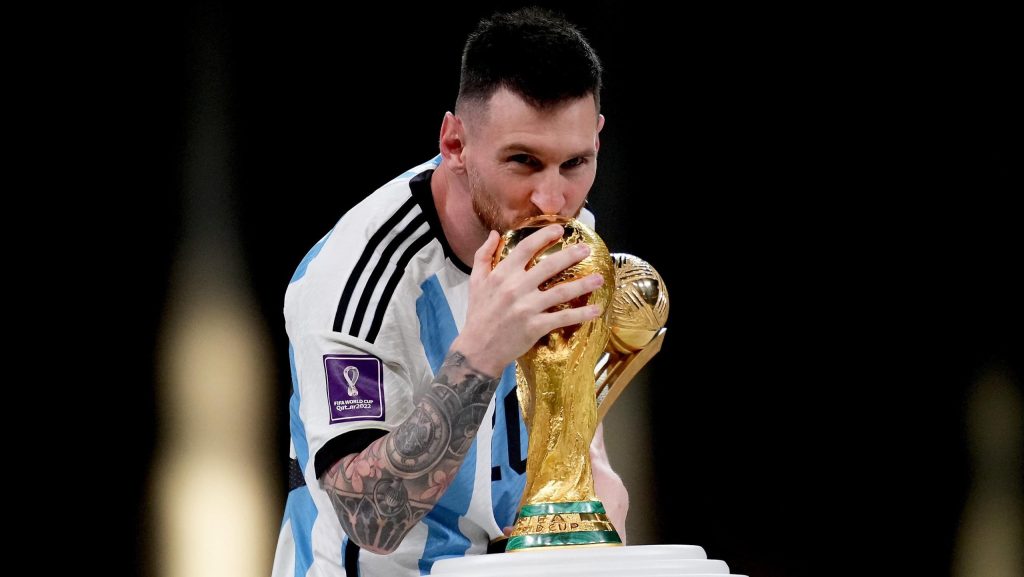
This wasn’t a “solo carry” in the chaotic style of 1986; it was a perfect harmony between individual brilliance and tactical leadership. It was the tournament where Messi finally combined his alien skill with the vocal leadership Argentina had been craving for decades.
3. Ronaldo Nazário – Brazil (World Cup 2002)
This performance wasn’t just about football; it was about overcoming tragedy.
Two years prior, Ronaldo’s knee had exploded. Doctors said he might never walk properly again, let alone play. Leading up to the 2002 World Cup in South Korea and Japan, the world was filled with doubt. was he finished? Was he too heavy?
Ronaldo answered with the most clinical display of striking we have ever seen. He scored 8 goals to win the Golden Boot – a tally that hadn’t been reached since 1970.
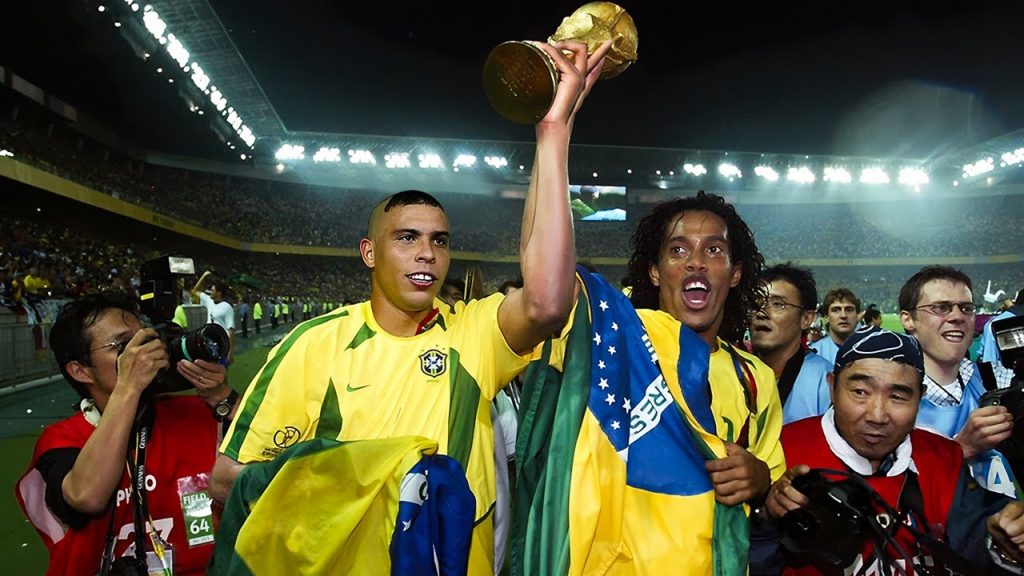
While that Brazil team was full of talent like Rivaldo and Ronaldinho, Ronaldo was the spearhead. He terrified defenses. His movement forced teams to sit deep, creating space for his teammates. And when the moments got biggest, he got colder. He scored the winner in the semi-final and a legendary brace against Oliver Kahn – the best goalkeeper in the world – in the final.
It was the ultimate striker’s performance: arrive, score, win, redeem.
2. Pelé – Brazil (World Cup 1958)
Yes, another Brazilian. But this is where the legend began.
Pelé at the 1958 World Cup is the “Big Bang” moment of modern football history. Imagine the pressure: Brazil was still traumatized by the 1950 World Cup failure. Into this cauldron stepped a 17-year-old kid.
Pelé started as a squad player and ended as a deity. He scored 6 goals, but look when he scored them: the only goal in the quarter-final, a hat-trick in the semi-final against France, and two goals in the final against Sweden.
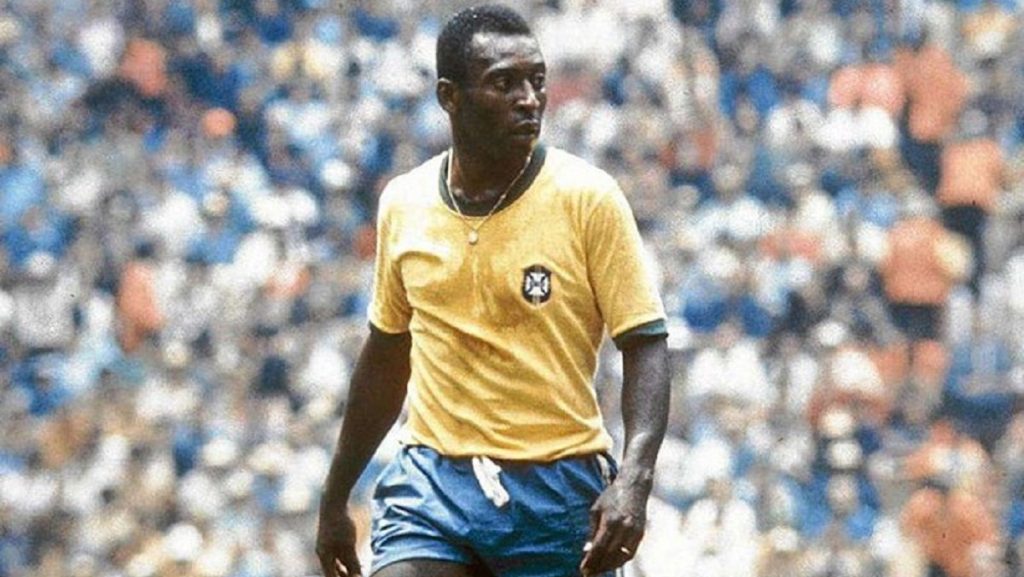
He remains the youngest player ever to score in a World Cup final. But it wasn’t just his youth; it was his maturity. He didn’t play like a teenager running on adrenaline; he played with the tactical intelligence of a veteran, combining beautifully with Vavá and Garrincha.
Pelé didn’t “carry” a weak team – Brazil was strong – but he was the spark that turned a good team into the greatest team the world had ever seen. He defined what it meant to be a “big game player”.
1. Diego Maradona – Argentina (World Cup 1986)
There is “carrying a team”, and then there is Diego Maradona in 1986.
This is widely considered the greatest individual performance in the history of team sports. It wasn’t just about the stats – though 5 goals and 5 assists (contributing to 10 of Argentina’s 14 goals) is absurd. It was about total, absolute domination.
The match against England encapsulated the duality of Maradona perfectly. The “Hand of God” showed his cunning and desire to win at all costs. Four minutes later, the “Goal of the Century” showed his divine talent.
Let’s be honest: Argentina’s tactic in 1986 was “Give the ball to Diego and pray”. He demanded the ball constantly, dribbled through entire midfields and unlocked defenses that were set up specifically to stop him.
While Messi in 2022 had a system built for him, Maradona in 1986 was the system. He dragged a good-but-not-great Argentina side to the summit of the world. Until someone else scores the goal of the century and punches the ball into the net in the same game, this record remains the benchmark.
