Whenever the transfer window opens, the football world descends into madness. A deluge of news – verified or otherwise – floods the headlines. It is a season of hope for some and despair for others. There are deals that seem impossible, fantasies concocted on message boards, that eventually get signed, sealed, and delivered, leaving the sporting world in a state of utter shock.
From the “Snake” Luis Figo crossing the ultimate divide to the €222 million “heist” that changed the global economy of the sport, the history of the transfer market is paved with broken promises and burning shirts.
Below is a detailed look at the 10 most explosive transfer sagas in modern history.
10. Antoine Griezmann – From Atlético Madrid to Barcelona (2019)
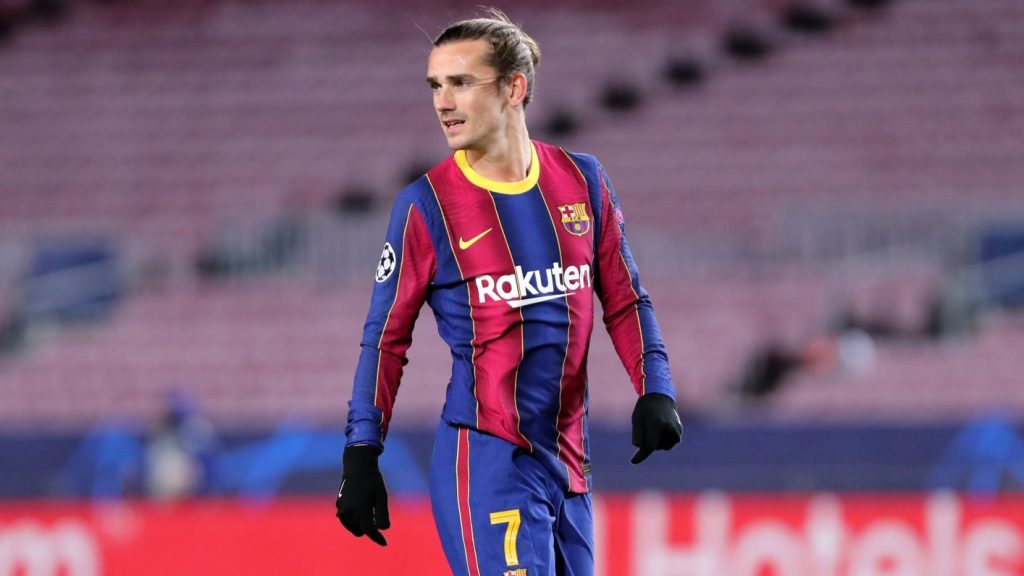
On July 12, 2019, Barcelona announced the signing of Antoine Griezmann after activating his €120 million release clause. On paper, it was a standard blockbuster deal. The French forward signed a five-year contract with an astronomical €800 million buyout clause to ward off future suitors.
However, the transfer immediately sparked a legal war. Atlético Madrid released an explosive statement claiming the deal was invalid. They alleged that Barcelona and Griezmann had reached a secret agreement back in March, when the player’s release clause was still €200 million. They argued that the player and Barcelona deliberately waited until July 1 – when the clause dropped to €120 million – to make the move official.
Atlético filed a formal complaint with the Spanish Football Federation (RFEF), demanding the missing €80 million. The conclusion to this high-stakes drama was almost comical: the RFEF found Barcelona guilty of “minor infractions” regarding negotiation timing and fined the Catalan giants a mere €300.
Despite the legal battle, Griezmann’s time in Catalonia was underwhelming. Struggling to fit into a system built around Lionel Messi, he scored just 35 goals in 102 games before shockingly returning to Atlético on loan in 2021, and permanently in 2022 for a fraction of his original price.
9. Zlatan Ibrahimović – From Inter Milan to Barcelona (2009)
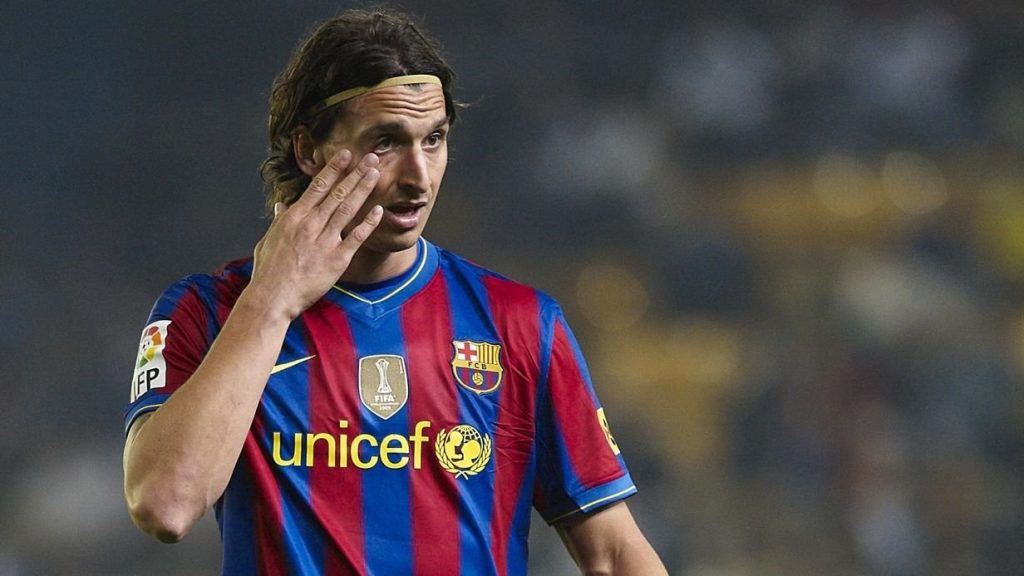
This was meant to be Pep Guardiola’s masterpiece. In a complex deal, Barcelona paid Inter Milan €46 million and sent superstar striker Samuel Eto’o – valued at €20 million – the other way. With the loan of Aleksandr Hleb included, the package totaled roughly €66 million.
Zlatan never flops. Statistically, his time at Barcelona was a success: 21 goals, a La Liga title, and a winner in El Clásico. However, he lasted only one season at Camp Nou.
The issue was a massive clash of personalities. As Guardiola shifted Lionel Messi into a central “False 9” role, Ibrahimović was marginalized. Zlatan famously wrote that Guardiola “bought a Ferrari but drove it like a Fiat.” The relationship disintegrated completely after Barcelona lost to Inter Milan in the Champions League semi-finals, leading to a locker room confrontation.
Guardiola shipped Zlatan to AC Milan the following summer. The irony? Samuel Eto’o – the man forced out for Zlatan – won a historic treble with Inter Milan that same season, eliminating Barcelona along the way.
8. Ronaldo Nazário – From Barcelona to Inter Milan (1997)
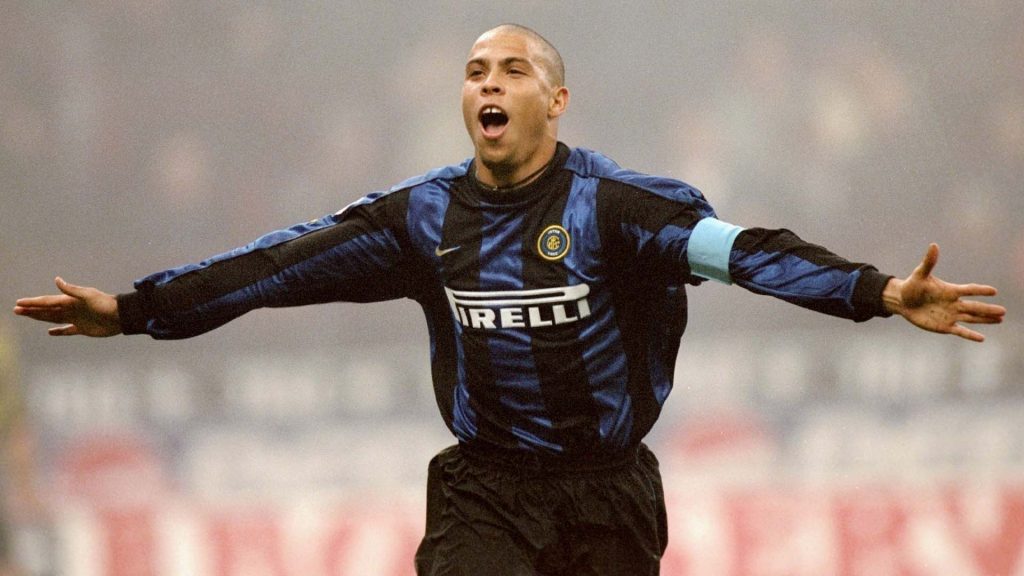
Ronaldo “O Fenômeno” played only one season for Barcelona (1996-97), but it was arguably the greatest individual season by any striker in history. Scoring 47 goals in 49 games, he was a force of nature who won the FIFA World Player of the Year award at just 20 years old.
Ronaldo wanted to stay. His agents and Barcelona president Josep Lluís Núñez had verbally agreed on a new long-term contract to keep the Brazilian star in Catalonia forever. They even celebrated the renewal with a handshake.
However, the very next day, the Barcelona board withdrew the offer, labeling the financial demands “absurd” and declaring they would sell him if any club met his buyout clause. Ronaldo felt betrayed. Massimo Moratti, the president of Inter Milan, didn’t hesitate. He paid the $27 million buyout clause – a world record at the time. It broke Catalan hearts and shifted the balance of power to Serie A.
7. Kylian Mbappé – From AS Monaco to PSG (2017)
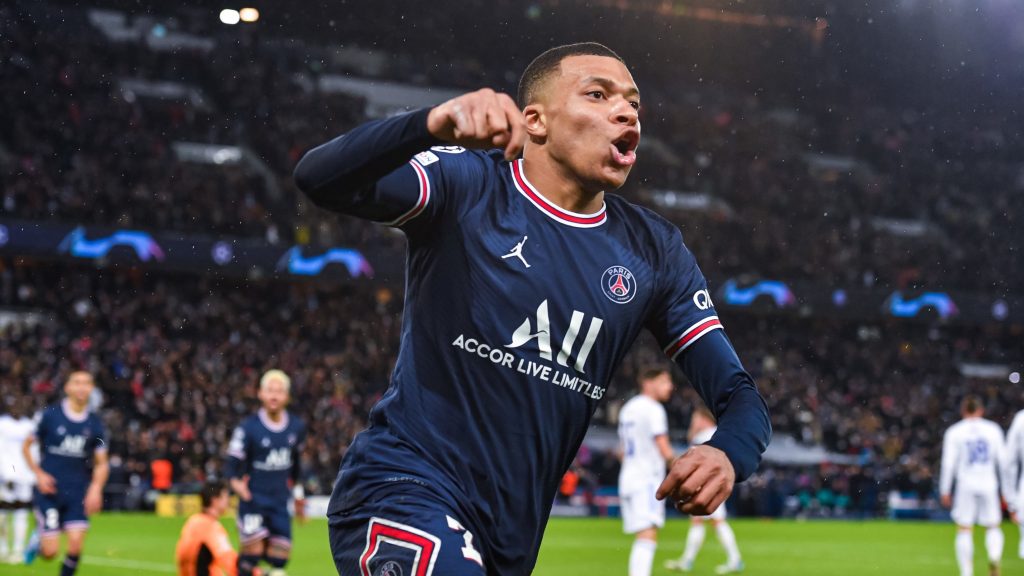
After leading AS Monaco to a Ligue 1 title and the Champions League semi-finals, teenage sensation Kylian Mbappé became the most coveted player in football. Real Madrid was the expected destination, but Paris Saint-Germain was desperate to assert dominance.
To comply with UEFA’s Financial Fair Play (FFP) regulations – having already shattered the world record for Neymar that same summer – PSG engineered a creative loophole. They signed Mbappé on a “loan” for the 2017-2018 season, with a mandatory purchase clause of €180 million to be activated the following year.
It was a rare instance of a mega-club weakening their direct domestic rival by poaching their best player. Mbappé proved the fee was justified, becoming PSG’s all-time top scorer. However, the bitterness lies in the lack of European silverware; despite the investment, the “project” failed to bring the Champions League trophy to Paris before he departed for Real Madrid in 2024.
6. Neymar – From Barcelona to PSG (2017)
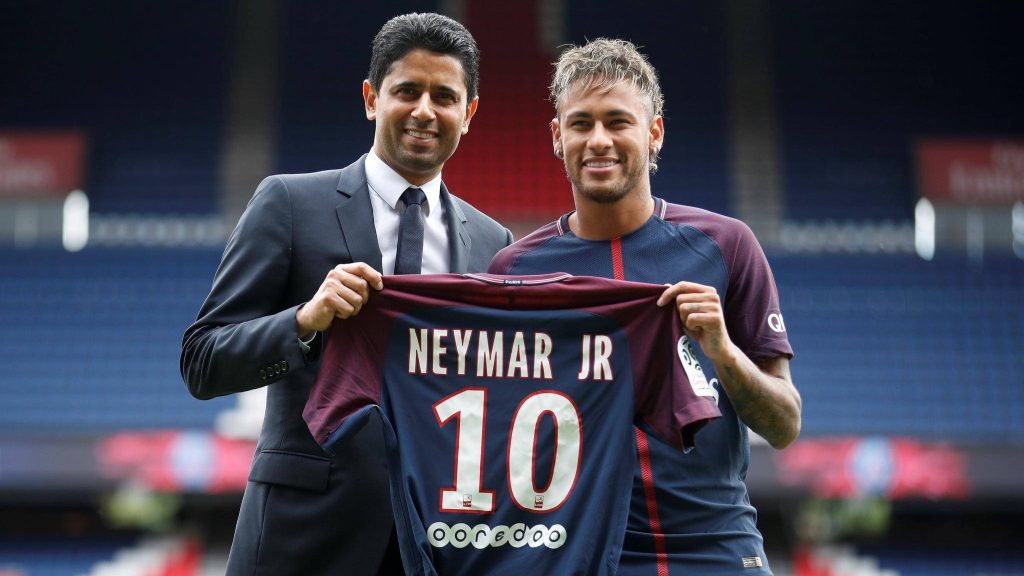
The transfer of Neymar from Barcelona to PSG for €222 million remains the most expensive in history, more than doubling the previous record. This deal single-handedly caused the hyper-inflation of the modern transfer market.
The saga was driven by Neymar’s ambition. Despite forming the legendary “MSN” trio with Messi and Suárez, Neymar reportedly felt he would always remain in Messi’s shadow at Camp Nou. He wanted to be the undisputed number one.
Barcelona’s board was arrogant, believing the €222 million release clause was a deterrent no club could afford. They were wrong. Backed by Qatar Sports Investments, PSG paid the fee in full. The move left Barcelona panic-stricken; flush with cash, they wasted the Neymar money on Ousmane Dembélé and Philippe Coutinho – two transfers now viewed as colossal failures.
5. Robin van Persie – From Arsenal to Manchester United (2012)
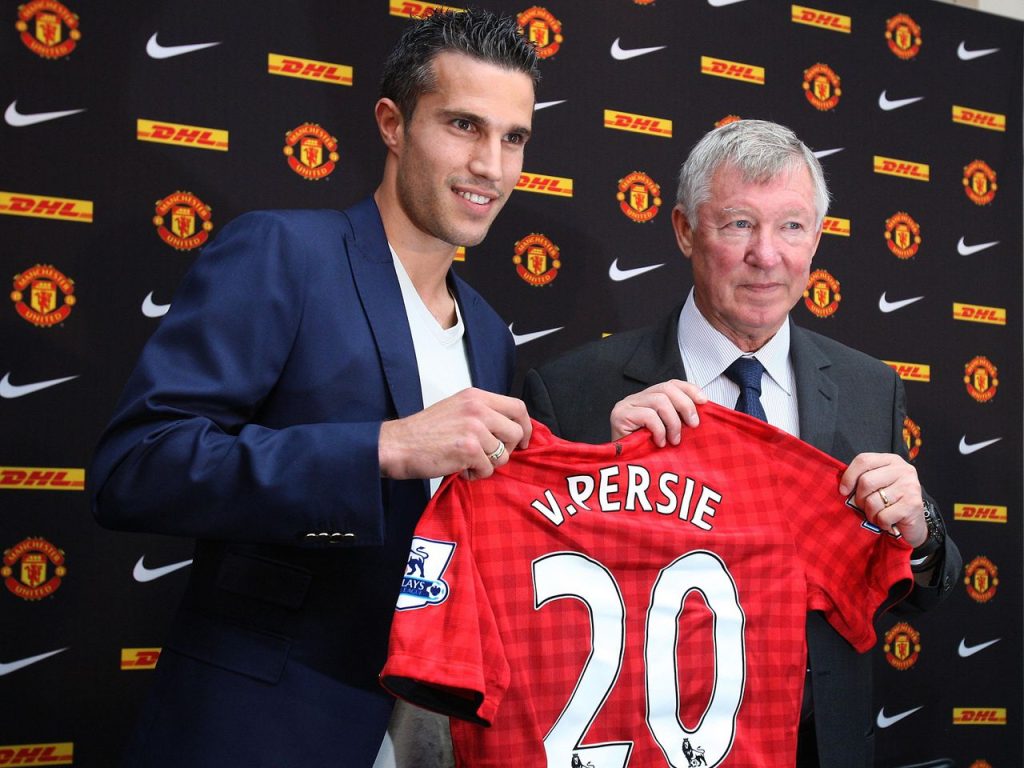
Robin van Persie spent eight years at Arsenal, evolving into the most lethal striker in the Premier League and serving as club captain. In the 2011/12 season, he was unstoppable, winning the Golden Boot with 30 league goals. However, his only major trophy with the Gunners was the 2005 FA Cup.
Desperate for silverware, he refused to sign a new contract. Instead of moving abroad, he joined Arsenal’s fierce rivals, Manchester United, for £24 million. In his unveiling, he famously stated: “I always listen to the little boy inside of me… That little boy was screaming for Manchester United.”
The betrayal was compounded by the result. Van Persie single-handedly fired United to their 20th league title in Sir Alex Ferguson’s final season. The ultimate humiliation came when he returned to the Emirates Stadium as a champion, forcing his former teammates to give him a Guard of Honor.
4. Fernando Torres – From Liverpool to Chelsea (2011)
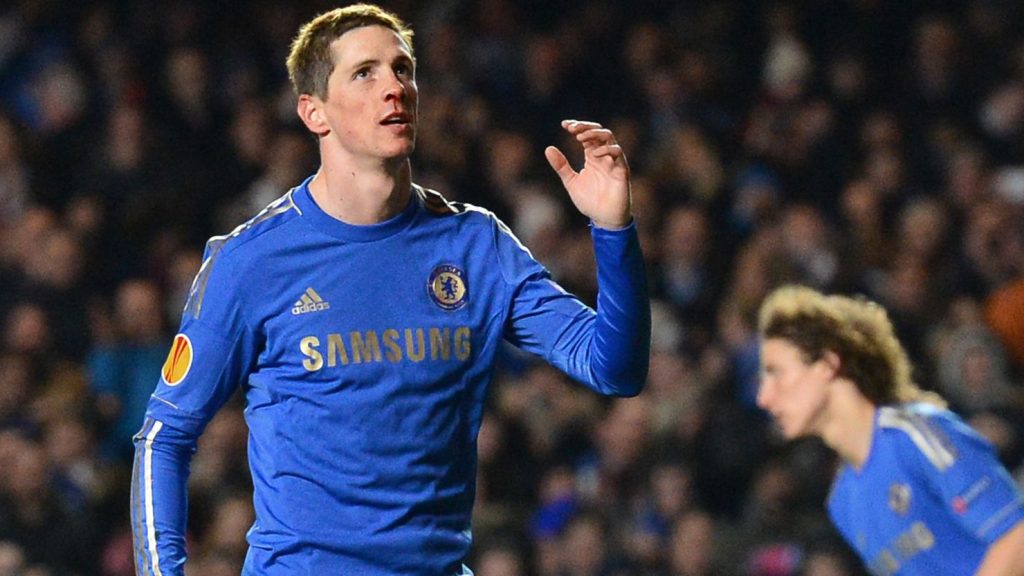
Fernando Torres was not just a striker for Liverpool; he was an idol adored by the Kop. But on the final day of the January 2011 window, Chelsea smashed the British transfer record, paying £50 million to bring “El Niño” to London.
Torres had handed in a transfer request, disillusioned by Liverpool’s decline. While Liverpool fans burned his shirt in the streets, Chelsea fans rejoiced. However, the Torres that arrived at Stamford Bridge was a shadow of his former self, seemingly having lost his explosive pace. He went 903 minutes without scoring his first goal.
His time at Chelsea is generally considered a flop, with only 45 goals in 172 games. However, he did repay a chunk of that fee with one specific moment in 2012: scoring the goal against Barcelona at Camp Nou that sent Chelsea to the Champions League final – a trophy they eventually won.
3. Sol Campbell – From Tottenham to Arsenal (2001)
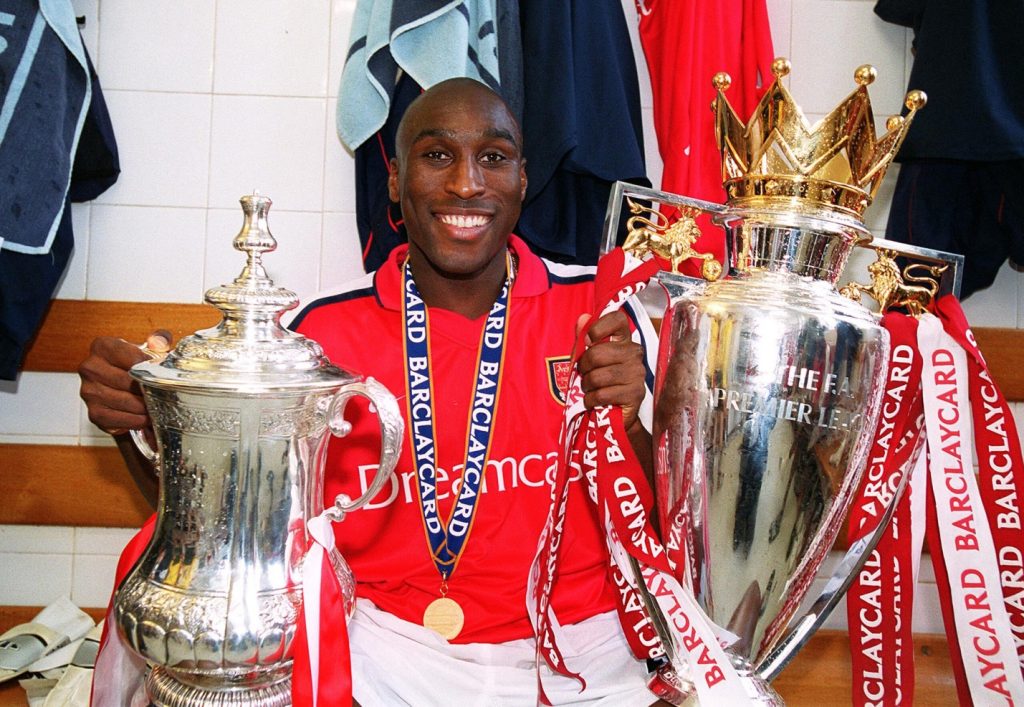
Direct transfers between North London rivals Tottenham and Arsenal are rare. But for the captain of one to join the other on a free transfer? That is unforgivable.
In 2001, Sol Campbell was the heart and soul of Tottenham. His contract was expiring, but he publicly promised Spurs fans he would never play for Arsenal. He lied. Driven by a desire to play Champions League football, Campbell held secret meetings with Arsenal manager Arsène Wenger.
When he walked out at a press conference, journalists thought they were there to see a new backup goalkeeper. When Campbell emerged, jaws dropped. He was instantly branded “Judas” by Spurs fans – a nickname that sticks to this day. The move was vindicated on the pitch, however. Campbell became a rock for Arsenal’s “Invincibles,” winning two Premier League titles.
2. Carlos Tevez – From Manchester United to Manchester City (2009)
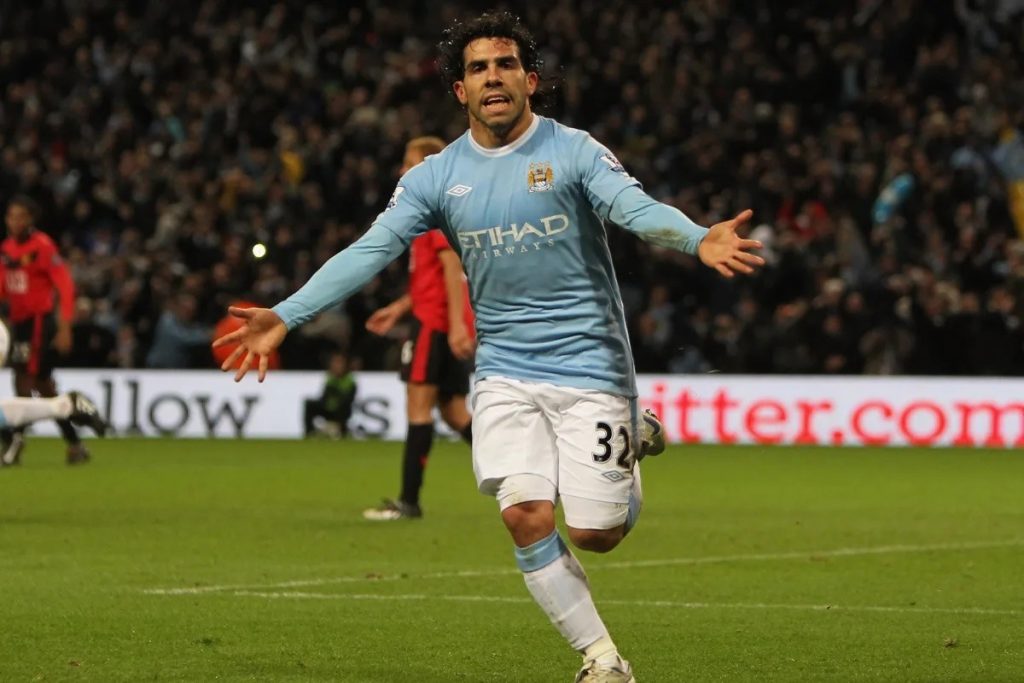
Carlos Tevez spent two years on loan at Manchester United, forming a deadly trio with Rooney and Ronaldo and winning the Champions League. However, United hesitated to pay the full fee to buy him outright, and Tevez grew frustrated with his lack of playing time.
Manchester City, newly rich thanks to their Abu Dhabi owners, swooped in. They paid the fee and convinced Tevez to cross the city lines.
It wasn’t just the transfer; it was the marketing. City erected a massive blue billboard in the city center with a picture of Tevez and the slogan “Welcome to Manchester.” It was a direct dig at United (whose stadium is technically outside the city boundaries). Sir Alex Ferguson was furious, calling City a “small club with a small mentality.” Tevez went on to captain City to the FA Cup and their historic 2012 Premier League title.
1. Luis Figo – From Barcelona to Real Madrid (2000)
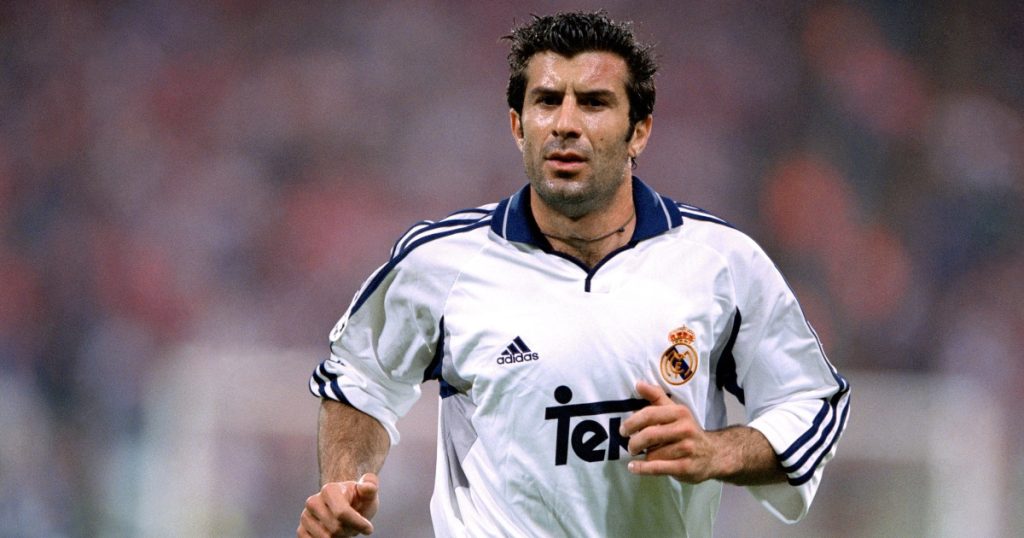
No transfer in the history of football carries the weight of hatred quite like Luis Figo moving from Barcelona to Real Madrid. For five years, Figo was the prince of Catalonia, the captain, and the symbol of Barcelona’s identity.
The move originated from a wild election promise by Florentino Pérez, who was running for the Real Madrid presidency. Pérez signed a secret pre-contract with Figo: if Pérez won the election, Figo would move. If Figo backed out, he would have to pay a massive €30 million penalty. Figo allegedly signed it thinking Pérez would never win, simply wanting leverage for a better contract at Barça.
But Pérez won. Real Madrid paid the world record €62 million release clause, and Figo, trapped by the penalty clause, had to move.
He went from hero to hate figure overnight. When he returned to Camp Nou in a white shirt, the noise was deafening. The defining image of the rivalry occurred in 2002, when a fan threw a severed pig’s head onto the pitch near Figo as he took a corner. Figo thrived in Madrid, winning the Ballon d’Or and two La Liga titles, but in Barcelona, he remains the ultimate traitor.
