
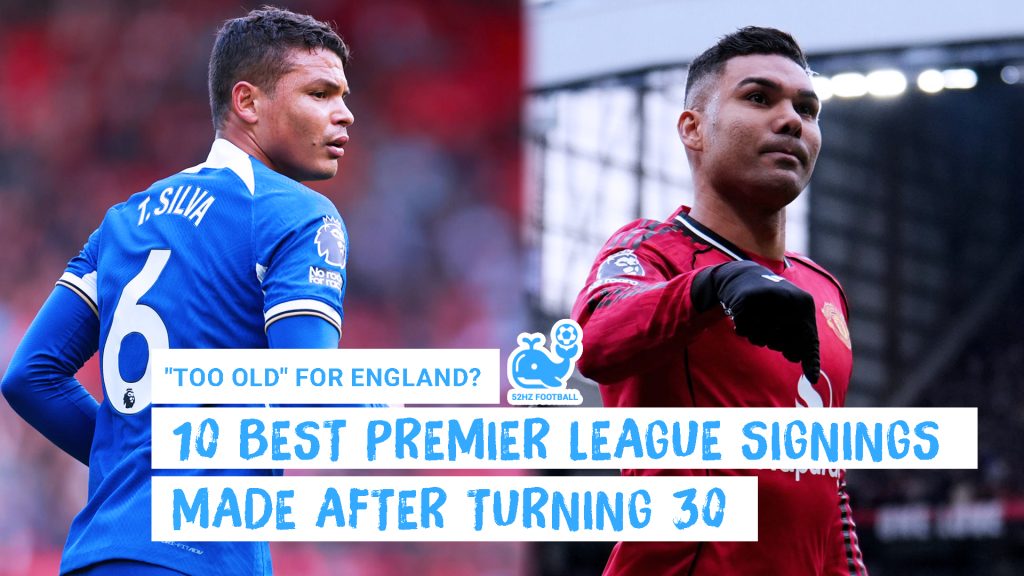
In the unforgiving world of modern football, turning 30 is often viewed as the beginning of the end. It is usually the time when players start packing their bags for the MLS, the Middle East, or China to enjoy lucrative retirement contracts. The Premier League, with its frantic pace and physical brutality, is simply not a place for the slow.
However, the most exciting league on the planet has witnessed some proud exceptions. There is a select group of “Grandmasters” who proved a simple truth: When the legs begin to tire, the brain truly starts to speak.
Here are 10 veterans who defied the clock.
1. Laurent Blanc
In the summer of 2001, Sir Alex Ferguson caused a seismic shock by selling Jaap Stam – the best defender in the world at the time – and bringing in Laurent Blanc, a player who was already 35. The whole of England laughed at Sir Alex, calling Blanc a “slow old man” as Man Utd lost consecutive games early in the season.
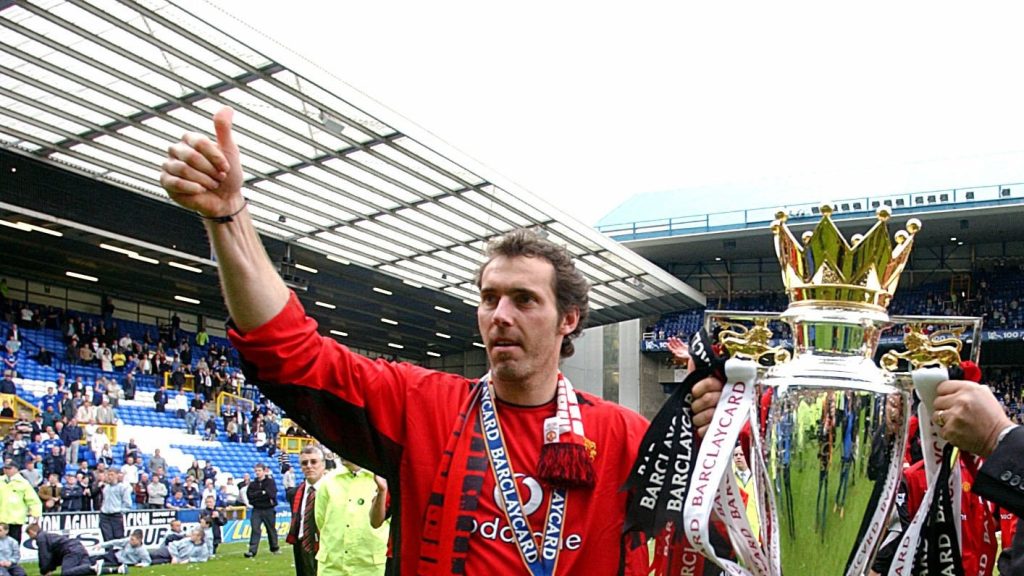
Blanc could never beat a young striker in a 40-meter sprint, but he always won the first 10 meters in his mind. Blanc played football like a chess grandmaster. He didn’t need to run much because he knew where the ball would be two seconds before anyone else. “Le Président” brought supreme calmness and an elite ability to read the game to stabilize a chaotic defense.
At Manchester United, Blanc’s greatest legacy wasn’t just the 2002/03 Premier League title at age 37, but the fact that he taught youngsters like Rio Ferdinand how to hold position, proving that: A world-class defender doesn’t need to tackle if he is standing in the right place.
2. Thiago Silva
When Thiago Silva joined Chelsea at age 35, PSG believed he was finished. But four years at Stamford Bridge turned him into a living legend.
Silva is the combination of a yoga master’s flexibility and an architect’s brain. At 38, he still possessed the best interception and passing accuracy stats in the Chelsea squad. Silva’s secret lay in his ability to “predict”. He never rushed into blind challenges; he used his body language to manipulate opponents into walking into positional traps he had already set.
The 2021 Champions League title was a fitting reward for a player who turned age into an advantage of experience.
3. Edwin van der Sar
Man United‘s Sir Alex once admitted his biggest mistake was not signing Van der Sar sooner. It wasn’t until he was 34 that the “Flying Dutchman” finally landed at Old Trafford.
Van der Sar played at the absolute peak until he was 40. The difference between him and younger goalkeepers was absolute concentration and defensive organization. He didn’t need to make Hollywood saves because he had already instructed the defenders in front of him to plug every gap moments earlier.
At the end of the day, his record of 1,311 consecutive minutes without conceding was the result of a brain that never knew fatigue.
4. Gary McAllister
The McAllister before Alexis Mac Allister…
When Liverpool signed McAllister at age 35 from Coventry, fans were furious, labeling it a “panic buy”. But McAllister responded with one of the greatest individual seasons in the club’s history.
McAllister possessed a tactical vision from a different dimension. He was the metronome, the set-piece specialist, and the man who made the clutch decisions that helped Liverpool win the Treble in 2001. That free-kick goal against Everton in stoppage time was a testament to the composure that only those who have tasted every bitterness of football can possess.
5. Esteban Cambiasso
In 2014, Esteban Cambiasso joined newly promoted Leicester City at age 34. People thought he came for a paycheck, but Cambiasso came to save a football club.
Cambiasso was a manager on the pitch in the literal sense. He organized teammates, plugged every gap, and transmitted a winning DNA to the younger players. Without Cambiasso’s experience helping Leicester pull off their miraculous survival that season, there would almost certainly have been no fairytale Premier League title in 2016. He stayed for only one year, but his influence was eternal.
6. Youri Djorkaeff
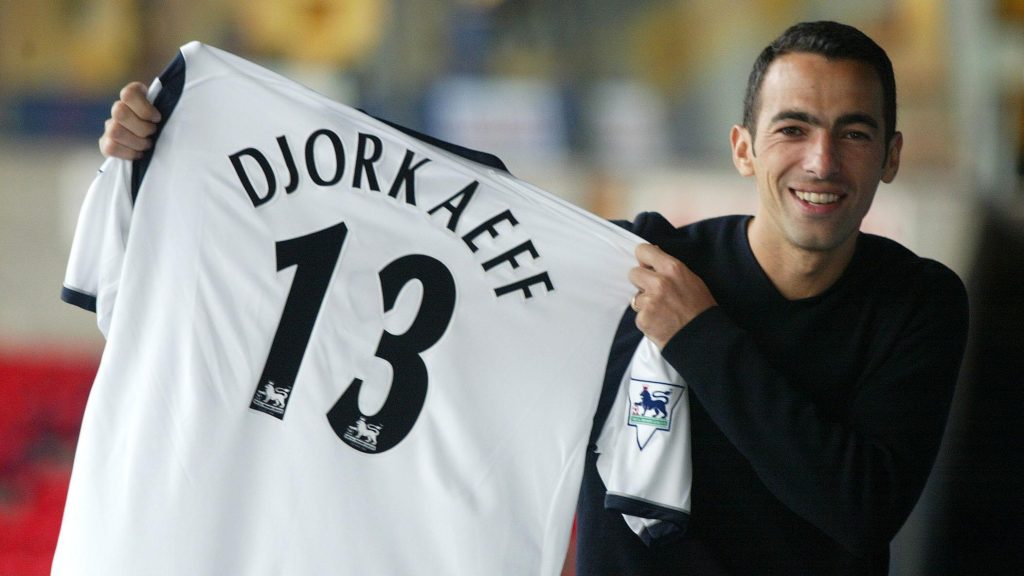
Bolton in the early 2000s was a “rough and tumble” team, until Youri Djorkaeff arrived at age 33.
The 1998 World Cup winner brought French artistry to neutralize Bolton’s rigid style. At 33, his feet were still incredibly quick, but more important was his limitless creativity. Djorkaeff taught the Premier League that a luxury player could still shine brightly at a smaller club if he possessed superior intellect.
7. Zlatan Ibrahimović
“Lions do not compare themselves to humans.”
Zlatan arrived at Man Utd at age 34 with a massive ego and immense pressure.
Zlatan didn’t run much; he chose to stand exactly where the ball would find him. His hold-up play and finishing technique at 34 were still terrifying. Scoring 28 goals in his debut season proved that a world-class assassin never loses his touch. He didn’t just score; he brought back the confidence and swagger of a conqueror, something Man Utd had lost since Sir Alex retired.
8. Edinson Cavani
Arriving at Old Trafford at age 33, Cavani was the symbol of dedication.
Cavani’s movement at age 33-34 was still considered the textbook standard for young strikers. He didn’t need blistering speed to escape defenders; he used feints and instinct to be in the right place at the right time.
At Manchester United, Cavani taught the likes of Rashford and Greenwood that goals sometimes don’t come from powerful legs, but from a sharp mind.
9. Gianfranco Zola
Zola joined Chelsea at 30, but his best years were remarkably between the ages of 32 and 36.
At 36, Zola still scored 14 Premier League goals in his final season. He played with endless inspiration. His curling free-kicks and ability to maneuver in tight spaces seemed to defy the laws of aging.
He was living proof that individual technique and tactical thinking can completely compensate for physical decline.
10. Casemiro
When Casemiro traded the glory of Real Madrid for a struggling Manchester United at age 30, critics called it a “panic buy” or one last massive payday. They said his legs were gone.
But the five-time Champions League winner responded with a masterclass in positioning and mentality. He didn’t run like a 20-year-old box-to-box midfielder; instead, he operated as the “cement” between the stones, extinguishing fires before they even started. His goal in the Carabao Cup final and his leadership in securing a Top 4 finish in his debut season (2022/23) were pivotal.
While his physical decline became more apparent in later seasons, his initial impact proved that a world-class defensive midfielder relies more on anticipation and reading the game than on pure speed. He taught a fragile team what a true winner’s mentality looks like.
