
Manchester United can announce record revenue and still face difficult decisions over how much to spend on their squad.
A closer look at the Manchester United financial statements helps explain that apparent contradiction. Revenue measures business activity. It does not tell supporters how much cash remains after wages, transfer instalments, interest and investment in facilities.
United’s latest accounts show genuine improvement in parts of the business. They also show why that improvement has not produced unrestricted financial freedom.
The central question is how much of the money United generate is already committed before another player arrives.
1. Record Revenue Conceals an Uneven Recovery
United’s revenue increased, but the individual streams moved in different directions.
| Revenue stream | FY2025 | FY2026 |
|---|---|---|
| Commercial | £333.3m | £317.3m |
| Broadcasting | £172.9m | £206.8m |
| Matchday | £160.3m | £153.5m |
| Total | £666.5m | £677.6m |
Figures follow the club’s rounded presentation.
Broadcasting carried the overall increase. United attributed that improvement primarily to finishing third in the Premier League rather than 15th, despite having no UEFA competition in 2025/26. Commercial and matchday revenue both declined.
That changes how the record should be interpreted.
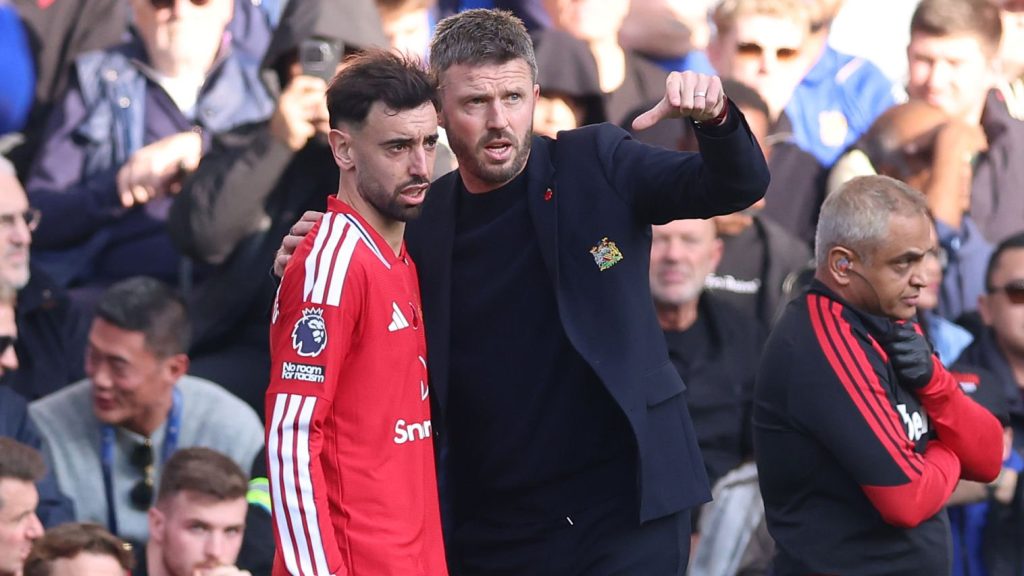
A recovery in league position can restore substantial income without demonstrating that every part of the business has become stronger. Conversely, fewer home fixtures can reduce matchday revenue even when demand for tickets remains healthy.
The commercial breakdown deserves particular attention. Sponsorship income fell following the expiry of the Tezos training-kit agreement. Retail growth, meanwhile, benefited from a full year under the revised e-commerce model and a one-off contractual credit whose value was not separately disclosed.
- READ MORE:
Which Firms Audit Premier League Clubs? Who Audits Manchester City?
For financial analysis, the distinction is between repeatable growth and improvements that depend on timing, contract changes or sporting recovery.
A one-off credit can be perfectly legitimate income. It still cannot automatically be projected into every future year.
The missing bridge is therefore the amount of retail growth that would remain after removing the extra reporting months and that credit. Without it, the headline growth rate is an incomplete guide to the underlying trend.
2. Player Sales Still Determine Whether Operating Profit Is Positive
The next question concerns the quality of United’s reported profit.
| Profit measure | FY2025 | FY2026 |
|---|---|---|
| Operating result before disposal gains | −£67.2m | −£24.2m |
| Gains on intangible-asset disposals | £48.7m | £46.9m |
| Reported operating result | −£18.4m | £22.6m |
| Net result after finance and tax | −£33.0m | −£43.0m |
The audited annual accounts show that disposal gains turned a negative operating result into a positive one. They also show a substantial improvement in the result before those gains.
Both findings matter.
It would be misleading to dismiss the recovery: the pre-disposal operating deficit narrowed by approximately £42.9 million. Equally, the business had not yet reached operating profitability before player trading.
This measure includes exceptional costs, so it should not be confused with a specially adjusted measure of recurring earnings. It is useful because it reveals how much the final operating result depended on disposals.
Player-sale profits are a normal part of football economics. Their sustainability depends on whether a club can repeatedly realise those profits while maintaining a competitive squad.
- READ MORE:
English Clubs Punished for Financial Breaches: What Could Happen to Manchester City?
There is also a difference between a sale price, an accounting gain and cash received.
For a simplified example, selling a player for £40 million when his remaining carrying value is £15 million produces a £25 million gain before transaction costs. Payment by instalments could mean that considerably less than £40 million reaches the bank immediately.
A profitable sale can therefore improve the income statement without funding an equivalent purchase straight away.
United’s recruitment model must be judged across those three dimensions: sporting value, accounting return and cash timing.
3. A Falling Receivables Provision Does Not Necessarily Mean Customers Paid
One of the more revealing disclosures appears in the notes on trade receivables.
United’s allowance for potentially unrecoverable receivables fell sharply. The reconciliation explains how:
| Movement in receivables loss allowance | FY2026 |
|---|---|
| Opening allowance | £20.4m |
| Additional provision | +£1.7m |
| Reversal following cash collection | −£2.8m |
| Receivables written off | −£13.9m |
| Closing allowance | £5.4m |
The write-offs included receivables removed immediately under a contract variation with an unnamed commercial partner. The report does not separately quantify that component. See Note 30.1(b) of the annual financial statements.
This is why the closing balance alone is insufficient.
An allowance can fall because a customer pays, because an estimate improves, or because a receivable is finally removed from the books. Those events have different economic meanings.
Here, write-offs accounted for most of the reduction.
That does not mean the entire £13.9 million became a fresh expense in FY2026. Where an existing allowance already covers a receivable, writing it off normally removes both the receivable and the corresponding allowance. Treating the write-off as another identical loss would double-count the effect.
The commercial substance nevertheless deserves examination.
If contractual rights to payment are surrendered during renegotiation, analysts need to understand what the club receives in exchange: revised future rights, a settlement, continued business or some other consideration.
The public disclosure does not provide that complete explanation.
The appropriate follow-up would be to examine the original agreement, the variation and the settlement terms. Naming a particular sponsor or assuming the entire balance reflects unpaid sponsorship would go beyond the evidence.
The broader lesson is simple: revenue recognised and revenue ultimately collected must be assessed separately.
4. Operating Cash Improved, but Investment Still Consumed More
The cash-flow statement provides a more direct answer to where the money went.
| FY2026 cash movement | Amount |
|---|---|
| Net cash from operating activities | +£178.7m |
| Property, plant and equipment payments | −£85.9m |
| Intangible-asset payments | −£292.3m |
| Intangible-asset disposal receipts | +£148.6m |
| Net investing cash flow | −£229.6m |
Operating cash flow improved from £72.7 million in the previous year. Nevertheless, investing outflows exceeded operating inflows by approximately £50.9 million, before financing. The figures are disclosed in the FY2026 consolidated cash-flow statement.
That £50.9 million is an analytical comparison, rather than a company-defined free-cash-flow measure.
It explains why stronger operations did not automatically produce a larger cash reserve. The business generated more cash, but payments for players and physical assets absorbed more than it generated.

There are two further details to examine.
First, disposal receipts benefited partly from financing arrangements involving transfer receivables. Such arrangements bring forward cash associated with amounts otherwise collectible later. Their benefit is liquidity today; their economic cost can include financing charges and reduced future receipts.
The accounts discuss that effect within investing cash flow. It should not be used to explain away the improvement in operating cash flow.
Second, physical investment included approximately £63.5 million for property and land associated with the proposed new stadium, as explained in the annual report.
Land can be a valuable long-term investment while placing immediate demands on cash.
Because its cost is capitalised, the payment does not appear as an equivalent current-year operating expense. Looking only at profit would therefore miss an important use of funds.
This creates a capital-allocation question: how should United balance investment in future infrastructure against the needs of the current team?
The accounts identify the competing demands. They cannot establish the ideal allocation between them.
5. Lower Revolving Borrowings Did Not Mean Lower Overall Debt
A reduction in one borrowing facility can give an incomplete impression of financial progress.
| Balance at 30 June | 2025 | 2026 |
|---|---|---|
| Total borrowings, carrying amount | £637.0m | £689.0m |
| Cash and cash equivalents | £86.1m | £67.2m |
| Net debt under the club’s definition | £550.9m | £621.7m |
| Revolving credit facility drawn | £160.0m | £110.0m |
United’s revolving balance fell, while total borrowings and net debt increased. The borrowing details and net-debt reconciliation appear in Notes 25 and 27 of the annual report.
The refinancing helps explain the apparent contradiction. United replaced their previous senior notes with a larger issue and extended the relevant long-term maturities to June 2031.
Extending maturities can improve financial resilience by reducing the amount that needs refinancing soon. Increasing principal also leaves the business with a larger obligation.
Those outcomes can occur together.
Interest expense also requires careful reading. United reported net finance costs of £69.6 million, but cash interest paid was £38.9 million. The income-statement figure includes items such as foreign-exchange movements and discount unwinding.
Calling all £69.6 million a cash interest payment would exaggerate the immediate drain. Ignoring the actual cash interest would understate the recurring burden on funds available elsewhere.
Liquidity disclosures provide another necessary distinction.
The £290 million undrawn revolving capacity reported at June was borrowing headroom, rather than money already held in the bank. Subsequent disclosures show the drawn balance reaching £200 million on 21 September. June’s headroom should therefore not be presented as an available transfer budget in November.
A facility also supports seasonal working capital and existing commitments. Drawing it creates another repayment obligation.
United reported covenant compliance and prepared their accounts on a going-concern basis. The evidence supports a discussion of financial flexibility and financing costs; it does not establish an immediate inability to meet obligations.
6. Previous Transfers Continue to Compete With the Next Transfer Window
Transfer spending is often discussed as though every window begins with a clean balance sheet.
The contractual payment schedule says otherwise.
| Transfer-related carrying balances at 30 June 2026 | Payables | Receivables |
|---|---|---|
| Within one year | £218.4m | £25.0m |
| After more than one year | £156.7m | £42.9m |
| Total | £375.0m | £67.9m |
Current amounts are calculated by subtracting disclosed non-current balances from the respective totals.
These figures come from the transfer-related disclosures in Notes 19 and 24. Transfer payables had declined from £447.1 million a year earlier, representing genuine progress.
The remaining commitments are still substantial.
A club can reduce new purchases while continuing to make large transfer payments, because instalments on earlier acquisitions remain due. Conversely, it can announce an expensive signing while paying only part of the price immediately.

That is why a transfer-window spending table cannot explain the cash-flow statement on its own.
The comparison above also has limits. The balances are accounting carrying amounts, payment dates vary, and receivables cannot necessarily be matched against particular liabilities. It is not a forecast that United will suffer a cash shortfall equal to the difference.
Nor should transfer payables be silently added to the club’s published net-debt figure and described as the same measure.
For recruitment planning, however, the implication is clear: existing instalments occupy part of the payment capacity before another negotiation begins.
A new player adds more than a headline fee. Wages, bonuses, agents’ costs and future instalments can commit resources across several seasons.
7. The £881 Million Intangible-Asset Balance Is Not a Squad Valuation
United’s intangible assets also need to be separated into their components.
| Intangible assets at 30 June 2026 | Carrying value |
|---|---|
| Player and other registrations | £452.3m |
| Goodwill | £421.5m |
| Other intangible assets | £7.5m |
| Total | £881.3m |
Goodwill arose largely from the 2005 acquisition of Manchester United Limited. Registration amortisation during FY2026 was £208.4 million, according to Note 16 of the audited accounts.
Neither figure represents cash available for recruitment.
Registration carrying values generally reflect capitalised acquisition costs less accumulated amortisation and any impairment. They do not provide a current transfer-market valuation.
An academy graduate can have substantial sporting and resale value while carrying little acquisition cost in the accounts. A purchased player can retain a significant carrying value despite disappointing performances.
This difference also explains why selling academy players can produce substantial accounting gains. It does not establish that selling them is the best football decision.
Goodwill involves another valuation process. Its recoverability depends on forecasts for the football business rather than the price of an individual player.
United’s impairment model used five-year forecasts, a 2% terminal growth rate and a pre-tax discount rate of 10.1%, down from 11.3%. Management reported substantial valuation headroom and no impairment.
A lower discount rate increases the present value of the same future cash flows, all else equal. Forecast competition performance and revenue assumptions also matter.
An analyst should therefore examine whether those assumptions remain reasonable as circumstances change. A poor run of matches does not mechanically require an impairment, but sustained underperformance can alter the forecasts supporting the asset.
Even a fully supportable goodwill balance cannot fund a wage payment.
8. PwC Identified Where Significant Accounting Estimates Sit
The audit report helps identify which accounting areas required particularly demanding work.
PwC issued an unmodified opinion and identified two critical audit matters: commercial revenue recognition and estimates of contingent consideration for registrations.
Commercial contracts can contain several rights or services delivered over different periods. Allocating the contract price and determining when those obligations are satisfied affects the timing of revenue.
Transfer agreements can contain additional payments triggered by appearances, achievements or other conditions. Estimating the relevant obligations affects the accounting for acquisition costs and subsequent charges.
These are areas where assumptions deserve scrutiny.
A critical audit matter does not mean the auditor found an accounting breach. It identifies an area involving especially challenging, subjective or complex audit judgment.
Equally, an unmodified opinion does not answer whether recruitment was effective, whether a stadium investment should take priority or whether the club has chosen the right head coach.
Those are questions of commercial judgment and sporting performance.
Our guide to which firms audit Premier League clubs explains the role of the external auditor in more detail.
- READ MORE:
Manchester City’s Financial Statements Explained: What Actually Looks Unusual?
9. What Does This Mean for Michael Carrick?
The financial statements provide context for Carrick’s position, but they do not establish his transfer budget or determine his future.
United did recruit in summer 2026, including Andrey Santos, Youri Tielemans, Carlos Baleba and Karl Darlow. Describing the window as one in which Carrick received no additions would be inaccurate. The club lists the arrivals in its official summer transfer roundup.
The relevant questions concern whether those additions addressed the right weaknesses and whether sufficient depth remained after departures and injuries.
The injury-hit selection against Como on 21 October illustrated that depth problem, with several academy players on the bench and appearances for Harry Amass and Shea Lacey. That selection alone cannot prove that financial restrictions caused the shortage.
The accounts do explain why another comprehensive rebuild would have consequences beyond its announced transfer fees.
Existing instalments, financing costs and infrastructure investment compete for resources. Replacing a coach can add termination and appointment costs while also creating demands for different players.
Keeping an underperforming coach carries financial risks too. After the Chelsea defeat on 31 October extended United’s winless run to nine matches, the sporting pressure was substantial.
The board must weigh the expected cost of change against the potential revenue and sporting damage from continued poor results.
Champions League participation makes that judgment especially important. Qualification supports broadcasting and matchday income, while participation can also increase player remuneration. Additional revenue therefore does not pass through entirely into additional spending capacity.
Financial pressure can explain why the board wants continuity and disciplined recruitment. It cannot establish whether Carrick’s tactics, selections or results justify that continuity.
Where Is United’s Financial Pressure Actually Coming From?
The strongest evidence concerns commitments and conversion.
United improved operating cash generation and narrowed the operating deficit before player-disposal gains. Transfer payables also fell. Those are meaningful signs of recovery.
Yet disposal gains remained necessary for a positive operating result, net debt increased, and investment absorbed more cash than operations generated. Commercial disclosures also show why recognised income and cash collection need to be examined separately.
The accounts describe a business making progress while carrying substantial obligations from earlier decisions.
That is the financial background to the next recruitment window and the next decision over Carrick.
Supporters should watch whether United can sustain operating profitability with less dependence on disposals, collect commercial income reliably and reduce financing pressure while maintaining a competitive squad.
Revenue records are encouraging. The more demanding test is whether those records produce durable financial capacity to improve the team.
You have just read the article “Manchester United’s Financial Statements Explained: Where Is the Money Going?”. Follow 52HzFootball for more captivating stories about football, geography and culture.
