

From Seedorf to Depay, explore why elite European footballers are choosing South America over UEFA competitions for a new competitive challenge.
The narrative of established European stars in Brazil took another notable step in early 2026 with Jesse Lingard’s high-profile arrival at Corinthians. His move created a renewed connection with Memphis Depay, forming a reunion of two former Manchester United teammates on South American soil.
Together, they bring Premier League experience and considerable global visibility to the Neo Química Arena. Their partnership at Corinthians illustrates how the Brazilian league is increasingly capable of attracting players with strong international profiles, while offering them a competitive and commercially relevant platform outside Europe.
Before, nearly a century, the narrative of global football has largely followed a one-way path. The brightest talents from Brazil or Argentina would sharpen their skills at home before crossing the Atlantic to seek fortune in Europe.
However, a fascinating “reverse migration” has quietly disrupted this tradition. Besides Lingard, a select group of elite European footballers in South America are defying convention, choosing to leave the highly structured environment of European academies for the unique intensity and atmosphere of South American football.
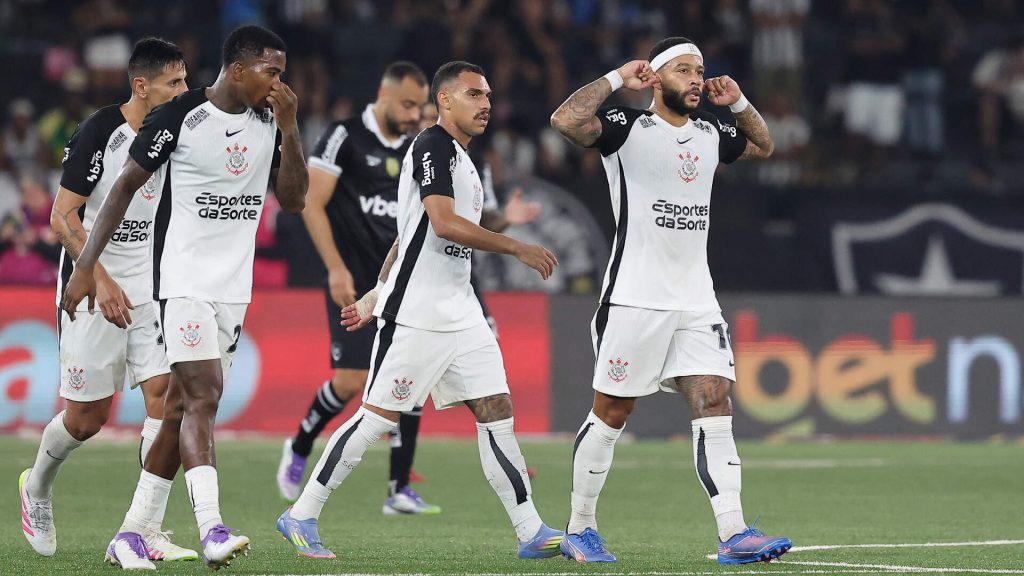
Memphis Depay is a perfect visual for a discussion on European footballers in South America
Labeling these moves as mere “retirement” stints ignores the complex motivations behind them. While the financial gap between the two continents remains significant, the allure of the South is increasingly driven by a desire for something modern European football has arguably lost: a different kind of emotional intensity.
These athletes are trading the predictable luxury of the Champions League for the grit and unpredictability of the Copa Libertadores, becoming the romantic rebels of the beautiful game.
1. The Tactical Revolutionaries: Clarence Seedorf and Dejan Petkovic
To understand how European footballers in South America can truly succeed, one must look at the men who didn’t simply visit the continent, but left a lasting influence within their clubs.
When Clarence Seedorf (Netherlands) joined Botafogo in 2012, he arrived as a four-time Champions League winner with three different clubs. Most observers expected a ceremonial farewell tour. Instead, Seedorf brought a level of tactical discipline and had a significant influence on professionalism within the squad. He demanded higher standards in training, nutrition, and recovery – areas where European training culture traditionally places heavier emphasis.

Clarence Seedorf and Ronaldinho shared a embrace on the pitch.
In 81 appearances, he netted 24 goals, leading the team to a state championship and a top-four finish in the national league. Seedorf’s success was rooted in a genuine respect for the local game. He didn’t treat Brazil as a step down; he treated it as a new challenge to be mastered. His legacy at Botafogo remains a blueprint for any European player looking to bridge the cultural divide.
While Seedorf was a late-career cameo, Dejan Petkovic (Serbia) is one of the most influential Europeans to ever grace the Brazilian Serie A. Known affectionately as “Pet”, the Serbian playmaker spent over a decade in Brazil, becoming a cult icon at Flamengo. His ability to score directly from corner kicks and his masterful vision made him an idol at the Maracanã.
In 2009, at the age of 37, Petković was the catalyst for Flamengo’s first national title in 17 years. He wasn’t merely a guest; he was a protagonist. His induction into the Maracana Walk of Fame – alongside legends like Pele and Garrincha – stands as a notable honor for European stars in Brazil.
He proved that a player from the Balkans could possess the same “Ginga” and flair as the locals.
2. The Heart Over the Head: Daniele De Rossi and David Trezeguet
In many cases, football transfers to South America are driven by nothing but pure emotion. These are moves that make little financial sense but fulfill a spiritual craving for the sport’s most intense atmospheres.
Daniele De Rossi (Italy) was the personification of a “one-club man” at AS Roma. Yet, throughout his career, he harbored a secret obsession with Boca Juniors. In 2019, he turned down lucrative offers from the MLS to spend six months at La Bombonera.
“My heart belongs to Rome, but my soul wanted to hear the roar of Boca Juniors.”
While injuries limited his playing time to just seven matches, his impact was a cultural phenomenon. Seeing a World Cup winner slide-tackling on the muddy pitches of Argentina reinforced the enduring appeal of European players in Argentina. De Rossi came to South America to feel alive on a football pitch one last time, proving that the game’s greatest treasures aren’t always found in a trophy cabinet.
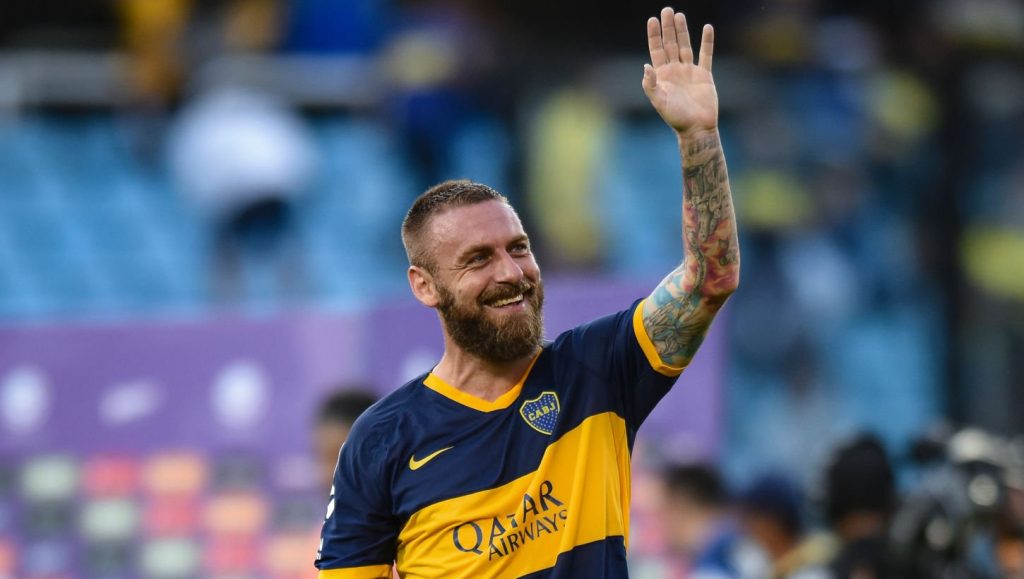
Meanwhile, David Trezeguet (France)’s move was a story of profound loyalty to his roots. Born in France but raised in Argentina, the legendary striker decided to join River Plate at the lowest point in their history. In 2011, when the club was relegated to the second division for the first time, Trezeguet left the comforts of the Middle East to help “Los Millonarios” return to the top flight.
He didn’t just play; he led. Scoring 13 goals and captaining the side, he became the hero of their promotion campaign. To the fans in Buenos Aires, Trezeguet is more than a French world champion; he is the man who returned to lead River of Silver in their promotion campaign.
3. The Modern Renaissance (2024 – present): Depay, Payet, and Braithwaite
The current era has seen a renewed wave of European veterans in Brazil, proving that the continent is once again becoming a viable destination for high-profile talent.
One of the most unexpected high-profile transfers of recent times was Memphis Depay (Netherlands) choosing Corinthians in late 2024. Depay was still a regular for the Dutch national team and had offers from Champions League clubs. By early 2026, he had already become the focal point of a Corinthians side that secured the Copa do Brasil title.

Depay’s eccentric personality and flamboyant style of play have meshed perfectly with the vibrant Sao Paulo lifestyle. He is a primary example of how European footballers in South America can maintain their global marketing value while competing at an elite level. His success suggests that the “reverse flow” is no longer just for those in the twilight of their careers.
Following the trail blazed by Depay, Dimitri Payet (France)’s arrival at Vasco da Gama serves as a testament to the enduring allure of the “Maestro” in Brazilian football. When the Frenchman landed in Rio de Janeiro, thousands of fans braved a 4:00 AM airport vigil just to witness the arrival of a true creator.
While not always a consistent starter, Payet contributed 16 assists and 8 goals in 77 appearances, underscoring his creative influence in attack during his spell at Vasco. His success at Vasco is a reminder that South America remains a sanctuary for those who view football as an art form rather than a mere physical exercise.

This appreciation for European pedigree extends deep into the south of Brazil, where Martin Braithwaite (Denmark) has made a solid early impact at Gremio. While Payet provides the flair, the former Barcelona striker has silenced initial skeptics through a display of relentless work rate and clinical finishing.
Embraced as a “Viking” hero in Porto Alegre, Braithwaite’s disciplined, professional approach has proven to be a perfect fit for the grueling physical demands of South American football culture. Together, these two veterans illustrate the diversity of the European influence currently reshaping the Brazilian Serie A – one through the elegance of the “Old World” playmaker, and the other through the grit of a modern continental professional.
4. The Strategic Pivot: Pablo Mari’s Success Story
It is a mistake to assume that moving to South America is always a final destination. For Pablo Mari, it was a career-defining strategic move. The Spanish defender left the lower tiers of European football to join Flamengo in 2019. Under the guidance of Jorge Jesus, Mari became a pillar of the defense, eventually becoming one of the few recent European Libertadores winners.
This success acted as a massive “shop window”, leading to a dream move to Arsenal just months later. Mari proved that South America can serve as a high-level developmental stage for European players looking to reset their careers and return to the elite level of the European game.
5. Why the “Reverse Flow” is the Future of Content
Far from being mere transactional moves, these stories represent a profound cultural exchange that underscores the universal essence of football.
This growing trend is fueled by several converging factors, starting with a significant emotional shift among elite players. Having secured every major trophy in Europe, many veterans now find themselves fatigued by the increasingly commercialized and tightly structured nature of elite European competitions, prompting them to seek the raw, chaotic energy unique to a South American derby.
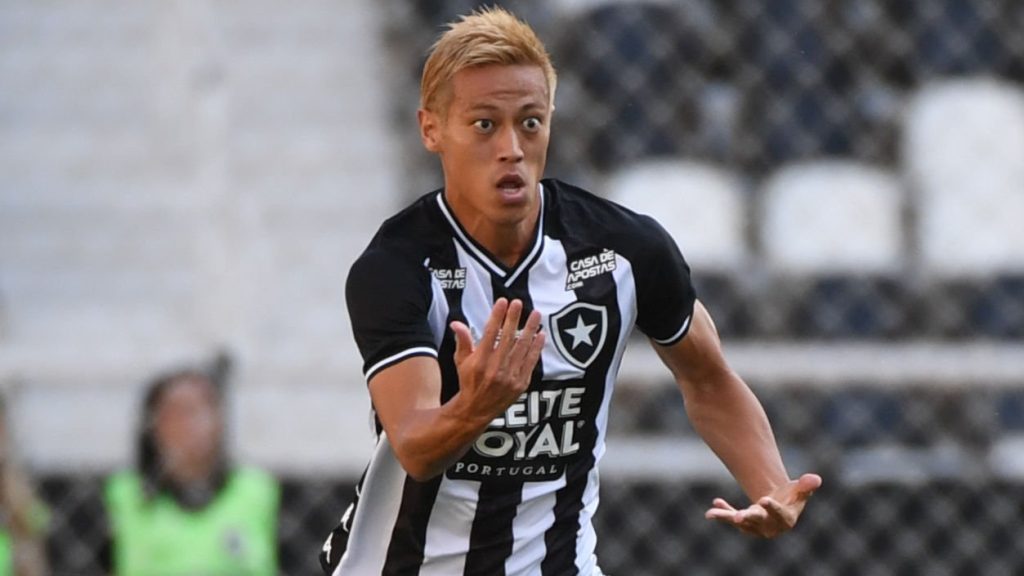
Japan’s Keisuke Honda – a seasoned veteran after a decade in Europe – also used to play for Botafogo
This psychological pull is increasingly supported by the robust financial growth within the region, particularly in Brazil. A surge in television revenue and sophisticated commercial partnerships has empowered clubs to offer salaries that are genuinely competitive for elite veterans.
Ultimately, the desire for “legacy building” serves as the final catalyst. For a seasoned professional, the chance to secure a title at a historic institution like Boca Juniors or Flamengo carries a romantic prestige that a mid-table finish in a European league could never provide.
Conclusion: A New Era of Global Football
The sight of European footballers in South America is no longer a historical anomaly. It is a testament to the enduring appeal of the Southern game. Whether it is the tactical influence of Seedorf, the emotional resonance of De Rossi, the global profile of Memphis Depay, or the renewed Manchester United connection forged by Jesse Lingard’s move to Corinthians, these players reflect a shifting dynamic in global football.
As the structural and financial differences between European and South American football continue to evolve, more European stars may begin to view the continent not as an epilogue, but as a legitimate and competitive chapter of their careers. They are not competing for a paycheck alone; they are pursuing relevance, reinvention, and a place within a football culture where the emotional stakes remain uniquely intense.
You have just read the article “European Footballers in South America: From Seedorf to Memphis Depay?”. Follow 52Hz Football for more captivating stories about football, geography and culture.
READ MORE:
- Nations Qualified but Banned from World Cup: Will Iran Repeat History in 2026?
- Uncovering the Truth: Why Do Welsh Clubs Play in England?
- From Eder to Tuanzebe: 10 “One-Match Wonders” Who Shocked the World
- Why Are So Many Football Clubs Called “Dynamo” or “Dinamo”?
