
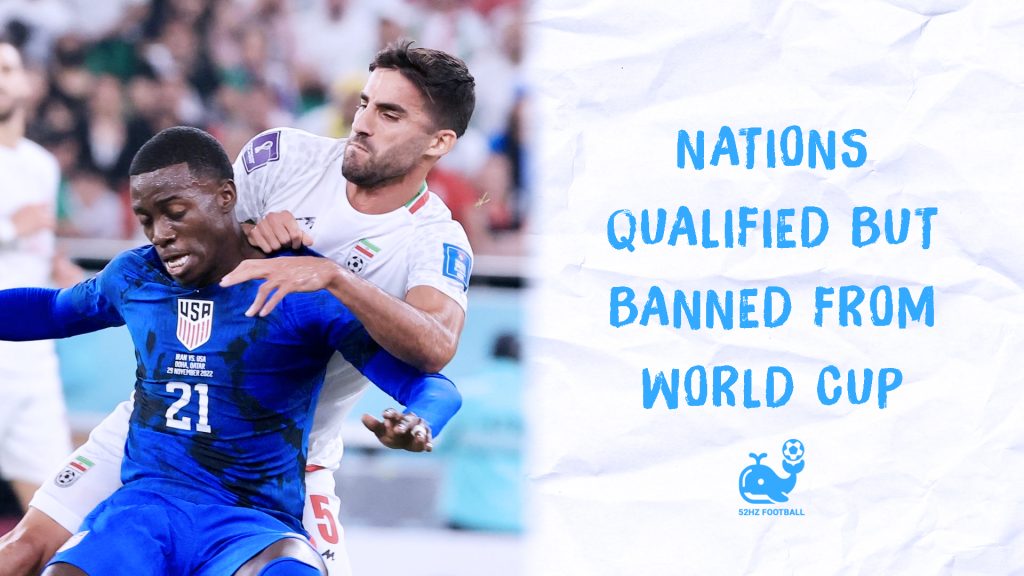
Will Iran be disqualified from World Cup 2026 on American soil? Explore the history of teams that won their tickets but never played due to politics and fraud.
In the world of football, the World Cup is not only a tournament, but also a sanctuary of dreams. To stand on that stage, national teams must endure qualifying journeys filled with blood, sweat, and tears.
However, football history has recorded agonizing cases where teams held their tickets firmly in hand, only to be excluded for reasons far beyond the pitch. These stories are not just footnotes; they are tragedies, scandals, and curses that have lingered for decades.
1. India 1950
The story of the Indian national team at the 1950 World Cup is often retold as a legend shrouded in mystery.
After their qualifying group opponents (i.e. Burma (Myanmar), the Philippines, and Indonesia) withdrew one by one, India naturally became Asia’s representative for the tournament in Brazil. Yet, the image of Indian players stepping onto the world stage never materialized.
For decades, a popular myth suggested that FIFA banned India because the players insisted on playing “barefoot” – a habit that had previously earned them admiration at the 1948 London Olympics.
However, when peeling back the archival layers, the truth is far more pragmatic. The All India Football Federation (AIFF) did not actually hold the World Cup in high regard at the time. To them, the Olympics were the pinnacle of achievement, while the World Cup remained a distant and foreign concept.
Furthermore, the astronomical travel costs of crossing the ocean to South America, combined with a newly independent economy, caused officials to hesitate.
This withdrawal created a lingering “what if” as the Indian national team has never come close to the World Cup limelight since that 1950 milestone.
2. Yugoslavia 1994
While India let their opportunity slip away, the case of Yugoslavia in the early 1990s was a painful tragedy written in the smoke of war. This was perhaps this country to be struck from a major tournament while at the peak of their powers.
Boasting a lineup of elite superstars like Dragan Stojkovic and Dejan Savicevic, Yugoslavia was dubbed the “Brazil of Europe”. They had cruised through Euro 1992 qualifying and were heading into the 1994 World Cup campaign with immense confidence.
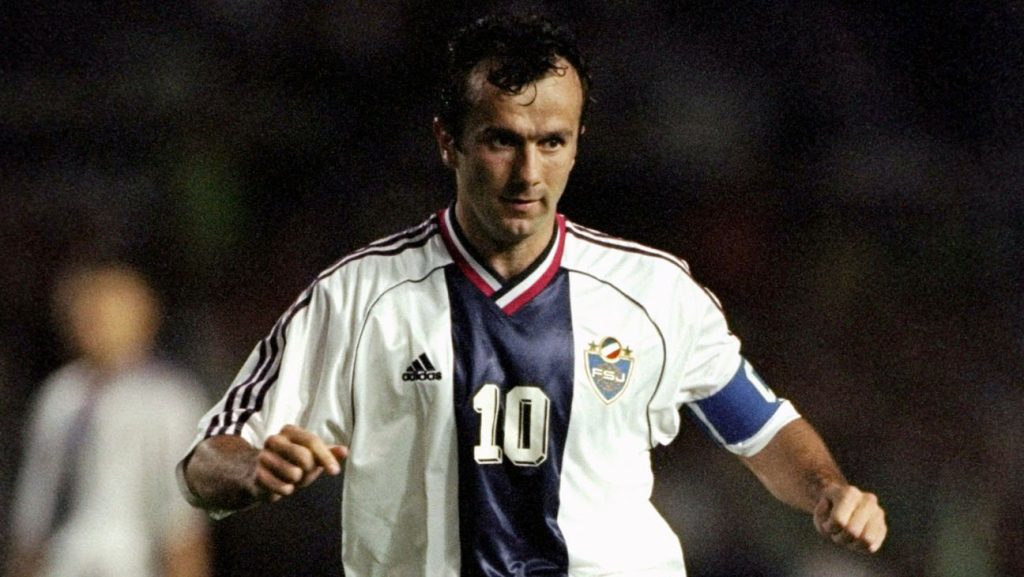
Dejan Savićević, the iconic maestro and a key figure in Yugoslavia’s attacking force
However, football could not escape the turmoil of political upheaval. The devastating civil war and the subsequent breakup of the nation led the UN Security Council to impose comprehensive sanctions on Yugoslavia.
Just days before Euro 1992 kicked off, the Yugoslav players were ordered to leave their training camps. This ban extended into the 1994 World Cup qualifiers, leading FIFA to officially remove the team from the competition.
A generation of geniuses forever lost the chance to prove their worth at the summit of the world, leaving behind one of football’s greatest unanswered questions: “If Yugoslavia had played, could they have been world champions?”.
3. Mexico 1990
Mexican football offers a completely different narrative, where the error stemmed from systematic administrative fraud.
In 1988, a scandal known as “Cachirules” rocked the nation. The Mexican Football Federation (FMF) was caught intentionally using at least four overage players during the CONCACAF youth championship. The incident was exposed by investigative journalists, and FIFA’s reaction was swift and harsh: a two-year international suspension.
This cost Mexico their place at the 1990 World Cup in Italy. But the story did not end with the ban.
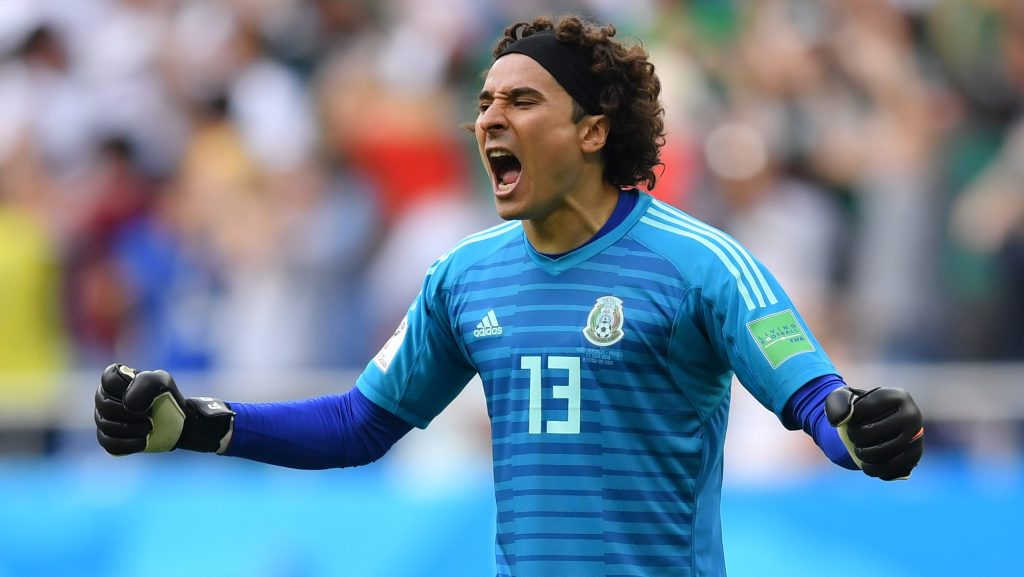
Guillermo Ochoa remains a living witness to World Cup history, having been named in Mexico’s squad for five consecutive tournaments since 2006
After returning in 1994, Mexico wrote one of the most unbelievable scripts in the tournament’s history. They became a pillar of consistency, advancing past the group stage in 7 consecutive World Cups from 1994 to 2018. Yet, that stability was accompanied by a psychological haunting known as “Quinto Partido” – the fifth match.
During those 28 years, Mexico consistently fell in the Round of 16 (the second round) against giants like Germany, Argentina, and the Netherlands. From a team banned for age fraud, Mexico seemed to have incurred an invisible “suspended sentence” unable to break the Round of 16 curse until their group stage exit in 2022.
4. Chile 1990
In the list of excluded teams, Chile’s 1990 case serves as a prime example of “reaping what you sow”.
During a do-or-die match against Brazil in 1989, Chilean goalkeeper Roberto Rojas collapsed, his face covered in blood after a flare was thrown from the stands. Chile refused to continue, hoping FIFA would forfeit Brazil and grant Chile the ticket.
However, close-up photos exposed the bitter truth: the flare landed a safe distance away, and the wound was actually caused by a small blade Rojas had hidden in his glove to slash himself.
FIFA did not hesitate. Chile was handed a forfeit, banned from the 1990 World Cup, and excluded from the 1994 World Cup qualifiers. Rojas was banned for life, leaving a permanent scar on Chilean football regarding the price of deceit.
5. The 1966 Boycott
Not all absences were painted with negative strokes. The mass withdrawal of African nations from the 1966 World Cup remains one of the most heroic moments in sporting history.
Initially, 31 African nations had registered for the qualifiers, eager to showcase their talent on the world stage. However, the Confederation of African Football (CAF) was met with a shocking decision: FIFA allocated only one single spot to be shared among three entire continents: Asia, Africa, and Oceania.
Insulted by this blatant discrimination, which meant an African champion could conquer their continent and still be denied a direct ticket, all 31 African teams withdrew en masse. This collective boycott sent shockwaves through FIFA’s headquarters.
The sacrifice of an entire generation of African players yielded great results; the injustice was acknowledged, and from the 1970 World Cup onwards, each continent was granted its own dedicated qualifying spots.
6. Iran 2026: Will history repeat itself?
As we look toward the 2026 World Cup, a new shadow looms over one of Asia’s powerhouses. Will Iran be disqualified from the 2026 World Cup due to government interference?
This is the question currently haunting fans and officials alike. FIFA has always maintained a strict “zero-tolerance” policy regarding political meddling in national football federations. With ongoing domestic tensions and repeated warnings from international governing bodies, Iran finds itself in a precarious position.
What makes this situation even more complex is the location of the tournament itself. With the 2026 World Cup primarily hosted in the United States, the geopolitical friction between Washington and Tehran adds a thick layer of tension to Iran’s participation.

Haji Wright of USA and Abolfazl Jalali of Iran compete for the ball during the FIFA World Cup Qatar 2022 Group B match
If a ban is imposed, Team Melli could become the latest addition to this infamous list of teams that conquered the qualifiers but vanished before the first whistle. History shows that FIFA does not hesitate to make an example of nations that violate its core principles, whether through fraud, politics, or deceit.
For Iran, the road to the US is no longer just about points on the board, but about surviving the complex intersection of sport and global diplomacy.
You have just read the article “Nations qualified but banned from World Cup: Will Iran Repeat History in 2026?”. Follow 52Hz Football for more captivating stories about football, geography and culture.
READ MORE:
- Beyond Maradona ’86: Ranking 5 Greatest One-Man Shows in World Cup History
- 10 Unbreakable World Cup Records: From Pelé to the 7-1 Disaster
- Top 10 Breakout Young Stars in FIFA World Cup History: From Pele to Mbappe
- 10 All-Time World Cup Goal Scorers: Messi Makes the List
