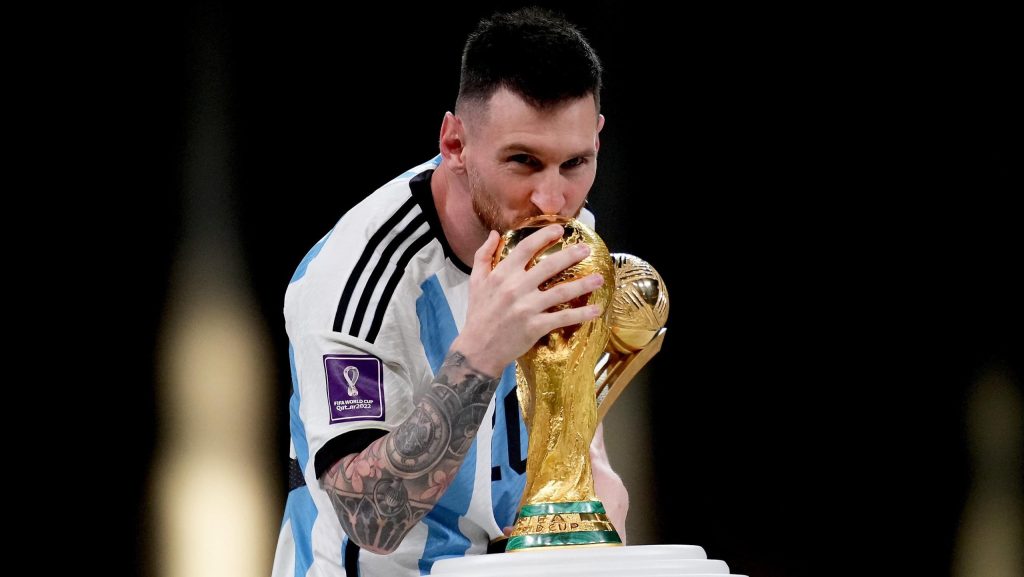
Think you know international football? Discover 10 mind-blowing FIFA world ranking facts, from the ultimate World Cup curse to the lowest FIFA ranking.
Whenever an international break rolls around or a FIFA World Cup is on the horizon, fans and pundits immediately turn to one thing: the FIFA Men’s World Rankings.
First introduced in December 1992, the ranking system was designed to mathematically determine the best international football team on the planet. However, over the past three decades, this algorithm has produced some incredibly controversial, fascinating, and downright bizarre statistical anomalies.
Whether you are a tactical nerd or just love a good pub debate, here are 10 mind-blowing FIFA World Ranking facts that will completely change how you look at international football.
1. Only 8 Nations Have Ever Been Ranked Number 1
Given the vast number of footballing nations across the globe (currently 211 recognized associations), you might think the number one spot has changed hands frequently. In reality, it is an incredibly exclusive VIP club.
Since the rankings began in 1992, only 8 countries have ever held the #1 ranking:
-
Brazil
-
Germany
-
Argentina
-
France
-
Italy
-
Spain
-
Belgium
-
The Netherlands
Perhaps the most shocking fact here is who is missing. Traditional global powerhouses like England and Portugal have never reached the absolute summit of global football according to the FIFA algorithm.
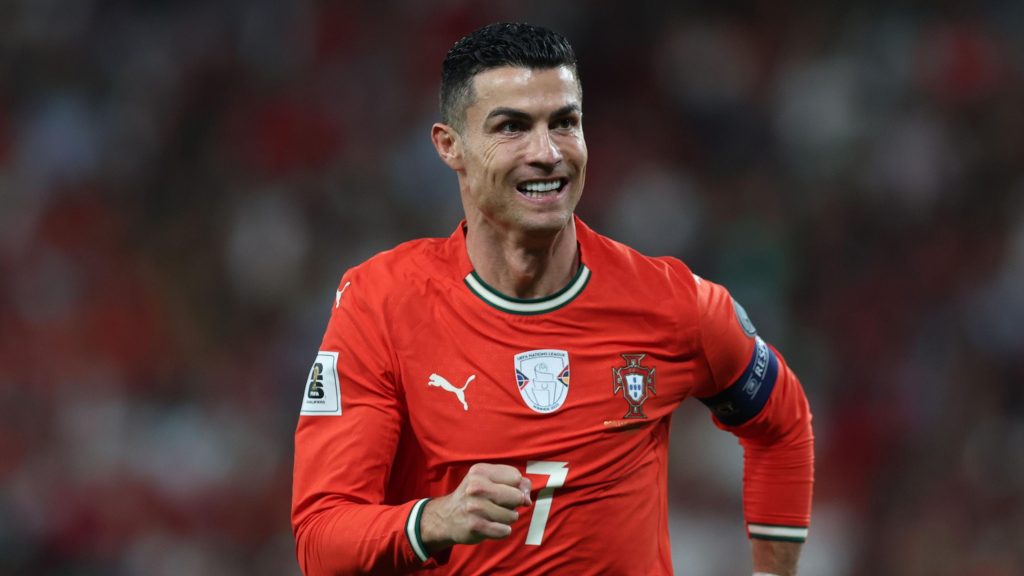
Cristiano Ronaldo’s Portugal has never reached #1. Image: Getty Images
2. The Ultimate “Curse” of the Number 1 Spot
Here is a fact that will give any football fan chills: Since the FIFA rankings were introduced in 1992, the team ranked #1 heading into a Men’s World Cup tournament has NEVER won it.
It is the ultimate footballing curse. Let’s look at the history of the #1 ranked team entering the tournament versus the actual winner:
-
1994: Germany entered as #1 (Brazil won)
-
1998: Brazil entered as #1 (France won)
-
2002: France entered as #1 (Brazil won)
-
2006: Brazil entered as #1 (Italy won)
-
2010: Brazil entered as #1 (Spain won)
-
2014: Spain entered as #1 (Germany won)
-
2018: Germany entered as #1 (France won)
-
2022: Brazil entered as #1 (Argentina won)
Being ranked number one right before a World Cup seems to guarantee heartbreaks and shocking exits.
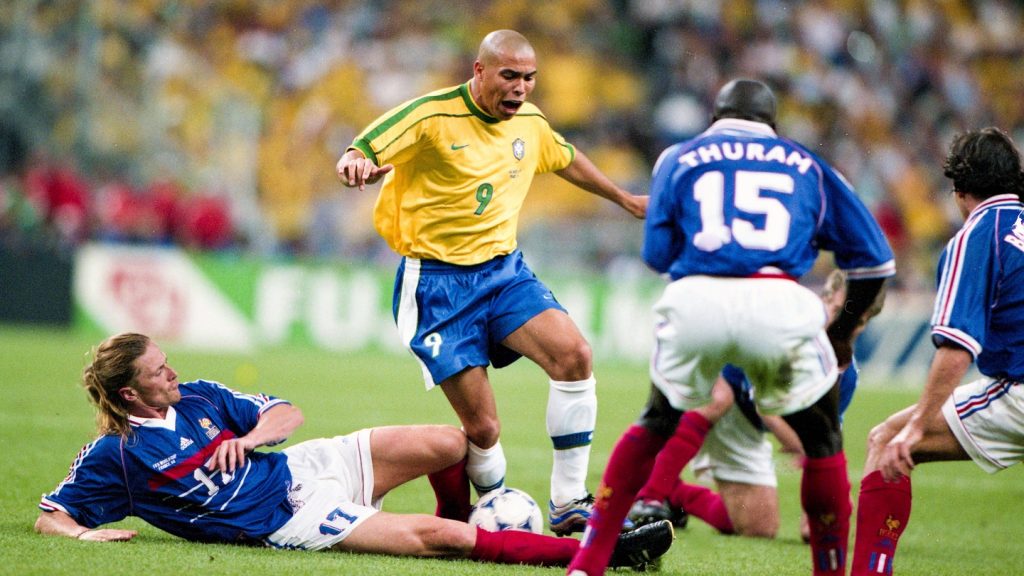
Image: Getty Images
3. The Bizarre “Host Nation” Penalty
Hosting a FIFA World Cup is the ultimate dream for any nation, but it actually destroys your FIFA World Ranking. Why? Because of the algorithm’s point distribution.
As the host nation, you automatically qualify for the tournament. This means for two entire years leading up to the World Cup, you do not play any high-stakes, competitive qualifying matches. You only play international friendlies.
Since the FIFA algorithm awards significantly fewer points for friendlies compared to competitive qualifiers, host nations mathematically hemorrhage ranking points.
The most extreme example of this “penalty” was Russia in 2018. Before hosting the tournament, their ranking plummeted to a dismal 70th in the world – making them the lowest-ranked team in their own World Cup!
Yet, they defied the algorithm by famously eliminating Spain and reaching the quarter-finals.
4. Belgium’s Uncrowned “Golden Generation”
If you look at the FIFA ranking history, one anomaly stands out above the rest: Belgium.
Between 2018 and 2022, the Belgian “Golden Generation” – featuring superstars like Kevin De Bruyne, Eden Hazard, and Romelu Lukaku – sat comfortably at the #1 spot for almost four consecutive years. They were the undisputed kings of the FIFA algorithm.
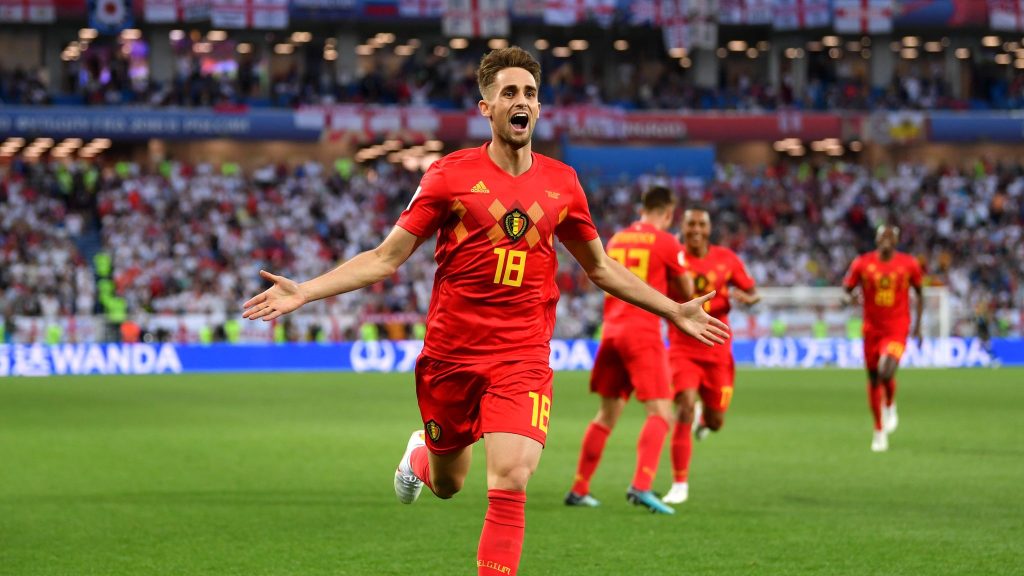
Januzaj celebrated his brilliant 2018 World Cup goal against England. Image: Getty Images
The catch? They didn’t win a single major international tournament during this period!
While France won the 2018 World Cup and Italy won Euro 2020, Belgium consistently racked up massive points in qualifiers and the Nations League, proving that consistency in every single international window was the true secret to gaming the old ranking system.
5. Teams Used to “Cheat” the System (Until the Elo Update)
Before 2018, the FIFA ranking algorithm heavily factored in the average points gained over a specific period. This led to a bizarre loophole: teams realized that playing (and potentially losing or drawing) friendly matches against lower-ranked opponents would actually drop their average score.
To manipulate their rankings and secure better seeding for the World Cup, nations like Wales, Poland, and Switzerland famously stopped playing friendly matches altogether.
To fix this, FIFA overhauled the entire system in August 2018, adopting the “Elo rating system” (originally used in Chess). Now, teams add or subtract points based on individual match results, completely removing the loophole of avoiding friendlies. Every single game matters!
6. Wales’ Miracle Climb: From 117th to the Top 10
The FIFA rankings perfectly document one of the greatest revivals in modern football history.
In August 2011, the Welsh national team had hit rock bottom, plummeting to a disastrous 117th in the world (ranked lower than Haiti and Guatemala). Under the foundational leadership of the late Gary Speed, and later Chris Coleman, Wales began an astronomical climb.
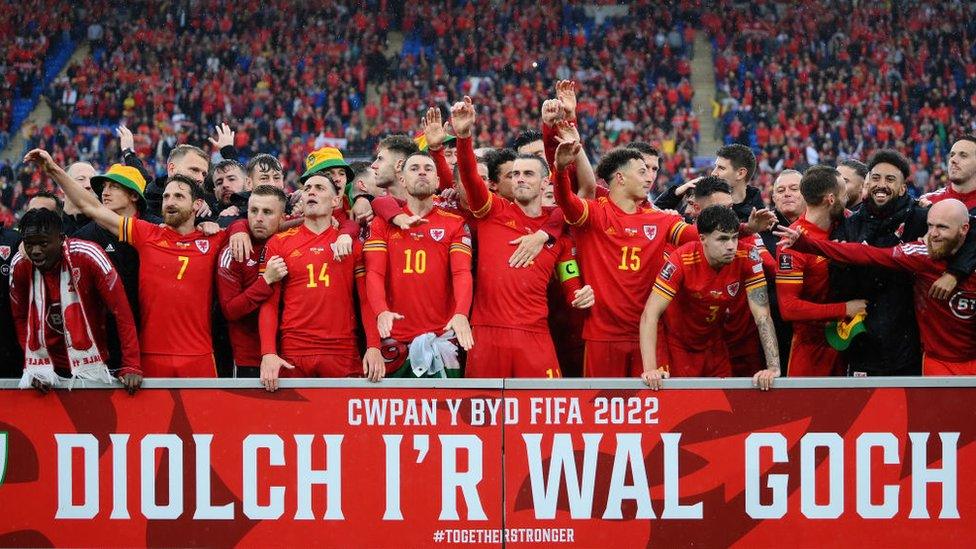
Image: Getty Images
By October 2015, driven by the brilliance of Gareth Bale, Wales skyrocketed into the global Top 10, eventually reaching the semi-finals of Euro 2016.
7. It Is Officially the “FIFA/Coca-Cola” Ranking
When discussing global football, branding is everywhere. Since the system’s inception in 1992, the rankings have been officially sponsored by the American beverage giant, Coca-Cola.
Therefore, its official corporate title is the “FIFA/Coca-Cola Men’s World Ranking”. It is one of the longest-running sports sponsorships in global history, deeply intertwining the brand with the emotional highs and lows of international football.
8. The Fall of Champions: France’s 2010 Collapse
The algorithm can be incredibly unforgiving when a giant falls.
France entered the 2002 World Cup ranked #1 in the world. Just eight years later, following a catastrophic 2010 World Cup campaign in South Africa – marred by player strikes, internal mutiny, and a humiliating group-stage exit – France plummeted to 27th in the FIFA rankings. It remains one of the sharpest drops for a former World Cup-winning nation in the history of the system.
9. The Famous “San Marino” Cult Following
While the battle at the top gets all the media attention, there is a fascinating story at the absolute bottom.
San Marino, a tiny European microstate with a population of just over 30,000, is widely famous for hovering near the very bottom of the lowest FIFA ranking nations. Their squad is primarily made up of part-time footballers with day jobs ranging from accountants to mechanics.
However, they haven’t always been dead last. In fact, their highest-ever FIFA ranking was a respectable 118th back in September 1993! Furthermore, the absolute bottom spot (usually #210 or #211) is frequently swapped with other micro-nations like Anguilla, Eritrea, or Turks and Caicos Islands.
Yet, because San Marino constantly plays against European giants in qualifiers, they have developed a massive global cult following on social media. Whenever San Marino scores a goal – which happens perhaps once every few years – the footballing internet completely erupts in celebration.
10. The Women’s Ranking is an Even More Exclusive Club
While the men’s ranking has seen 8 different nations reach the summit, the FIFA Women’s World Ranking (introduced in 2003) is even more exclusive.
For the vast majority of its history, the #1 spot was treated as a private tennis match between just two nations: the United States and Germany. It took nearly two decades for teams like Sweden and Spain to finally break that duopoly, highlighting the immense gap between the historical superpowers and the rest of the world in women’s football.
Frequently Asked Questions (FAQ)
Which country has been number 1 in the FIFA rankings the longest? Brazil holds the absolute record. The Seleção has spent over 4,700 days (more than 12 combined years) sitting at the #1 spot since the rankings were created in 1992.
How often are the FIFA World Rankings updated? FIFA typically updates the Men’s World Rankings roughly every one to two months, strategically releasing the new numbers immediately following an official international break where competitive matches and friendlies take place.
You have just read the article “FIFA World Ranking Facts: 10 Crazy Stats You Won’t Believe”. Follow 52Hz Football for more captivating stories about football, geography and culture.
READ MORE:
- The David vs. Goliath Effect: 10 Smallest World Cup Nations by Population
- Nations Qualified but Banned from World Cup: Will Iran Repeat History in 2026?
- Beyond Maradona ’86: Ranking 5 Greatest One-Man Shows in World Cup History
- 10 Unbreakable World Cup Records: From Pelé to the 7-1 Disaster
