
From Curacao’s historic 2026 debut to Iceland’s 2018 miracle, discover the 10 smallest World Cup nations by population to ever qualify for the biggest stage in football.
In the grand theater of international football, the size of a talent pool is often seen as the ultimate advantage. However, the history of the tournament is punctuated by the exploits of the smallest nations – tiny communities that achieved the statistically impossible. These countries prove that national soul and tactical grit can outweigh tens of millions of citizens.
As we look toward the expanded 48-team era in 2026, the records for these human miracles are being completely rewritten. From frozen islands to Caribbean gems, here are the 10 smallest World Cup nations by population, ranked from most to least.
10. Qatar (Approx. 2.7 Million)
Qatar has officially secured its place among the smallest nations to qualify for World Cup 2026. Unlike their debut as hosts in 2022, Qatar secured qualification through the AFC playoff stage rather than topping their main qualifying group.
This second consecutive appearance proves that their World Cup 2022 campaign was just the beginning of a sustained presence among the elite. They have silenced critics and proved that even nations with small populations can belong at the top with enough vision.
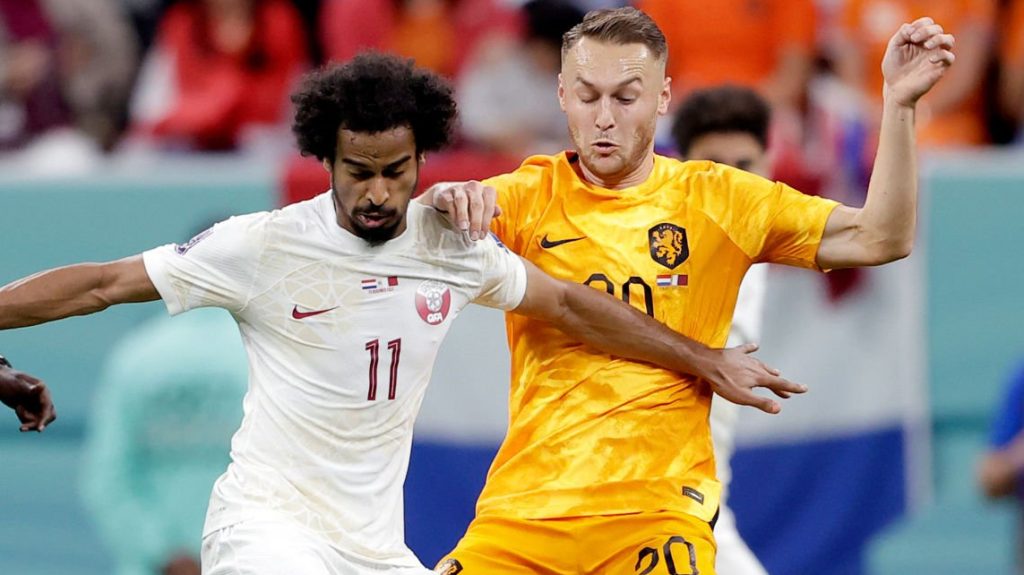
Qatar struggled on home soil during a disappointing 2022 campaign.
Akram Afif remains the creative heartbeat of the side, having carried his stellar form into the 2026 World Cup qualifiers. As they head to North America, Qatar looks to improve on their previous record and demonstrate the full potential of their highly specialized development system.
9. Jamaica (Approx. 2.6 Million)
Jamaica brought the vibrant spirit of the Caribbean to France in 1998, becoming one of the most beloved of the smallest World Cup nations. With only 2.6 million people and no global-brand academy at the time, the “Reggae Boyz” achieved a dream that many massive nations have never touched.
The team’s style was a reflection of the island’s energy – athletic, fearless, and full of natural flair. Their victory over Japan at the 1998 finals sparked celebrations that proved Jamaica was much more than just a track-and-field powerhouse; they were a true footballing nation.

Jamaica has not qualified for a World Cup since 1998
Theodore Whitmore became the face of this historic achievement, scoring two goals that cemented Jamaica’s legacy as a giant-killer. They remain an inspiration for all small nations who believe that spirit and athleticism can overcome a lack of traditional elite infrastructure.
8. Uruguay (Approx. 1.9 Million in 1930)
Uruguay is the ultimate anomaly among the smallest nations. While their population has grown today, they were a tiny nation of under 2 million when they won the first-ever World Cup in 1930, defying the laws of probability ever since.
With two World Cup titles, Uruguay is the only one of the smallest nations to consistently beat the world’s giants and remain a global superpower. Their secret lies in “Garra Charrúa” – a unique brand of tenacity and grit that defines their national character across every generation.
Legends like Luis Suárez and Diego Forlán represent a lineage of greatness that is unheard of for a country of this size. Their success proves that a high-quality footballing culture can outperform any population advantage, making Uruguay the gold standard for every nation on this list.
7. Slovenia (Approx. 1.9 Million)
Slovenia has twice fought its way into the finals, standing tall among the smallest World Cup nations in Europe. Since gaining independence, they have used their disciplined athletic systems to compete with the continent’s most populated nations through tactical intelligence.
The nation’s ability to qualify in both 2002 and 2010 showed that their success was no fluke but the result of a precise footballing machine. They proved that small nations could produce a team capable of defeating giants in high-pressure play-off matches.
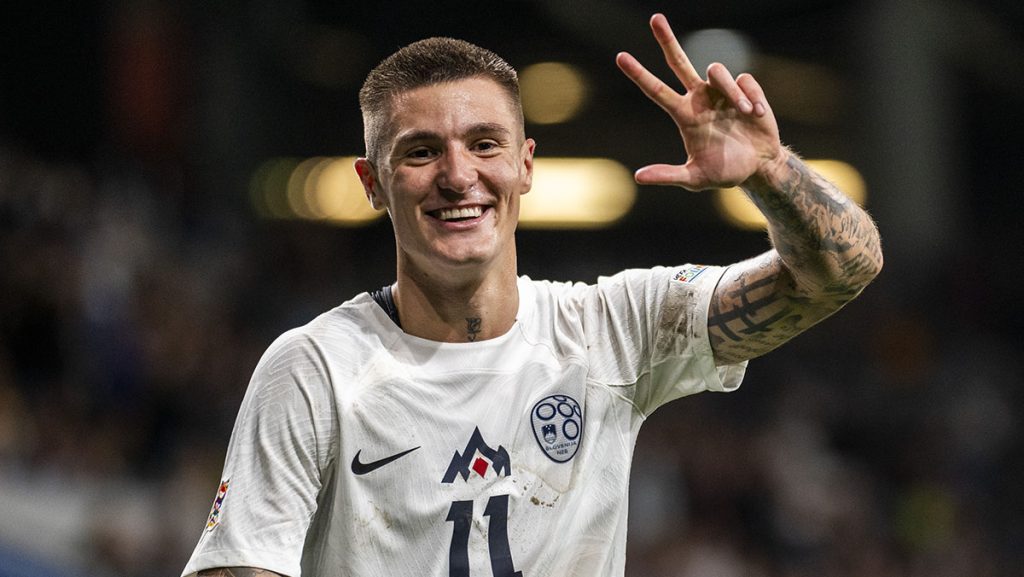
Slovenia, the homeland of Man United’s Benjamin Sesko, has qualified for the World Cup twice
Samir Handanovic and Jan Oblak are examples of the world-class goalkeepers produced by this tiny nation’s focused development. Slovenia remains a blueprint for how a small nation can stay competitive by valuing the collective effort over individual ego on the world stage.
6. Kuwait (Approx. 1.5 Million in 1982)
In 1982, Kuwait became the first Gulf nation to qualify for the finals, joining the prestigious ranks of the smallest nations. With just 1.5 million citizens at the time, they showcased a technical style that surprised European observers during their peak era.
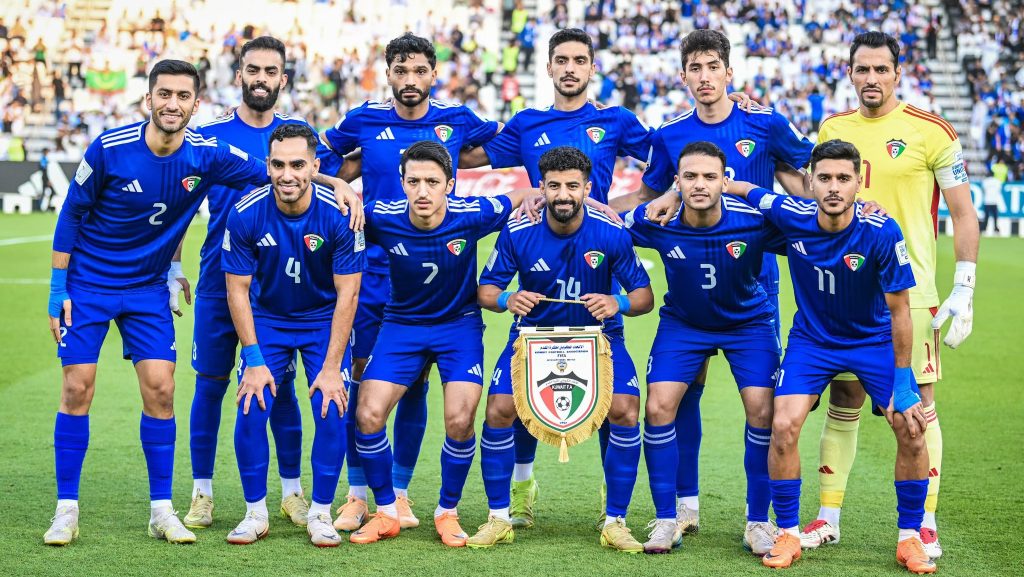
Kuwait at the 2025 Arab Cup Qualifiers in Qatar
The team’s performance against Czechoslovakia proved they belonged on the world stage, playing with a flair and confidence that reflected the ambition of their region. It was a historic breakthrough that opened the doors for other Arab nations to follow in the decades to come.
Faisal Al-Dakhil was the star who carried the hopes of the Kuwaiti people, scoring a goal that is still a point of immense national pride. They showed that vision and investment can elevate even the smallest nations to compete at the highest international level.
5. Northern Ireland (Approx. 1.4 Million in 1958)
Northern Ireland is perhaps the greatest overachiever in history among the smallest World Cup nations. With only 1.4 million people in 1958, they reached the Quarter-finals in a legendary run, and have qualified three times in total through sheer collective willpower.
Their 1982 victory over host nation Spain remains one of the most shocking results in football history, proving that grit can neutralize the largest talent pools. They consistently showed that the smallest nations are often more dangerous when playing as a tightly-knit, disciplined squad.

Jonny Evans’ Northern Ireland has not qualified for a World Cup since 1986
Norman Whiteside famously became the youngest player in World Cup history while representing this tiny nation, breaking Pele’s record. They remain legends of the British game, proving that a tiny population can produce elite professionals capable of thriving under intense global pressure.
4. Trinidad and Tobago (Approx. 1.3 Million)
Trinidad and Tobago held the record for the smallest nations for nearly two decades, qualifying for the World Cup 2006. Without the benefit of world-renowned football academies, they relied on a generation of “warriors” who grew up playing in local leagues and high school competitions.
They famously held a star-studded Sweden team to a 0–0 draw despite playing with only ten men for much of the match. This display of resilience proved that tactical organization and heart could neutralize the individual brilliance of top European stars. They played like true warriors for their flag.
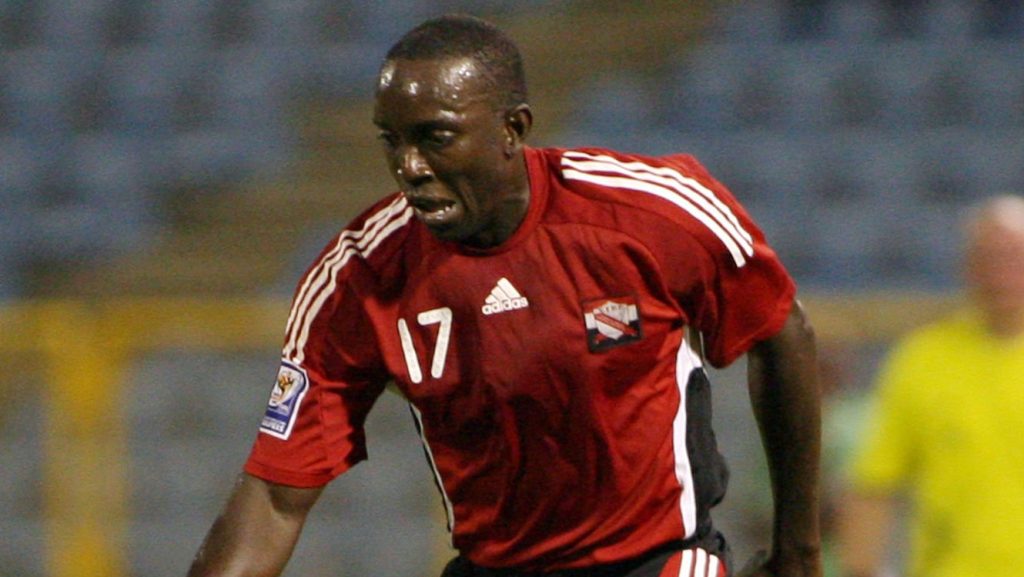
Dwight Yorke is the most famous footballer to ever represent Trinidad and Tobago
Captain Dwight Yorke was the undisputed heart of the team, transitioning from a striker to a playmaker to manage the game. Alongside goalkeeper Shaka Hislop, Yorke ensured that his nation left an indelible mark on the sport’s history.
3. Cape Verde (Approx. 600,000) – 2026 Debutant
Cape Verde has stunned the African continent by qualifying for the 2026 World Cup, instantly becoming one of the most remarkable smallest nations in the sport. With only 600,000 citizens, the “Blue Sharks” have achieved a feat that nations with 100 million people can only dream of.
Their historic run involved topping a qualifying group that included Cameroon, a result that defied every statistical model. As a 2026 Debutant, Cape Verde has built a squad that is technically modern and tactically disciplined, fueled by a relentless ambition to prove their worth.
Veteran star Ryan Mendes will lead this tiny nation into their first-ever World Cup match in 2026. Their presence is the ultimate reward for decades of progress, showing that the smallest nations can truly conquer a massive continent through sheer tactical organization.
2. Iceland (Approx. 334,000)
Iceland became a global sensation in 2018, holding the record for the lowest population among the smallest nations for nearly a decade. With just 334,000 people, their qualification redefined what was possible through a highly disciplined training system.
Their 1–1 draw against Messi’s Argentina remains a legendary result, as the “Viking Clap” echoed through stadiums. They proved that the smallest nations could produce a team of giants if they focused on collective grit and a clear defensive identity.
Gylfi Sigurdsson and captain Aron Gunnarsson were the symbols of this fearless squad that captured the hearts of fans worldwide. Iceland showed the world that a population the size of a small town can still produce a footballing machine that is impossible to break.
1. Curacao (Approx. 150,000) – 2026 Debutant
Curacao has shattered every existing record to become the absolute leader among the smallest nations in World Cup history. With only 150,000 citizens – roughly the size of a mid-sized city – this Caribbean island has secured a sensational spot in the 2026 finals.
As a 2026 Debutant, Curacao’s qualification is being hailed as the greatest underdog story in the history of the CONCACAF region. Their success is built on a specialized recruitment of talent, proving that even the smallest nations can compete if they tap into an elite global network.
While they lack a world-famous domestic academy brand, their technical proficiency and spirited play suggest they are ready to shock the world. This milestone puts the tiny island on the global map, proving that even the most modest populations can roar the loudest on the pitch.
You have just read the article “The David vs. Goliath Effect: 10 Smallest World Cup Nations by Population”. Follow 52Hz Football for more captivating stories about football, geography and culture.
READ MORE:
- Beyond Maradona ’86: Ranking 5 Greatest One-Man Shows in World Cup History
- 10 Unbreakable World Cup Records: From Pelé to the 7-1 Disaster
- Top 10 Breakout Young Stars in FIFA World Cup History: From Pele to Mbappe
- 10 All-Time World Cup Goal Scorers: Messi Makes the List
- Nations Qualified but Banned from World Cup: Will Iran Repeat History in 2026?
