
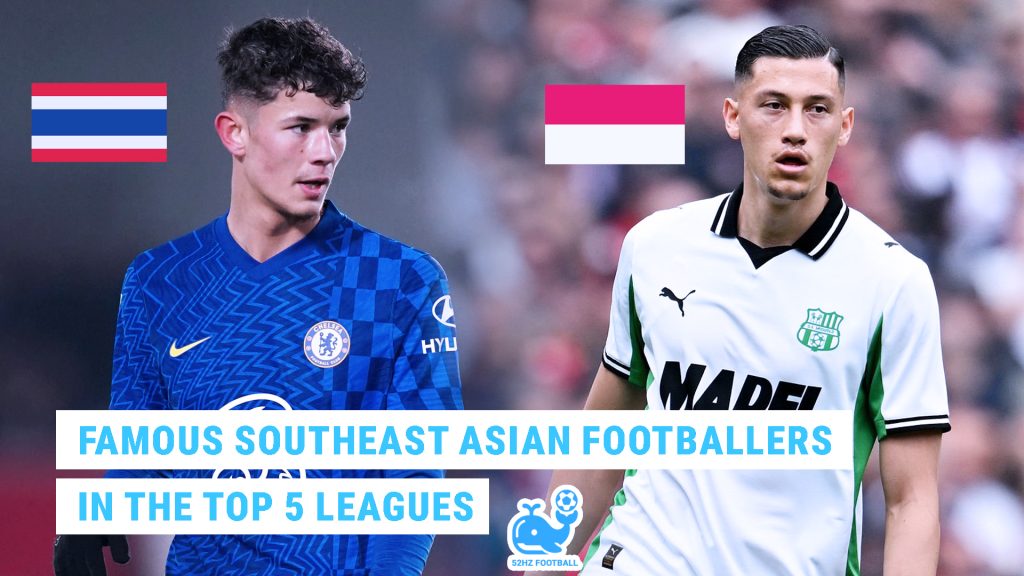
Nicholas Mickelson became the second Thai player in Bundesliga history on 5 September 2026, 47 years after Witthaya Laohakul made the breakthrough with Hertha BSC.
Southeast Asian players remain rare in Europe’s five biggest domestic leagues, but the list is longer than it first appears. It includes homegrown stars such as Teerasil Dangda, as well as European-developed players who later chose to represent an ASEAN national team.
For consistency, this article counts a player if he has represented a senior men’s national team from an ASEAN country and has made at least one league appearance in the Premier League, La Liga, Bundesliga, Serie A or Ligue 1. The player did not necessarily have to represent that country at the time of his European appearance.
Last updated: 6 September 2026. Statistics refer to league appearances only unless otherwise stated.
15 Southeast Asian Internationals Who Played in Europe’s Top Five Leagues
| Country | Player | Top-five league record |
|---|---|---|
| Thailand | Witthaya Laohakul | 3 Bundesliga appearances |
| Thailand | Teerasil Dangda | 6 La Liga appearances |
| Thailand | Erawan Garnier | 1 Ligue 1 appearance |
| Thailand | Nicholas Mickelson | Bundesliga debut in September 2026 |
| Indonesia | Jordi Amat | 124 La Liga and 52 Premier League appearances |
| Indonesia | Jay Idzes | Serie A appearances for Venezia and Sassuolo |
| Indonesia | Kevin Diks | 2 Serie A appearances; Bundesliga regular |
| Indonesia | Calvin Verdonk | Ligue 1 appearances for Lille |
| Indonesia | Emil Audero | More than 200 Serie A appearances |
| Philippines | Neil Etheridge | 38 Premier League appearances |
| Philippines | Gerrit Holtmann | 135 Bundesliga appearances |
| Philippines | Stephan Schröck | 22 Bundesliga appearances |
| Philippines | Raphael Obermair | Bundesliga debut in August 2026 |
| Cambodia | Chhunly Pagenburg | 12 Bundesliga appearances |
| Laos | Billy Ketkeophomphone | 53 Ligue 1 appearances |
1. Thailand
1.1. Witthaya Laohakul – the original Bundesliga pioneer
Long before the present generation, Witthaya Laohakul had already opened Germany’s top-flight door for Thailand. The defensive midfielder joined Hertha BSC in 1979 and made his Bundesliga debut as a substitute against Fortuna Düsseldorf on 8 December.
According to the DFB’s official database, Laohakul made three Bundesliga appearances in the 1979–80 season. Hertha were relegated at the end of that campaign, and he subsequently played 31 times for the club in the 2. Bundesliga. He later added another 27 second-tier appearances for 1. FC Saarbrücken.
The distinction matters. Some career summaries give Laohakul more than 30 league appearances for Hertha, but most of those were in the second division. His top-flight record is three matches — still enough to make him the first Thai footballer in Bundesliga history.
1.2. Teerasil Dangda – Thailand’s first La Liga player
Teerasil Dangda joined Manchester City with Suree Sukha and Kiatprawut Saiwaeo in 2007, but none of the three made a competitive first-team appearance in England. Work-permit difficulties were a major obstacle.
Teerasil eventually reached a top-five league with UD Almería in 2014. He made his La Liga debut against Espanyol and finished the loan spell with six league appearances, not 15 as is sometimes reported. His only Almería goal came against Real Betis in the Copa del Rey, so it should not be recorded as a La Liga goal.
1.3. Erawan Garnier – one appearance that made history
French-born winger Erawan Garnier came through Lyon’s academy before joining Lens. On 14 March 2026, he came off the bench in a 2–1 defeat at Lorient to become the first Thai player to appear in Ligue 1.
The official match record lists him as an 83rd-minute substitute, while some reports describe the change as taking place in the 85th minute. Either way, it remains his only Ligue 1 appearance. Garnier made his senior Thailand debut against Kuwait in June 2026 and later moved to SC Bastia, then competing outside Ligue 1.
🇹🇭🇫🇷Thai U23 winger Erawan Garnier made his first appearance in Ligue 1 last night.
The youngster came on in the 85th minute for RC Lens during their away match against FC Lorient, which ended in a 2–1 defeat for Lens.#ErawanGarnier #Ligue1 #Lens #Thailand #ASEANFootball pic.twitter.com/3enmxEjwhN
— ASEAN FOOTBALL (@theaseanball) March 15, 2026
1.4. Nicholas Mickelson – Thailand returns to the Bundesliga after 47 years
Nicholas Mickelson helped SV Elversberg win promotion in 2025–26, contributing one goal and two assists in 25 league appearances. He was an unused substitute when the newcomers beat Bayer Leverkusen on the opening weekend of their first Bundesliga season.
His moment arrived on 5 September 2026. Mickelson replaced Lasse Günther in the 75th minute away to Borussia Mönchengladbach. Elversberg were trailing 3–1 before completing a remarkable 4–3 comeback victory.
That appearance made Mickelson only the second Thai player in the Bundesliga, 47 years after Laohakul. Indonesia defender Kevin Diks was also on the pitch for Gladbach, giving the match an unusual ASEAN connection.
Thai players who came close
Thanawat Suengchitthawon was named on Leicester City’s Premier League bench but did not enter the pitch. Jude Soonsup-Bell made a senior appearance for Chelsea in the EFL Cup, not the Premier League. Those are important career milestones, but neither qualifies as a top-five league appearance.
2. Indonesia
Indonesia has the largest group on this list. Its recent diaspora programme has added several European-developed professionals to a history that already included Jordi Amat’s long career in Spain and England.
2.1. Jordi Amat
Jordi Amat owns the broadest top-five league record among Indonesian internationals. The centre-back played 124 La Liga matches across spells with Espanyol, Rayo Vallecano and Real Betis, as well as 52 Premier League matches for Swansea City. He made his Indonesia debut in 2022, years after most of those European appearances.
2.2. Jay Idzes
Jay Idzes became the first Indonesia international to play in Serie A when he appeared for Venezia in 2024–25. After Venezia’s relegation, he remained in Italy’s top flight with Sassuolo and completed another 35-match league campaign in 2025–26. By the start of September 2026, he had reached 70 Serie A appearances across the two clubs.

2.3. Kevin Diks
Kevin Diks made two Serie A appearances for Fiorentina early in his career. His bigger top-flight impact came after he had switched international allegiance to Indonesia. Diks joined Borussia Mönchengladbach in 2025, became the first Indonesia international to play in the Bundesliga and produced five goals in 30 league appearances during his debut season in Germany.
2.4. Calvin Verdonk
Calvin Verdonk joined Lille in September 2025 and became the first Indonesian to appear in Ligue 1 later that month. He made 14 league appearances in 2025–26 and remained with the French club for the following campaign.
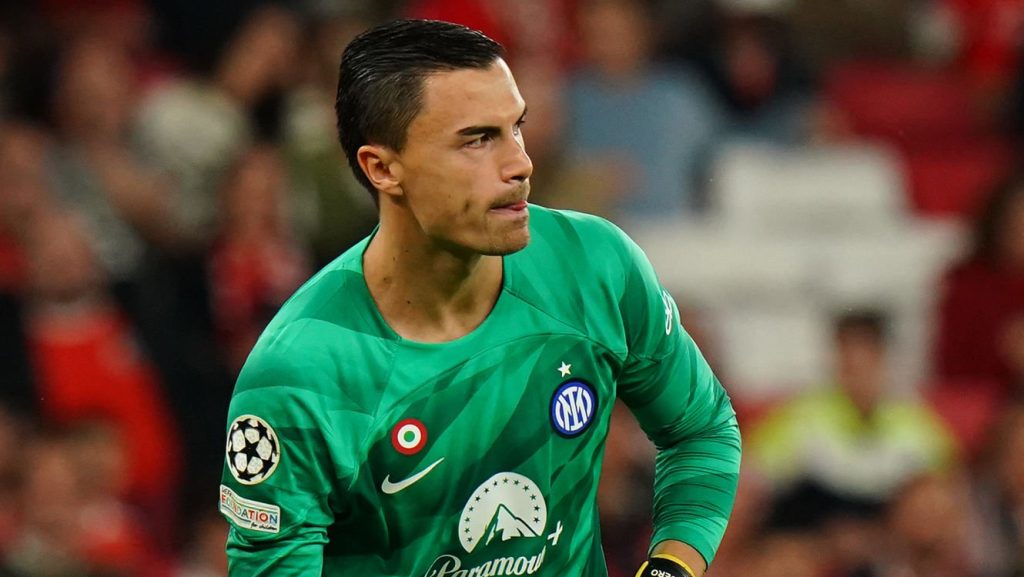
2.5. Emil Audero
Born in Mataram and developed by Juventus, Emil Audero has played more than 200 Serie A matches for Juventus, Sampdoria, Inter Milan, Como and Cremonese. He began representing Indonesia in 2025.
On 1 September 2026, Audero joined Rayo Vallecano on loan from Como. At the time of this update, he had not yet made his La Liga debut, but he already qualified for this list through his extensive Serie A career.
3. Philippines
The Philippines also has a strong record, particularly in England and Germany. The original version of this article missed two important names: Stephan Schröck and Raphael Obermair.
3.1. Neil Etheridge
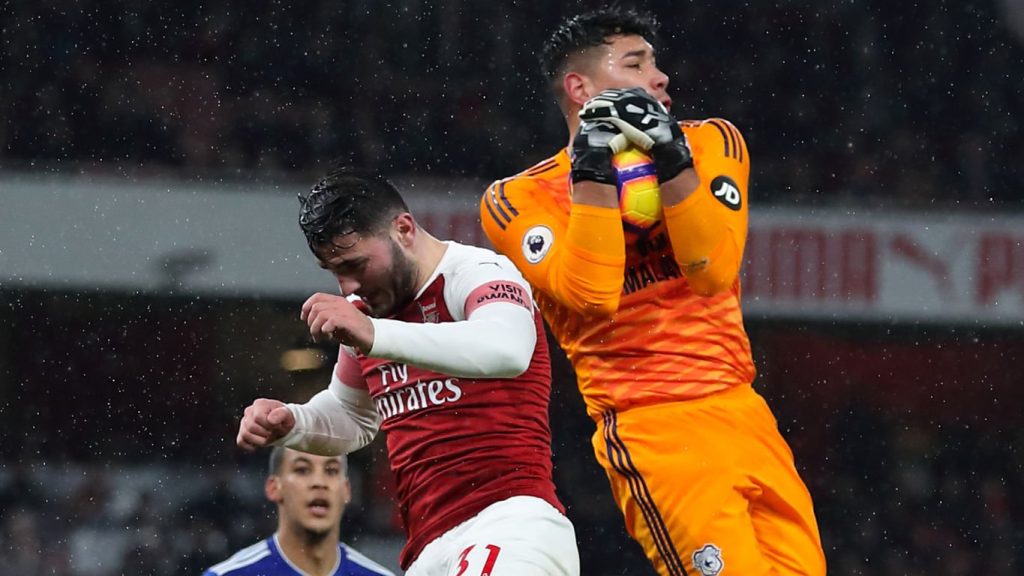
Neil Etheridge started all 38 of Cardiff City’s Premier League matches in 2018–19. He was the first player representing a Southeast Asian national team to appear in the competition and saved three penalties during the season.
3.2. Gerrit Holtmann
Gerrit Holtmann accumulated 135 Bundesliga appearances with Mainz 05, SC Paderborn, VfL Bochum and Darmstadt 98. His five-club total includes the celebrated solo goal for Bochum against Mainz in 2021, which was later voted the Bundesliga Goal of the Season for 2021–22. Holtmann made his Philippines debut in 2022.

3.3. Stephan Schröck
Stephan Schröck is one of the clearest omissions from many ASEAN lists. He had already debuted for the Philippines in 2011 when he joined Hoffenheim in 2012. He made 10 Bundesliga appearances there, followed by another 12 for Eintracht Frankfurt in 2013–14, giving him 22 Bundesliga appearances in total.
Schröck also played extensively in the 2. Bundesliga for Greuther Fürth, but those second-tier matches are not included in the figure above.
3.4. Raphael Obermair
Raphael Obermair made his senior Philippines debut and scored against Tajikistan in March 2026. Five months later, promotion with SC Paderborn carried him into the Bundesliga.
Obermair played the full 90 minutes in Paderborn’s 0–0 draw at Mainz on 29 August 2026, making his top-flight debut. He completed another full match against Freiburg one week later. The official Bundesliga profile lists him as a Philippines international.
A historical note on Paulino Alcántara
Iloilo-born Paulino Alcántara remains one of the Philippines’ greatest football figures. He scored 395 goals in 399 matches for Barcelona, including friendlies, and represented both the Philippines and Spain.
However, Alcántara retired in 1927 and La Liga began in 1929. He therefore belongs in the history of Southeast Asians at major European clubs, but he cannot be counted as a La Liga player.
4. Cambodia
Chhunly Pagenburg came through 1. FC Nürnberg’s academy and made his Bundesliga debut against Schalke in December 2006. The DFB records 12 Bundesliga appearances for the forward. The figure of 14 sometimes attached to his Nürnberg career includes matches outside the Bundesliga.
Pagenburg did not score in the league, but he did find the net in Nürnberg’s 4–0 DFB-Pokal semi-final win over Eintracht Frankfurt. The club went on to lift the cup in 2007. He later represented Cambodia at senior level in 2013.
5. Laos
France-born forward Billy Ketkeophomphone is the only Laos international to meet the criteria. He played 53 Ligue 1 matches for Angers, scoring six goals and providing seven assists.
His best season was 2015–16, when he made 35 league appearances, scored five goals and supplied seven assists. The commonly repeated claim that he played all 38 league matches is incorrect. A serious knee injury limited him to five appearances the following season. Ketkeophomphone made his Laos debut at the 2021 AFF Championship.
6. Which ASEAN Countries Are Still Waiting?
Under the definition used in this article, Vietnam, Malaysia, Singapore, Brunei, Myanmar and Timor-Leste have not yet had a senior men’s international make a league appearance in one of Europe’s current top five divisions.
That does not mean those countries have no European football history. Vietnam’s Nguyen Quang Hai played for Pau in Ligue 2; Malaysia international Dion Cools built a strong career in Belgium and Denmark; Singapore legend Fandi Ahmad starred for Groningen in the Eredivisie; and Brunei’s Faiq Bolkiah spent time in English academies and with Marítimo’s reserve side.
Those careers matter, but the Eredivisie, Belgian Pro League, Danish Superliga, Ligue 2, youth football and reserve competitions sit outside the narrow scope of this list.
7. Players and Cases Not Counted
- Terry Butcher: born in Singapore, but represented England and is not a Singapore international.
- Paulino Alcántara: a Barcelona and Philippines legend whose career ended before La Liga was founded.
- Thanawat Suengchitthawon: named on Leicester City’s Premier League bench but did not play.
- Jude Soonsup-Bell and Ben Davis: made English cup appearances, not Premier League appearances.
- Teerasil Dangda, Suree Sukha and Kiatprawut Saiwaeo at Manchester City: signed by the club but never played a competitive first-team match.
- Harry Birtwistle and Faiq Bolkiah: developed at Premier League clubs without appearing in the league.
Frequently Asked Questions
Q: Who was the first Thai player in the Bundesliga?
A: Witthaya Laohakul. He debuted for Hertha BSC in December 1979 and made three Bundesliga appearances. Nicholas Mickelson became the second in September 2026.
Q: How many Southeast Asian internationals have played in Europe’s top five leagues?
A: Using senior ASEAN national-team representation and at least one top-flight league appearance as the criteria, this article identifies 15 players as of 6 September 2026.
Q: Who was the first Southeast Asian international in the Premier League?
A: Neil Etheridge, who played all 38 league matches for Cardiff City in 2018–19.
Q: Did Teerasil Dangda score in La Liga?
A: No. He made six La Liga appearances for Almería without scoring. His only goal for the club came in the Copa del Rey.
Q: Did Paulino Alcántara play in La Liga?
A: No. Alcántara retired in 1927, two years before the first La Liga season, although he remains one of Barcelona’s great early players.
You have just read “Mickelson Makes History! Famous Southeast Asian Footballers in the Top 5 Leagues”. Follow 52Hz Football for more stories about football, geography and culture.
READ MORE:
- Top 5 Indonesian Players in Europe’s Big Five Leagues
- Top 5 Uzbekistan Footballers in Europe
- Top 6 Most Famous Armenian Footballers
