
Ever wondered why the World Cup is not held every year? Uncover the true reasons, from billion-dollar logistics to FIFA’s clever staggered 2-year cycle.
Every football fan knows the feeling. The final whistle blows on a spectacular World Cup or European Championship final, the confetti falls, and suddenly, a harsh reality sets in: you have to wait another four long years to experience this magic again.
In an era where football is a multi-billion-dollar industry hungry for continuous content and revenue, the four-year gap feels almost archaic. Why don’t FIFA and UEFA organize these mega-tournaments every two years, or even annually?
The truth is, the four-year cycle is not just a random tradition. It is a carefully calibrated formula built on historical limitations, logistical nightmares, biological boundaries. Here is why the biggest tournaments in football must make us wait.
1. The Historical Blueprint
To truly understand the four-year rule, we must look outside of football and travel back to Ancient Greece. The foundation of the World Cup wasn’t a random mathematical decision; it was a deliberate copy of the Olympic Games.
Long before FIFA established its own global tournament, the Olympics had already set the gold standard for international sports. The Games operated on an “Olympiad” – a four-year cycle used by the ancient Greeks to measure time. Culturally, this four-year gap was ingrained in human history as the ultimate timeframe to define an athlete’s physical peak and generational dominance.
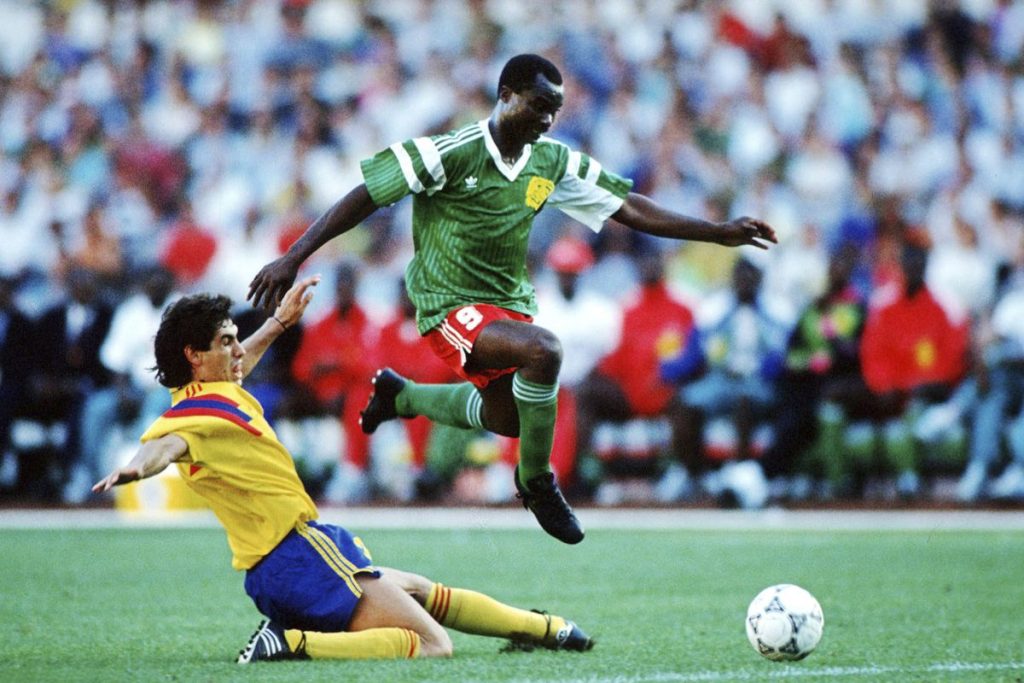
In the 1920s, the Olympic football tournaments (particularly the 1924 and 1928 games won by Uruguay) were massively successful and drew unprecedented crowds. However, the International Olympic Committee (IOC) strictly demanded that athletes be amateurs. FIFA President Jules Rimet realized that football, which was rapidly professionalizing, needed its own standalone world championship.
To instantly legitimize this new “World Cup” in 1930, Rimet and FIFA deliberately stole the Olympic blueprint. By adopting the exact same four-year cycle, FIFA ensured their unproven tournament would instantly carry the same mythological prestige, scarcity, and global gravitas as the Olympics. They wanted the World Cup to feel like a monumental gathering of nations, not just an annual cup competition.
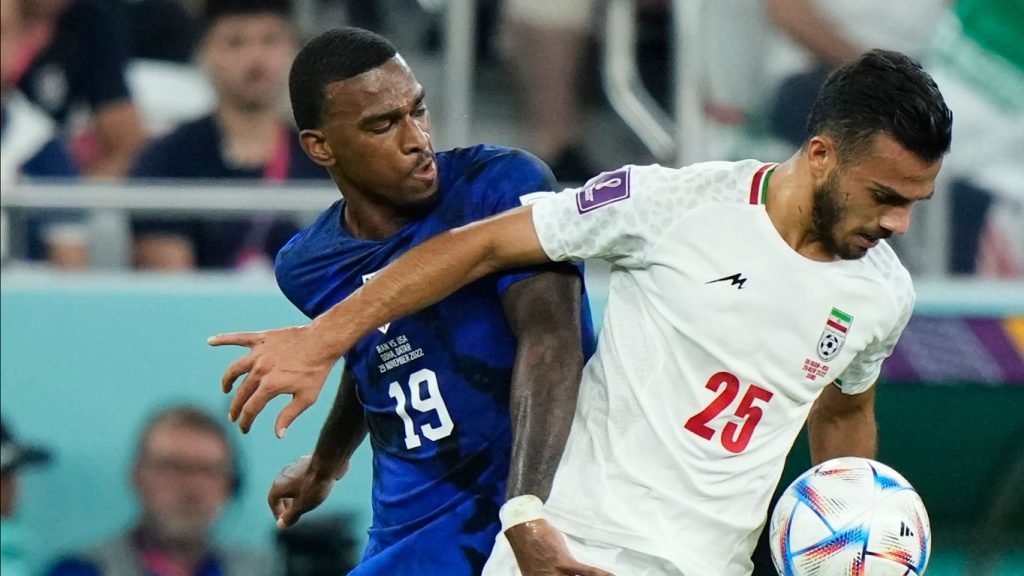
Furthermore, copying this quadrennial Olympic model perfectly masked a harsh 20th-century reality: geographical isolation. Commercial air travel was practically nonexistent. For European teams like France and Belgium to participate in the inaugural 1930 World Cup in Uruguay, they had to endure weeks at sea on transatlantic ocean liners.
Gathering the globe’s best teams was so financially and physically exhausting that hosting a tournament any more frequently than the established Olympic standard was simply impossible.
2. The Monumental Qualification Process
When fans watch the World Cup or the EUROs, they are only seeing the tip of the iceberg. The actual tournament is just a one-month finale to a multi-year campaign.
FIFA currently has 200+ member associations, while UEFA has 55. You cannot simply invite these nations to a tournament; they have to earn their spots. This requires an intercontinental qualification format consisting of hundreds of matches.
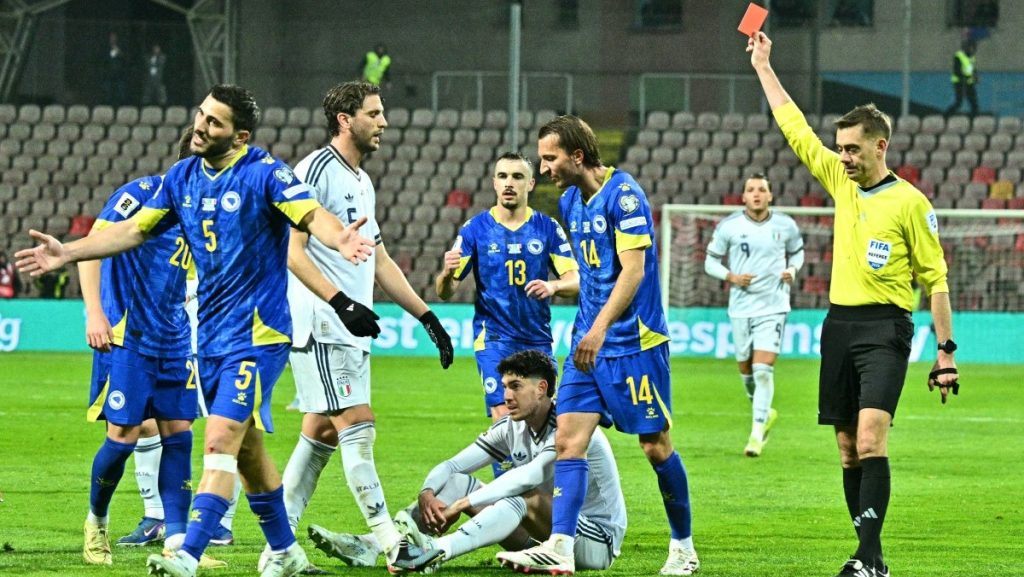
Because professional football is dominated by domestic club leagues (like the Premier League or La Liga), international football can only be played during designated “FIFA International Windows” – short breaks scattered throughout the calendar year.
Mathematically, it takes a minimum of two to three years to comfortably schedule and complete a full qualification cycle across all continents without entirely derailing domestic club competitions.
3. The Billion-Dollar Hosting Logistics
Hosting a World Cup or a European Championship is a logistical beast. It is not just about having a few grass pitches; host nations must provide state-of-the-art stadiums, massive training facilities, upgraded airports, extensive public transport, and thousands of hotel rooms to accommodate millions of traveling fans.
This level of infrastructure development requires astronomical funding and time. Host nations are typically selected six to eight years in advance to give them a realistic runway to build and prepare.
If major tournaments were held every two years, the preparation windows would overlap, creating absolute chaos. Furthermore, the financial burden would be so immense that only three or four ultra-rich nations on the planet would ever be capable of hosting.
The four-year gap ensures a fair rotation, allowing different countries to prepare their economies and infrastructure for the global spotlight.
4. The Club vs. Country
Hosting a World Cup or a European Championship is a logistical and financial beast. It is not just about having a few grass pitches; host nations must provide state-of-the-art stadiums, massive training facilities, upgraded airports, and extensive public transport. This level of infrastructure development requires astronomical funding and years of planning.
The four-year gap is a crucial cooling-off period to prevent national economic collapses. Brazil serves as the cautionary tale.
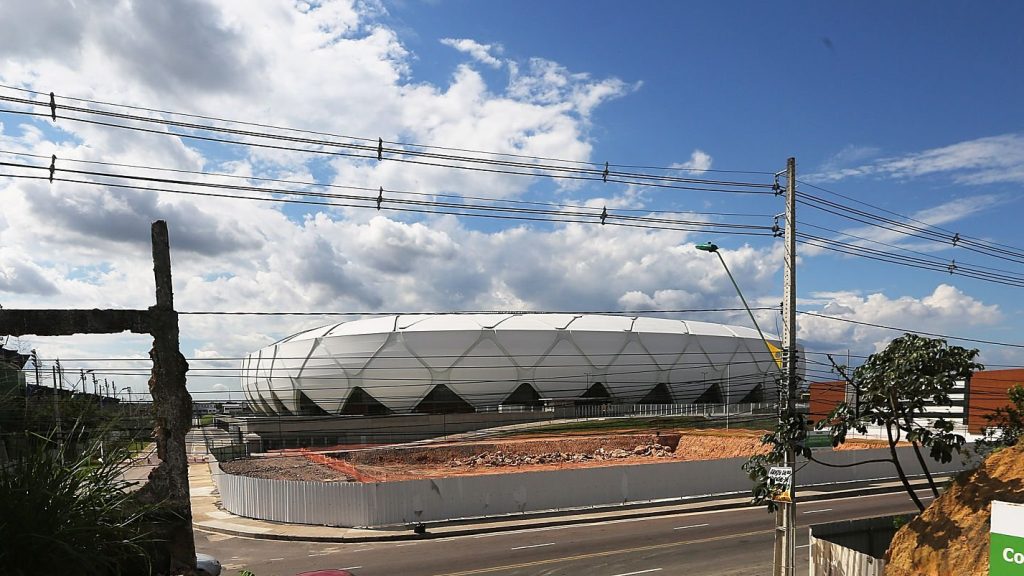
By hosting the 2014 World Cup and the 2016 Rio Olympics in back-to-back cycles, the country’s economy was pushed to its breaking point. Brazil spent over $13.5 billion on the World Cup alone, diverting funds from essential public services like education and healthcare.
The result was a series of “White Elephants”: magnificent, million-dollar stadiums built in remote areas that now sit empty and decaying, costing the taxpayers millions in maintenance. This massive overspending contributed to Brazil’s deepest economic recession in decades.
If major tournaments were held every two years, the financial burden would be unsustainable. Most nations would face national debt crises trying to keep up. The four-year cycle ensures a fair rotation, giving host nations enough time to secure funding and build infrastructure that serves a purpose long after the final whistle blows.
5. The Economics of Scarcity
From a pure business perspective, it might seem logical to host the World Cup more often to make more money. Former Arsenal manager and FIFA’s Chief of Global Football Development, Arsene Wenger, recently proposed a biennial (every two years) World Cup.
The idea was met with fierce backlash and eventually scrapped. Why? Because it violated the rule of economics: Scarcity creates value.
The World Cup and the EUROs are so incredibly lucrative because they are rare. The four-year wait builds an unparalleled level of anticipation. It makes the tournament feel like a generational event rather than just another routine cup competition.
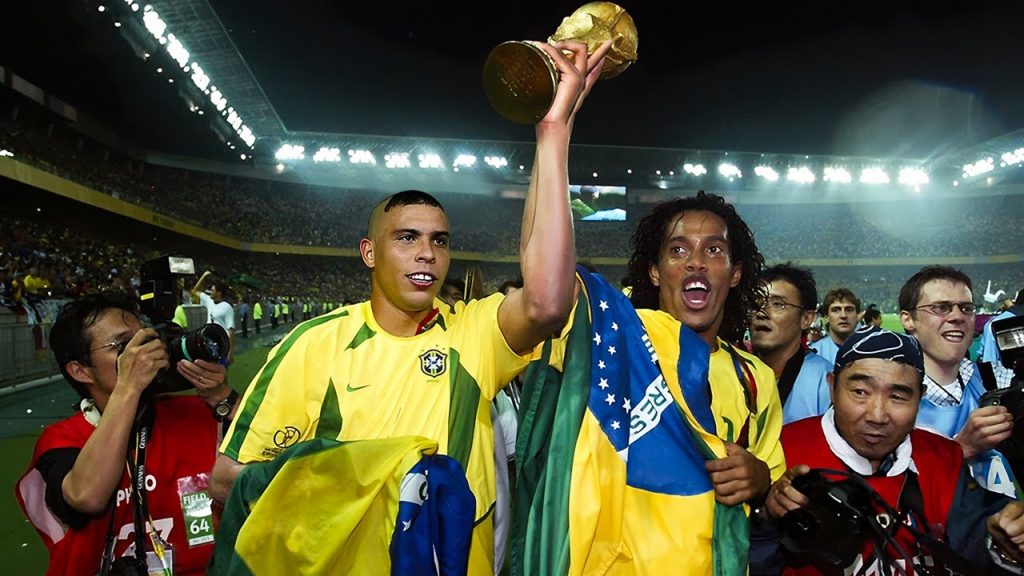
Broadcasters and global sponsors are willing to pay billions of dollars for TV rights and advertising space precisely because they know the entire planet will stop to watch an event that only happens once every 1,460 days.
If you have a World Cup every two years, the magic fades. It becomes routine. By keeping it scarce, FIFA and UEFA protect the prestige of their product, ensuring that when that opening whistle finally blows, the whole world is watching.
6. The Masterful Illusion: The Staggered Two-Year Cycle
While it is true that the World Cup and the European Championship operate on strict four-year cycles, FIFA and UEFA have masterfully coordinated their calendars to ensure fans never actually experience a four-year drought.
By staggering their flagship tournaments, the governing bodies have created a continuous loop of international football. The World Cup and the EUROs are deliberately offset by exactly two years. For example, fans were treated to the World Cup in 2022, the EUROs in 2024, and will experience the World Cup again in 2026.
This alternating schedule is a stroke of commercial and psychological genius. It means that in reality, the global football community gets a month-long festival of international football every two years, rather than enduring an empty four-year wait.
This brilliant compromise keeps the global football economy thriving and satisfies the fans’ immense appetite for major tournaments. Most importantly, it maintains the sacred four-year prestige of the individual competitions without forcing FIFA and UEFA to compete against one another for global viewership and multi-billion-dollar sponsorship deals.
You have just read the article “Why the World Cup Is Not Held Every Year? The 4-Year Rule Explained”. Follow 52Hz Football for more captivating stories about football, geography and culture.
READ MORE:
- The David vs. Goliath Effect: 10 Smallest World Cup Nations by Population (2026 Update)
- Nations Qualified but Banned from World Cup: Will Iran Repeat History in 2026?
- Beyond Maradona ’86: Ranking 5 Greatest One-Man Shows in World Cup History
- 10 Unbreakable World Cup Records: From Pelé to the 7-1 Disaster
- Top 10 Breakout Young Stars in FIFA World Cup History: From Pele to Mbappe
