
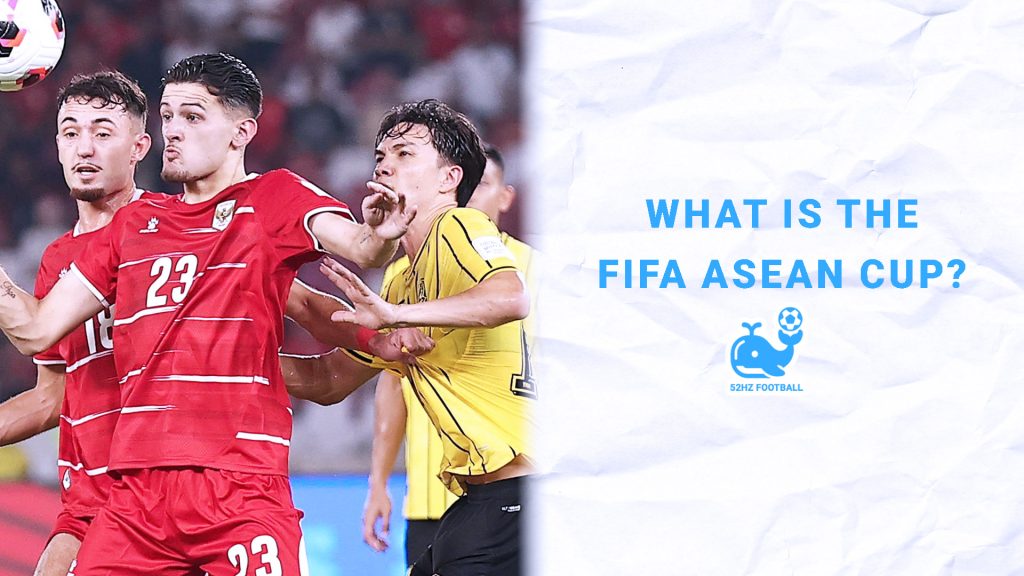
FIFA’s social-media accounts have recently been filled with highlights involving Vietnam, Thailand, Indonesia and several less familiar opponents. The competition looks regional, but its name suggests something much bigger.
So, what is the FIFA ASEAN Cup, and why does a Southeast Asian tournament carry FIFA’s name? The answer lies in a new partnership between world football’s governing body and ASEAN—but the tournament’s expensive broadcast rights, unusual guest list and one-sided results have already prompted questions about its first edition.
Last updated: 3 October 2026.
1. What Is the FIFA ASEAN Cup?
The FIFA ASEAN Cup is a new men’s international tournament created by FIFA for national teams from Southeast Asia and invited countries from the wider Asian region.
The inaugural edition is being staged from 24 September to 5 October 2026. Indonesia hosts the main FIFA ASEAN Cup, while Hong Kong, China hosts the second-tier FIFA ASEAN Challenge Cup.
Fourteen countries are participating. The field includes all 11 ASEAN members plus three guests: Bangladesh, Pakistan and Hong Kong, China.
According to FIFA’s tournament guide, the competition was designed to provide more meaningful international matches, strengthen football links across the region and create another platform for supporters to follow their national teams.
2. Why Does the Tournament Carry FIFA’s Name?
The word “FIFA” is not a sponsorship label or a piece of purchased naming rights. FIFA helped create, launch and organise the competition.
That makes it different from an existing regional tournament that simply receives recognition from world football’s governing body. The FIFA ASEAN Cup is being presented as a FIFA competition, complete with FIFA branding, tournament pages, match coverage and official highlights.
The project developed from the formal relationship between FIFA and the Association of Southeast Asian Nations. The two organisations first signed a memorandum of understanding in 2019 and renewed the partnership at the ASEAN Summit in Kuala Lumpur in October 2025.
The renewed agreement covers football development, education, inclusion, sporting integrity and youth opportunities. The FIFA ASEAN Cup subsequently became its most visible elite-football project.
In short, the competition carries FIFA’s name because FIFA is one of its creators and organisers—not because ASEAN sold the tournament’s title to FIFA.
3. Who Plays in the FIFA ASEAN Cup?
The inaugural event is divided into two levels.
| Competition | Host | Teams | Dates |
|---|---|---|---|
| FIFA ASEAN Cup | Indonesia | 8 | 25 September–5 October 2026 |
| FIFA ASEAN Challenge Cup | Hong Kong, China | 6 | 24 September–3 October 2026 |
3.1. FIFA ASEAN Cup
- Group A: Indonesia, Bangladesh, Malaysia and Singapore
- Group B: Vietnam, Pakistan, Thailand and Philippines
Each team plays the other three countries in its group once. The two group winners advance directly to the final, while the runners-up meet in a bronze-medal match.
3.2. FIFA ASEAN Challenge Cup
- Group A: Hong Kong, China, Laos and Brunei Darussalam
- Group B: Cambodia, Myanmar and Timor-Leste
The group winners contest the Challenge Cup final. The structure therefore produces two champions and two separate trophies.
4. Is It the Same as the ASEAN Championship?
No. The FIFA ASEAN Cup and the ASEAN Championship – previously known widely as the AFF Cup – are separate competitions.
| FIFA ASEAN Cup | ASEAN Championship | |
|---|---|---|
| Organiser | FIFA in partnership with ASEAN | ASEAN Football Federation |
| First edition | 2026 | 1996 |
| Guest teams | Yes | Primarily Southeast Asian members |
| 2026 structure | Two levels hosted in Indonesia and Hong Kong | Established regional championship |
| Calendar | Played inside a FIFA international window | Traditionally uses a longer regional schedule |
The ASEAN Championship has previously carried commercial names including the Tiger Cup, AFF Suzuki Cup and AFF Mitsubishi Electric Cup. It remains Southeast Asia’s established regional championship.
The FIFA ASEAN Cup is neither a replacement nor a rebranding of that competition. Countries such as Vietnam, Thailand and Indonesia can participate in both during the same year.
5. Why Is FIFA Posting So Many Highlights?
FIFA is giving the competition extensive coverage because it is launching a new tournament under its own brand.
The event has dedicated pages on FIFA.com, while match reports and videos are being distributed through FIFA’s international social-media accounts. Supporters who do not normally follow Southeast Asian football may therefore encounter games such as Vietnam against Philippines or Indonesia against Bangladesh in their feeds.
FIFA has an obvious interest in making the first edition visible. The competition is unfamiliar, its name can easily be confused with the ASEAN Championship and its future value will partly depend on building an audience.
The official FIFA ASEAN Cup highlights page is consequently much more prominent than the coverage normally given to regional friendlies.
6. Why Has the FIFA ASEAN Cup Been Controversial?
The tournament has given Southeast Asian national teams another competitive platform, but its first edition has not been free from criticism.
6.1. Expensive Broadcast Rights
The television-rights negotiations in Vietnam became one of the biggest stories before the national team’s opening match.
Vietnamese broadcasters reportedly considered FIFA’s asking price too high, and negotiations continued after the tournament had already begun. According to Tuoi Tre News, FIFA initially sought approximately US$3 million for the Vietnamese package before lowering the figure to around US$2.6 million.
The final fee was not publicly disclosed and was reportedly substantially lower than those figures.
For a time, it appeared that no Vietnamese broadcaster would purchase the rights. FPT Play and TV360 eventually announced agreements approximately one hour before Vietnam’s opening match against the Philippines. MyTV subsequently confirmed that it would also show the tournament.
Securing a deal so close to kick-off left broadcasters with little time to promote subscriptions or sell advertising. It also raised a broader question: had FIFA placed too high a commercial value on a new tournament that had not yet established an audience?
6.2. India and China Did Not Participate
The proposed guest list initially appeared more attractive than the final line-up.
China was linked with the tournament but eventually chose not to participate. Instead, the China national team arranged its own warm-up competition featuring opponents including North Korea and Palestine. The decision was reported by outlets including VnExpress International.
India had accepted an invitation and was originally drawn alongside Indonesia, Malaysia and Singapore. However, the All India Football Federation later withdrew in order to prioritise higher-profile friendlies, including a home match against Brazil.
Bangladesh was invited to replace India in Group A.
The final guests – Bangladesh, Pakistan and Hong Kong, China – still provide different opponents for ASEAN teams. Nevertheless, the loss of China and India reduced the tournament’s commercial appeal and competitive depth.
It is therefore fair to say that the guest selection became less compelling than originally anticipated. Describing every replacement as “low quality” would be unnecessarily dismissive, but the final field does not carry the same profile that China and India would have provided.
6.3. Indonesia Beat Bangladesh 9-2
Concerns about the tournament intensified after Indonesia defeated Bangladesh 9-2 in the final round of Group A.
Indonesia and Malaysia entered the closing stages of their respective matches in a direct race for first place. Malaysia were beating Singapore 6-0, while Indonesia needed two additional goals against Bangladesh to move above them.
The controversy centred on the amount of stoppage time in Jakarta. According to the Football Association of Malaysia, the fourth official initially displayed two additional minutes, but the indicated period was subsequently changed to seven minutes.
Indonesia scored through Kevin Diks in the 90th+6 minute before Mitchell Baker added another in the 90th+7, completing a 9-2 victory. Those two goals allowed Indonesia to finish above Malaysia. The teams had the same number of points and an identical goal difference, but Indonesia advanced after scoring more goals in the group.
Baker finished the match with five goals, while FIFA’s official match report described the conclusion as an extraordinary late qualification for the hosts.
The Football Association of Malaysia subsequently announced that it would submit a formal request asking FIFA to explain the basis, procedure and circumstances behind the change from two to seven minutes.
However, FAM made an important distinction: it was not challenging the result or disputing Indonesia’s achievement. The association said it wanted clarification about whether the adjustment had followed the correct procedures, given its direct effect on the final Group A standings.
The episode added another layer of controversy to an already unusual match. Indonesia’s 9-2 victory and Malaysia’s simultaneous 6-0 win over Singapore had already raised questions about the competitive balance of the group. The stoppage-time change then created concerns about transparency and consistency in the officiating process.
FAM’s position and request for clarification were reported by Malaysia’s national news agency, Bernama.
6.4. Another Tournament in an Already Crowded Calendar
Southeast Asia already has the ASEAN Championship, World Cup qualifiers, Asian Cup fixtures and a growing club calendar.
Adding another national-team competition creates more matches, but it may also create repetition. Vietnam, Thailand, Indonesia, Malaysia and other regional teams can now meet several times within a relatively short period.
The FIFA international-window scheduling is an advantage because overseas-based players are more likely to be available. At the same time, India’s withdrawal demonstrated that countries may still prefer individually arranged fixtures against stronger or more commercially attractive opponents.
7. Does the Tournament Still Have Value?
The criticism does not make the competition meaningless.
Many national teams struggle to arrange suitable opponents during international windows. The FIFA ASEAN Cup guarantees several matches in a competitive setting and gives developing teams experience they might not receive through occasional friendlies.
FIFA’s global distribution also provides unusual exposure. A goal scored by a Cambodian, Bangladeshi or Timorese player can appear on the same platforms that cover the World Cup and FIFA’s largest competitions.
Scheduling the event inside an international window also improves the possibility of selecting footballers based overseas. That could eventually help distinguish it from regional tournaments in which clubs have sometimes been reluctant to release players.
The first edition should therefore be viewed as an experiment. It offers genuine sporting opportunities, but FIFA will need to review the pricing of media rights, the strength of invited teams and the balance between its two levels.
8. Will the FIFA ASEAN Cup Replace the AFF Cup?
There is no indication that the new tournament will replace the ASEAN Championship.
The ASEAN Football Federation continues to operate its established competition, while FIFA runs the new event through its wider partnership with ASEAN. Both can remain on the calendar, although their similar names and overlapping participants will continue to create confusion.
Future editions may also look different. FIFA could change the guest nations, adjust the two-level structure or introduce movement between the FIFA ASEAN Cup and FIFA ASEAN Challenge Cup.
Much will depend on whether broadcasters, national associations and supporters consider the inaugural tournament successful.
9. Is the FIFA ASEAN Cup FIFA’s First Regional Tournament?
No. The closest precedent is the FIFA Arab Cup, which brings together national teams from the Arab world across Asia and Africa.
Regional Arab competitions had existed for decades, but the 2021 edition in Qatar was the first Arab Cup organised directly by FIFA. Sixteen teams participated, with Algeria defeating Tunisia in the final. The tournament also allowed Qatar to test stadiums, transport and match operations before the 2022 World Cup.
FIFA has explicitly stated that the FIFA ASEAN Cup follows in the footsteps of the successful Arab Cup model. Both competitions bring together countries connected by geography and culture without replacing their continental tournaments.
The FIFA Arab Cup does not replace the AFC Asian Cup or Africa Cup of Nations. In the same way, the FIFA ASEAN Cup does not replace the ASEAN Championship or provide qualification for the Asian Cup or World Cup.
This also explains why both tournaments carry FIFA’s name. FIFA is not simply providing financial support or attaching its logo as a sponsor. It takes responsibility for the competition’s branding, organisation, promotion, match coverage and commercial rights.
The main difference is their current standing. The Arab Cup already had a long history before FIFA became its organiser and featured several internationally established national teams. The FIFA ASEAN Cup was created as an entirely new competition and is still trying to establish its sporting value.
More information about the precedent is available through FIFA’s official account of the FIFA Arab Cup Qatar 2021.
10. Final Answer
The FIFA ASEAN Cup carries FIFA’s name because it is a new competition created and organised under FIFA’s partnership with ASEAN. FIFA is not merely sponsoring an existing AFF tournament or allowing its name to be used.
That involvement explains the polished branding and the steady stream of highlights across FIFA’s social channels. It does not, however, place the competition alongside the World Cup or the Asian Cup.
Its first edition has already shown both sides of the project. National teams have received more competitive matches and worldwide exposure, but expensive broadcast rights, the withdrawals of India and China, replacement guests and results such as Indonesia’s 9-2 victory over Bangladesh have exposed clear weaknesses.
The FIFA name has guaranteed attention. Building a tournament that deserves lasting prestige will be the harder task.
You have just read “What Is the FIFA ASEAN Cup and Why Does It Carry FIFA’s Name?”. Follow 52Hz Football for more explanations of the tournaments, rules and institutions shaping modern football.
