
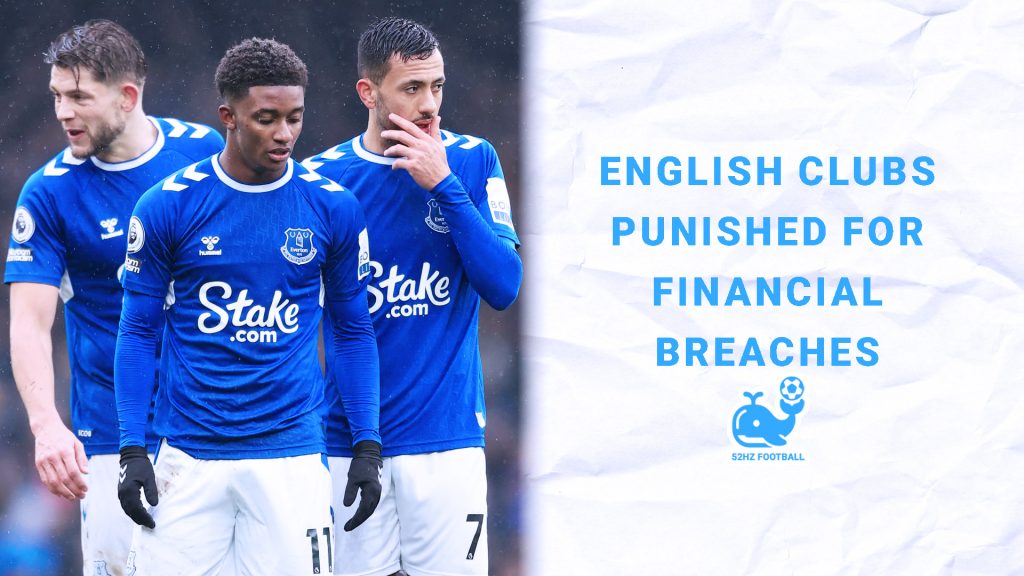
Manchester City’s financial case has placed the punishments available to English football authorities under renewed scrutiny. Yet there is no standard outcome when a club breaks financial rules.
Everton lost points but remained in the Premier League. Luton Town’s record deduction sent them out of the Football League, while Bournemouth retained promotion after resolving their case with a financial settlement.
This guide examines English football clubs punished for financial rule breaches, separating point deductions, relegations and financial penalties. Overspending, inaccurate accounts, administration and unpaid wages may all be described as financial problems, but they are not the same offence.
1. What Counts as a Financial Breach in English Football?
Financial cases in English football generally fall into several categories:
- Exceeding Profitability and Sustainability Rules, commonly called PSR or P&S.
- Recording revenue, expenses or transactions in the wrong reporting period.
- Making undisclosed or unauthorised payments to players, managers or agents.
- Failing to pay wages, taxes or transfer instalments on time.
- Entering administration or another formal insolvency process.
- Failing to follow a business plan agreed with the league.
Administration does not automatically prove dishonesty. It is a legal process used when a business cannot pay its debts, but league rules impose a sporting penalty because the club may restructure obligations while continuing to compete. That differs from deliberately concealing payments or supplying misleading financial information.
The EFL publishes disciplinary judgments and decisions concerning many of its financial cases.
READ MORE:
Which Firms Audit Premier League Clubs? Who Audits Manchester City?
2. English Clubs Deducted Points Without Being Relegated by the Penalty
Several clubs have received substantial deductions and still avoided relegation. Others lost a promotion opportunity rather than a place in their existing division.
2.1. Everton – Eight Points in 2023/24
Everton became the first Premier League club to receive two separate points deductions in one season. An initial 10-point sanction for the assessment period ending in 2021/22 was reduced to six on appeal. A second PSR case brought another two-point deduction, leaving the total at eight.
The punishment repeatedly pulled Sean Dyche’s side towards the relegation places, but Everton recovered to finish 15th. Without the deductions, they would have ended the campaign with 48 points.
2.2. Nottingham Forest – Four Points in 2023/24
Nottingham Forest admitted exceeding their permitted PSR threshold and were deducted four points by an independent commission. The penalty briefly dropped Forest into the bottom three, but they eventually finished 17th, six points ahead of relegated Luton.
Forest’s appeal was rejected, although their cooperation and early admission were considered when the sanction was determined.
2.3. Other Deductions That Did Not Directly Cause Relegation
| Club | Season | Penalty | Outcome |
|---|---|---|---|
| Leeds United | 2007/08 | 15 points | Reached the League One play-offs but missed promotion |
| Bournemouth | 2008/09 | 17 points | Survived in League Two |
| Rotherham United | 2008/09 | 17 points | Survived in League Two |
| Crystal Palace | 2009/10 | 10 points | Survived in the Championship |
| Birmingham City | 2018/19 | Nine points | Remained in the Championship |
| Reading | 2021/22 | Six points | Remained in the Championship |
Portsmouth in 2009/10 also require careful wording. They were deducted nine Premier League points after entering administration and finished bottom, but would have been relegated even if those points had been restored.
The same applies to Sheffield Wednesday in 2025/26. Wednesday received deductions totalling 18 points, yet earned only 18 points on the field and would still have finished bottom without the punishment.
READ MORE:
Manchester City’s Financial Statements Explained: What Actually Looks Unusual?
3. Clubs Relegated Because of Financial Punishments
The following table uses a stricter test: restoring the deducted points would have kept the club up, or the authorities directly ordered its demotion.
| Club | Season | Financial punishment | Consequence |
|---|---|---|---|
| Peterborough United | 1967/68 | 19-point deduction | Third Division to Fourth Division |
| Wrexham | 2004/05 | 10-point deduction | League One to League Two |
| Luton Town | 2008/09 | 30-point deduction | League Two to the Conference |
| Plymouth Argyle | 2010/11 | 10-point deduction | League One to League Two |
| Portsmouth | 2011/12 | 10-point deduction | Championship to League One |
| Wigan Athletic | 2019/20 | 12-point deduction | Championship to League One |
| Macclesfield Town | 2019/20 | 17 points across three cases | League Two to the National League |
| Sheffield Wednesday | 2020/21 | Six-point deduction | Championship to League One |
| Derby County | 2021/22 | 21-point deduction | Championship to League One |
| Reading | 2022/23 | Six-point deduction | Championship to League One |
| Leicester City | 2025/26 | Six-point deduction | Championship to League One |
3.1. Peterborough United – Relegated Despite a Ninth-Place Record
Peterborough collected enough points to finish ninth in the Third Division in 1967/68 but were found guilty of financial irregularities involving payments to players. A 19-point deduction placed them at the bottom and sent them into the Fourth Division, regardless of their results on the pitch.
The case remains one of the most dramatic episodes in Peterborough United’s history.
3.2. Luton Town – The Record 30-Point Deduction
Luton began the 2008/09 League Two season on minus 30 points, the largest deduction imposed in the top four levels of English football. Ten points came from Football Association charges concerning irregular payments to agents. The Football League imposed another 20 because Luton left administration without an approved Company Voluntary Arrangement with creditors.
Luton would have collected 56 points without the sanction, comfortably enough to remain in League Two. Instead, they finished with 26 and entered non-League football for the first time in 89 years. The club has since reflected on the long journey from that punishment to its eventual return to the Premier League on the official Luton Town website.
3.3. Wigan Athletic and Macclesfield Town – Two Relegations in 2019/20
Wigan entered administration shortly before the end of the 2019/20 Championship season. Their 12-point deduction dropped them from mid-table to 23rd, two points short of safety. The club’s appeal against the deduction was unsuccessful.
Macclesfield’s League Two campaign contained repeated cases involving unpaid wages and unfulfilled fixtures. Their deductions eventually totalled 17 points. An EFL appeal activated an additional four-point sanction, moving Macclesfield below Stevenage and into the National League.
3.4. Sheffield Wednesday, Derby County and Reading
Sheffield Wednesday began 2020/21 with a penalty connected to the accounting treatment of the sale of Hillsborough. The original 12-point deduction was reduced to six on appeal, but Wednesday were relegated by three points.
Derby faced an even larger obstacle in 2021/22. Administration brought a 12-point deduction, followed by another nine for historical accounting and P&S breaches. Wayne Rooney’s team earned 55 points on the field but finished with 34. The crisis forms an important part of Derby County’s modern history.
Reading were relegated in 2022/23 after six suspended points were activated for failing to comply with a business plan agreed following an earlier P&S breach. Restoring those points would have preserved their Championship status. The details can be found in the published EFL v Reading Football Club decision.
3.5. Leicester City – The Latest Example
Leicester were deducted six points during the 2025/26 Championship season for exceeding the applicable P&S loss threshold for the period ending in 2023/24. Their appeal was dismissed.
The Foxes finished 23rd with 46 points. They earned 52 on the pitch and had a better goal difference than Blackburn, who also finished with 52. Without the sanction, Leicester would have survived. The Premier League published the original decision and subsequently confirmed the outcome of the appeal.
READ MORE:
How Clubs Actually Pay for Blockbuster Transfers via Bank Loans?
4. Direct Demotion, Denied Promotion and Expulsion
Not every financial punishment operates through a points total.
Swindon Town won the 1990 Second Division play-off final and expected to enter the top flight. After breaches involving illegal payments, the Football League initially demoted the club by two divisions. An appeal left Swindon in the Second Division, meaning they were denied promotion rather than relegated below their original level. The episode appears in the Swindon Town Football Club Museum timeline.
Boston United were already relegated from League Two on results in 2006/07. Financial problems and the terms of their Company Voluntary Arrangement then caused a further demotion from the Conference National to Conference North. More background is available through Boston United’s club history.
Bury suffered a still more serious outcome. They were expelled from the EFL in August 2019 after failing to demonstrate the funding and ownership stability required to complete the season. Technically, Bury lost their league membership rather than being relegated.
5. Clubs Fined Without a Points Deduction
Under older Championship FFP regulations, clubs remaining in the division could face a transfer embargo, while promoted clubs could be pursued for a financial settlement. That created several cases in which a club retained the sporting benefit of promotion.
Leicester paid £3.1 million to settle an EFL dispute relating to the club’s Championship-winning 2013/14 season. The title and promotion were unaffected.
Bournemouth agreed a £4.75 million settlement over their financial results in 2014/15, when they also won the Championship. The EFL acknowledged that Bournemouth had not deliberately attempted to deceive the authorities, and no points were removed.
QPR’s 2013/14 case produced a settlement of almost £42 million: a £17 million fine, approximately £3 million in legal costs and the conversion of close to £22 million in shareholder loans into equity. QPR also accepted a January 2019 transfer embargo, but retained their play-off victory and promotion.
Transfer embargoes were also used against clubs including Blackburn Rovers, Leeds United, Nottingham Forest, Fulham and Bolton Wanderers after they exceeded the financial limits applicable at the time.
These clubs did not escape punishment. The more accurate description is that they avoided an immediate sporting sanction.
READ MORE:
6. Why Do Financial Punishments Vary So Much?
The rules have changed repeatedly, and the Premier League, EFL, Football Association and UEFA operate separate disciplinary systems. Authorities may consider the size of the breach, any sporting advantage, how quickly the club admitted it and whether it cooperated. Deliberate concealment is treated differently from an accounting disagreement or insolvency.
Timing also matters. A promoted club may have moved outside the competition that first investigated it. Older rules sometimes substituted a fine for restrictions that could no longer be applied. Appeals can reduce penalties, while delays may cause a sanction to fall in a later season than the original breach.
Modern regulators have moved towards sporting penalties because a fine may have little deterrent effect on a club backed by an extremely wealthy owner. Points deductions, by contrast, affect league position, prize money, promotion and relegation.
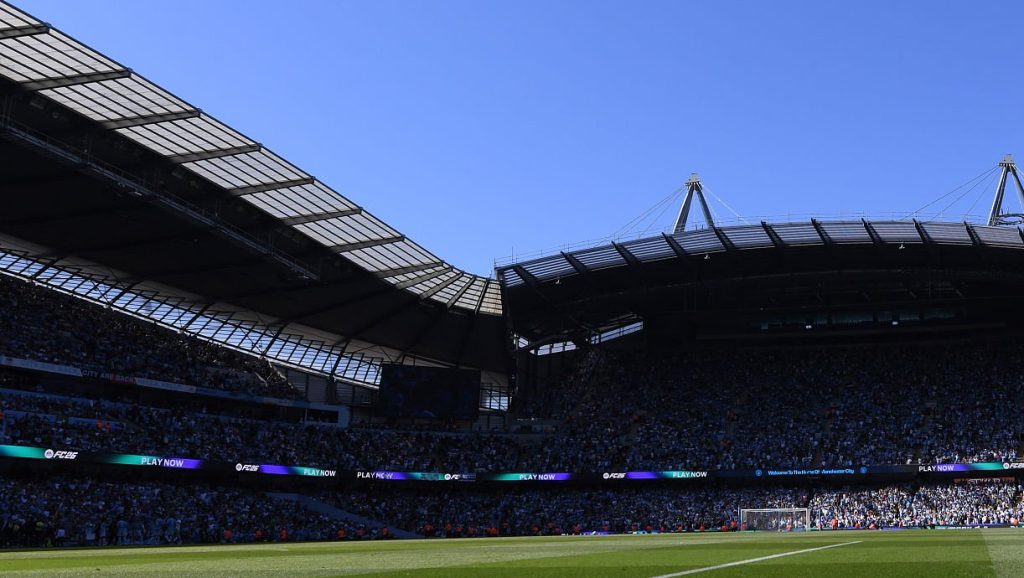
7. Where Does Manchester City Fit?
An independent Premier League Commission has found Manchester City guilty of serious breaches of the competition’s financial rules across a nine-season period and of the majority of the charges concerning failure to cooperate with the investigation.
City reject the findings and intend to appeal. No sanction has yet been imposed. Until the disciplinary and appeal process establishes the final outcome, the club cannot accurately be placed in the points-deduction, relegation or fine-only category.
The historical cases demonstrate the range of possible outcomes, but none provides a simple formula for City. The scale and duration of the conduct distinguish the case from a single PSR overspend. The latest position is available in the Premier League’s official Manchester City statement.
8. Final Verdict
English football has used fines, transfer restrictions, points deductions, direct demotion and expulsion to deal with financial problems. The consequences have ranged from Bournemouth retaining a promotion after paying a settlement to Luton losing their Football League place after starting a season on minus 30.
The dividing line is not simply how much money a club lost. The applicable rules, conduct, timing and response all influence the sanction. Everton survived a significant deduction, while Derby, Reading and Leicester show that the same punishment can decide relegation. Manchester City’s position will become clear only after a final sanction and appeal decision.
Frequently Asked Questions
Q: Were Everton relegated for breaking financial rules?
A: No. Everton were deducted a total of eight points in 2023/24 but recovered sufficiently to finish 15th and remain in the Premier League.
Q: Which English club received the largest points deduction?
A: Luton Town began the 2008/09 League Two season with a 30-point deduction, the largest recorded penalty in the top four levels of English football.
Q: Has a Premier League club been relegated solely because of a financial deduction?
A: Not yet. Portsmouth received a nine-point deduction in 2009/10 and were relegated, but their results would have sent them down even without the penalty.
Q: Can Manchester City be relegated for financial breaches?
A: A severe sporting sanction is possible under the available disciplinary powers, but Manchester City have not yet received their punishment and plan to appeal the findings. Relegation should therefore be described as a possible outcome, not a confirmed decision.
You have just read “English Clubs Punished for Financial Breaches: What Could Happen to Manchester City?”. Follow 52Hz Football for more stories about football finance, the Premier League and the history of the game.
READ MORE:
Which Firms Audit La Liga Clubs? Real Madrid, Barcelona and Atlético Madrid Explained
