
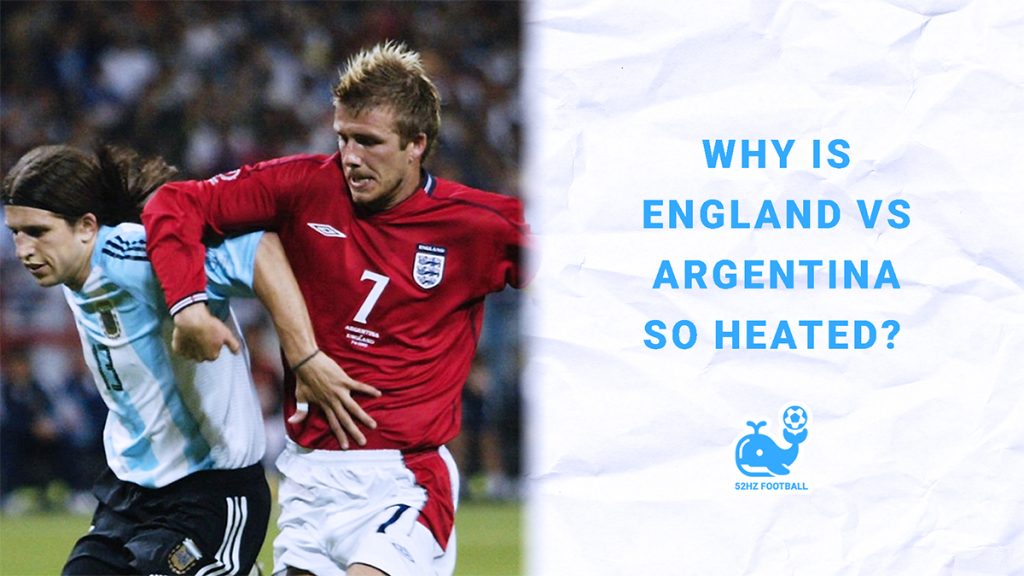
Blurring the lines between football and geopolitical warfare, the England vs Argentina rivalry stands alone as one of the most deeply personal fixtures in World Cup history.
When it comes to international football, few fixtures carry the immense emotional, historical, and political weight of the England vs Argentina football rivalry.
This is not merely a clash between two historic footballing nations; it is a profound cultural and geopolitical collision that extends far beyond the confines of a 90-minute match.
To truly understand why this fixture is so explosive, one must look at the intertwining of sports and warfare, specifically the Falkland Islands conflict, and a series of highly controversial World Cup encounters that have etched this rivalry into footballing folklore.
A. The Falklands War (Guerra de las Malvinas)
While footballing tensions existed prior to the 1980s, the rivalry was permanently transformed from a sporting disagreement into a bitter blood feud by the Falklands War (Guerra de las Malvinas) in 1982.
The conflict began when Argentina, under a military junta, invaded the Falkland Islands – a British overseas territory in the South Atlantic that Argentina claims sovereignty over.
The United Kingdom, led by Prime Minister Margaret Thatcher, responded by sending a naval task force to retake the islands. The brief but bloody war lasted 74 days, resulting in the deaths of 649 Argentine military personnel, 255 British military personnel, and three Falkland Islanders.
The scars left by this conflict deeply traumatized the Argentine national psyche. When the two nations met on the football pitch just four years later at the 1986 World Cup, it was impossible to separate the sport from the geopolitical trauma.
For Argentina, beating England on the global stage was no longer just about advancing in a tournament; it was viewed as a symbolic act of retribution and national pride.
Diego Maradona famously captured this sentiment, stating that it felt like they were “going to war” and that the match was a way to honor the fallen Argentine soldiers.
B. The Unspoken Protocol
The animosity between the two nations is so profound and well-documented that it directly impacts how international football’s governing bodies manage their matches.
It is a widely understood, albeit unofficial, protocol within FIFA and continental confederations that English referees do not officiate matches involving the Argentina national team, and conversely, Argentine referees do not take charge of England matches.
This unwritten rule is a necessary geopolitical safeguard. Football is inherently subjective, and referees must make split-second, highly scrutinized decisions. If an English referee were to award a controversial penalty against Argentina or issue a red card to an Argentine star in a crucial World Cup knockout match, the backlash would transcend footballing complaints and ignite immediate political outrage and accusations of historical bias.
By keeping English and Argentine officials away from each other’s respective national teams, FIFA prevents the matches from becoming international incidents, acknowledging that the England vs Argentina football rivalry carries too much historical baggage for complete neutrality to be perceived, even if the officials act with perfect integrity.
C. Iconic Controversies
The Falklands War football impact amplified a rivalry that had already been seeded in previous decades. The timeline of this feud is marked by iconic, infamous World Cup moments.
1966 World Cup
The bad blood actually originated at the 1966 World Cup in England.
During their volatile quarter-final match at Wembley Stadium, Argentine captain Antonio Rattín was controversially sent off by the German referee. Refusing to leave the pitch, Rattín had to be escorted off by police, reportedly sitting on the Queen’s royal carpet in protest.
England won the match 1-0, and post-match, England manager Alf Ramsey infamously referred to the Argentine players as “animals” and forbade his players from swapping shirts. This deeply insulted Argentina, planting the first seeds of hatred.
1986 World Cup
The 1986 World Cup quarter-final in Mexico is arguably the most famous football match in history.
Played in the direct shadow of the Falklands War, the match belonged entirely to Diego Maradona. His first goal, the infamous “Hand of God”, was a blatant handball that the referee missed. For the English, it was a disgraceful act of cheating; for the Argentines, it was an act of cunning street-smarts (picardía) that exacted sweet revenge against their political rivals.
Just four minutes later, Maradona scored the “Goal of the Century”, dribbling past five English players to score the greatest individual goal in World Cup history. Argentina won 2-1 and went on to win the tournament, cementing the match as a legendary act of national vindication.
1998 World Cup
The tension flared up again during the 1998 World Cup Round of 16 in France.
The match was a brilliant display of football, but it is entirely remembered for the 1998 World Cup Beckham red card. Following a heavy tackle by Diego Simeone, a prone David Beckham flicked his leg out, kicking the Argentine midfielder. Simeone dramatically collapsed, and the referee immediately sent Beckham off.
England valiantly fought to a 2-2 draw with ten men but ultimately lost in the ensuing penalty shootout. The British press vilified Beckham, while Argentina celebrated another dramatic victory over their fiercest European rivals.
2002 World Cup
Four years later, fate drew the two nations together in the group stages of the 2002 World Cup in Japan. In a tightly contested match, England was awarded a penalty. David Beckham stepped up and smashed the ball directly down the middle, securing a 1-0 victory for England.
The result eventually contributed to Argentina’s shock group-stage elimination, providing England and Beckham with a highly emotional dose of sporting revenge.
D. England vs Argentina Head-to-Head Record
Despite the massive narrative weight surrounding their encounters, the England vs Argentina head-to-head record is surprisingly balanced.
Over the course of their history, the two senior men’s national teams have faced each other 15 times in official tournaments and international friendlies.
- England Wins: 6
- Argentina Wins: 4
- Draws: 5
Note: Argentina’s penalty shootout victory in the 1998 World Cup is officially recorded as a draw in standard footballing statistics, though it is universally remembered as a crucial Argentine triumph.
While England holds a slight edge in overall victories (bolstered by early friendly matches and their 1966 and 2002 World Cup wins), Argentina has arguably won the most culturally significant encounters, specifically the 1986 quarter-final and the 1998 Round of 16 shootout.
Decades of historical tension and bitter sporting rivalry are about to be reignited, as England vs Argentina are set to collide in a highly anticipated 2026 FIFA World Cup Semi-Final.
E. Are Argentine Players Hated in England?
Despite the fierce geopolitical and historical animosity between the two national teams, Argentine players are rarely subjected to hostility when they transfer to the Premier League.
In fact, the deeply tribal nature of English club football means that nationality is instantly forgotten the moment a player puts on the club’s shirt.
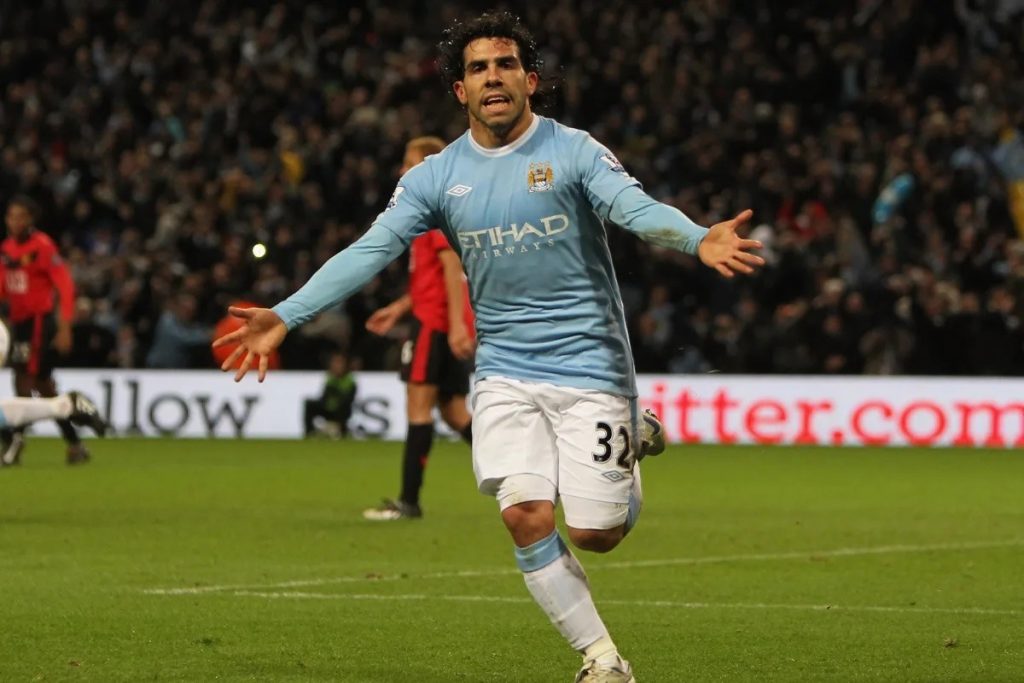
Superstars like Sergio Agüero, Carlos Tevez, and Javier Mascherano have become absolute legends in England, fiercely adored by their respective fanbases for their passion (grinta), relentless work rate, and undeniable talent.
Ultimately, the bitter rivalry is strictly reserved for international breaks; on standard Premier League weekends, an Argentine player bleeding for an English club is celebrated just like any local hero.
FAQ: England vs Argentina Rivalry
Q: Why do English referees not referee Argentina matches?
A: It is an unspoken protocol within FIFA to avoid assigning English officials to Argentina matches (and vice versa) due to the deep-seated political tensions stemming from the 1982 Falklands War. This ensures that controversial on-pitch decisions do not spark geopolitical outrage or accusations of historical bias.
Q: What is the all-time head-to-head record between England and Argentina?
A: In 15 official encounters, England has won 6 times, Argentina has won 4 times, and there have been 5 draws (including the 1998 World Cup match which Argentina won via penalty shootout).
Q: How did the Falklands War affect the football rivalry between the two nations?
A: The 1982 Falklands War transformed a standard sporting rivalry into a bitter geopolitical feud. Following the conflict, matches between the two nations – especially the 1986 World Cup quarter-final – were viewed by many in Argentina as symbolic warfare and a chance to seek national vindication on the global stage.
ou have just read the article “Why is England vs Argentina So Heated? Roots of the Fierce Rivalry & H2H Record”. Follow 52Hz Football for more captivating stories, tactical analyses, and historical football deep-dives.
