
How did legends like Ronaldo and Franco Baresi win a World Cup with zero minutes played? Explore the exclusive club of unplayed World Cup champions.
The FIFA World Cup is the absolute pinnacle of professional football. For most players, simply stepping onto the pitch for a single minute in this prestigious tournament is the culmination of a lifelong dream.
Yet, football is a game of strange ironies. Throughout the tournament’s rich history, a highly exclusive group of players has managed to lift the iconic golden trophy and receive a winner’s medal without ever breaking a sweat on the pitch.
While many of these “zero-minute” champions are third-choice goalkeepers or unknown youngsters making up the numbers in a 23-man squad, there is a fascinating subcategory: the legends of the game. These are generational talents, club icons, and Ballon d’Or winners who, due to injuries, sheer bad luck, or the presence of other established superstars, spent an entire World Cup campaign warming the bench.
Let us dive deep into the remarkable stories of the greatest football legends who won the World Cup without playing a single second.
1. Ronaldo Nazário (Brazil – 1994)
Before he became “O Fenômeno” (The Phenomenon), Ronaldo Luís Nazário de Lima was just a 17-year-old kid with a dazzling smile. Coming off a sensational breakout season with Cruzeiro, where he scored an astonishing 44 goals in 47 games, the teenage prodigy earned a call-up from Brazilian national team coach Carlos Alberto Parreira for the 1994 World Cup in the United States.
However, Brazil’s attacking lineup in 1994 was heavily reliant on the established, telepathic partnership between Romário and Bebeto. Parreira was a pragmatic coach who valued defensive solidity and tactical discipline. With the Romário-Bebeto duo firing on all cylinders and leading the Seleção all the way to the final against Italy, Parreira saw no reason to tinker with his winning formula.
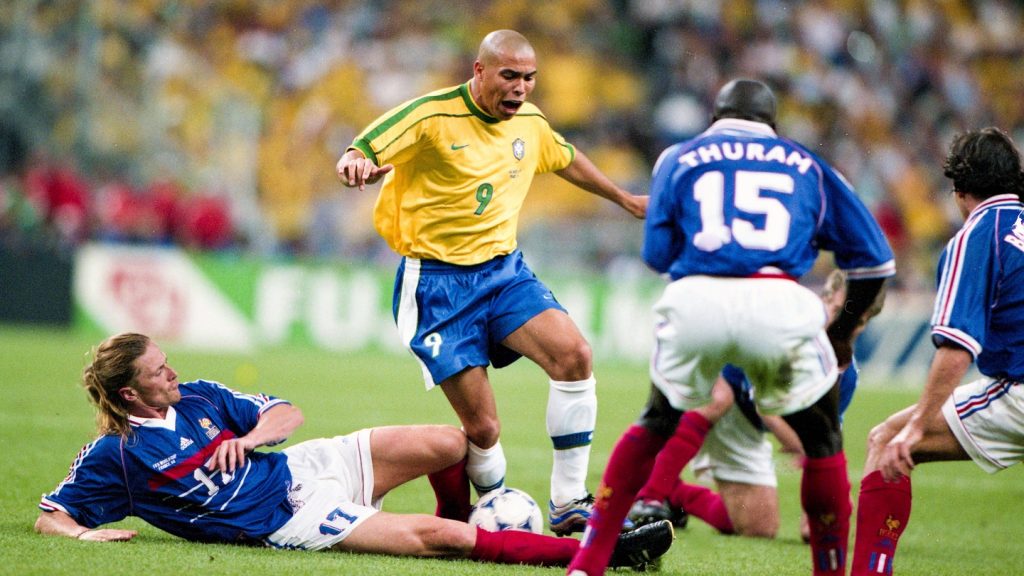
Consequently, the 17-year-old Ronaldo did not play a single minute. He watched from the sidelines, absorbing the immense pressure of the tournament, learning from the veterans, and celebrating wildly when Roberto Baggio famously missed his penalty.
This zero-minute experience laid the mental foundation for Ronaldo, who would return to completely dominate the 1998 and 2002 World Cups.
2. Franco Baresi (Italy – 1982)
When football historians debate the greatest center-backs to ever grace the game, Franco Baresi’s name is always near the very top of the list. He was a one-club man who led AC Milan to unparalleled domestic and European glory over a two-decade career. Yet, his introduction to World Cup triumph was an exercise in extreme patience.
At the 1982 World Cup in Spain, a 22-year-old Baresi was selected for Enzo Bearzot’s Italian squad. Despite his talent, Baresi was a victim of terrible timing. The Italian defense at that time was an impenetrable fortress built primarily on the legendary Juventus block.
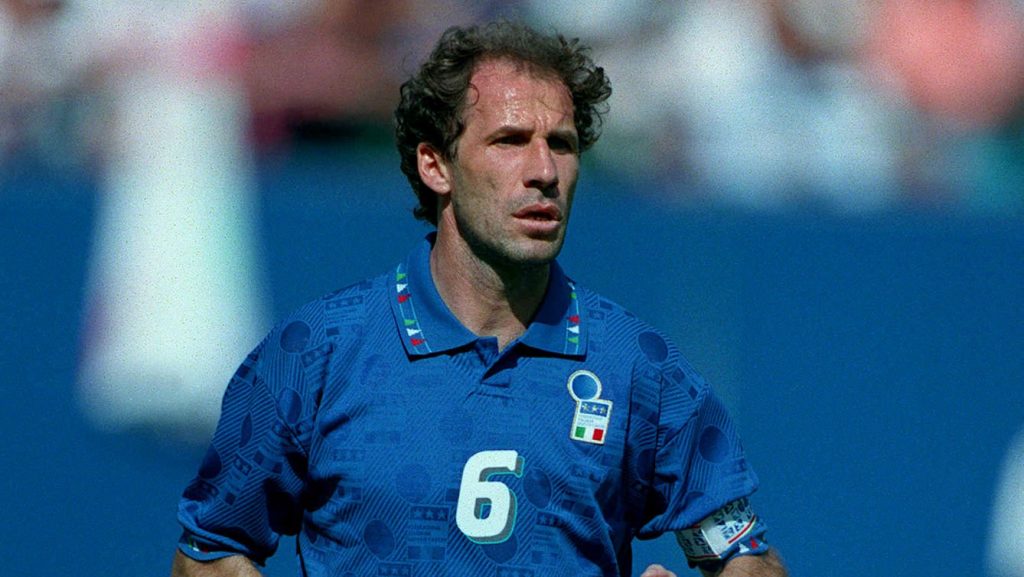
Baresi found his path to the starting lineup completely blocked by established titans like Gaetano Scirea, Claudio Gentile, and Fulvio Collovati. Bearzot stuck loyally to his veteran defenders, who successfully nullified the likes of Diego Maradona and Zico en route to lifting the trophy. Baresi did not see a single minute of action.
However, the 1982 tournament proved to be a masterclass in observation for the young defender. He would later inherit Scirea’s mantle, becoming the undisputed leader and captain of the Azzurri’s defense in the 1990 and 1994 World Cups.
3. Daniel Passarella (Argentina – 1986)
The story of Daniel Passarella at the 1986 World Cup is a captivating drama of power, rivalry, and a cruel twist of medical fate. Passarella is an absolute god in Argentine football. In 1978, he was the fiercely inspirational captain who led Argentina to their first-ever World Cup triumph on home soil. A goalscoring center-back with an indomitable spirit, he was expected to be a vital cog in the 1986 campaign in Mexico.
However, the build-up to the 1986 tournament was marred by a bitter clash of egos between Passarella and the new team talisman, Diego Maradona. Manager Carlos Bilardo had controversially stripped Passarella of the captaincy and handed the armband to Maradona, creating a massive rift in the locker room.
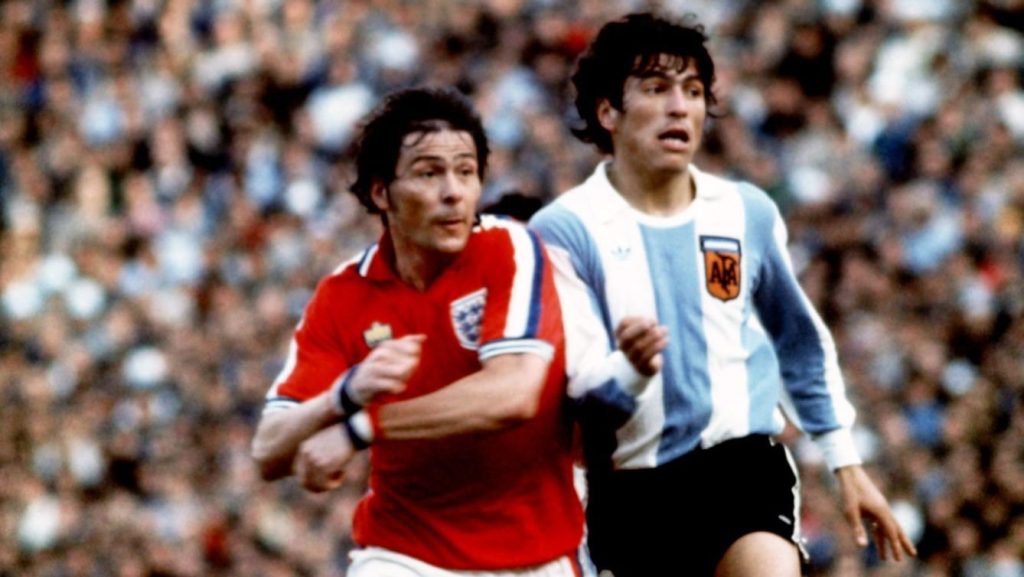
Fate intervened in the most brutal way imaginable just days before the tournament began. Passarella contracted a severe case of enterocolitis (a debilitating intestinal infection) and subsequently suffered a muscle tear while trying to recover. He spent the entire World Cup in a hospital bed or on the bench, watching his replacement, José Luis Brown, score in the final.
Despite not playing a single minute, Passarella holds a unique and untouchable record: he remains the only Argentine player in history to possess two World Cup winner’s medals.
4. José Macia “Pepe” (Brazil – 1958 & 1962)
If there is an award for the unluckiest legend in World Cup history, it unequivocally goes to José Macia, universally known as Pepe.
A true icon of Brazilian football, Pepe is the second-highest goalscorer in the history of Santos FC, sitting strictly behind his legendary teammate, Pelé. Armed with a left foot so powerful it was dubbed “The Cannon”, Pepe was widely considered one of the best left-wingers on the planet.
Tragically, Pepe’s World Cup dreams were repeatedly shattered by the cruelest of timings. Days before the 1958 World Cup in Sweden, he suffered a severe ankle injury. Unable to play, he watched from the sidelines as Mário Zagallo took his starting spot on the left flank, helping a teenage Pelé secure Brazil’s first global crown.
Lightning miraculously and tragically struck twice. Four years later, heading into the 1962 World Cup in Chile, Pepe was once again in the squad and heavily favored to start. Heartbreakingly, he suffered another major injury just before the tournament commenced.
Zagallo stepped in once more, and Brazil successfully defended their title. Pepe is the ultimate statistical anomaly: a bona fide football legend who won two World Cup trophies without ever playing a single minute in the competition.
5. Angelo Peruzzi (Italy – 2006)
Angelo Peruzzi was a colossus in the 1990s. Built like a heavyweight boxer, his explosive reflexes made him a legend at Juventus, where he famously won the 1996 UEFA Champions League. By the time the 2006 World Cup in Germany rolled around, Peruzzi was 36 years old, enjoying the twilight of his career with Lazio.
Manager Marcello Lippi called upon the veteran, not with the expectation that he would play, but because he needed his towering presence. The Italian starting goalkeeper was a prime Gianluigi Buffon, who was arguably at the absolute peak of his supernatural powers during that tournament. Buffon conceded only two goals in the entire competition (an own goal and a penalty), making it impossible for Peruzzi to get any minutes.
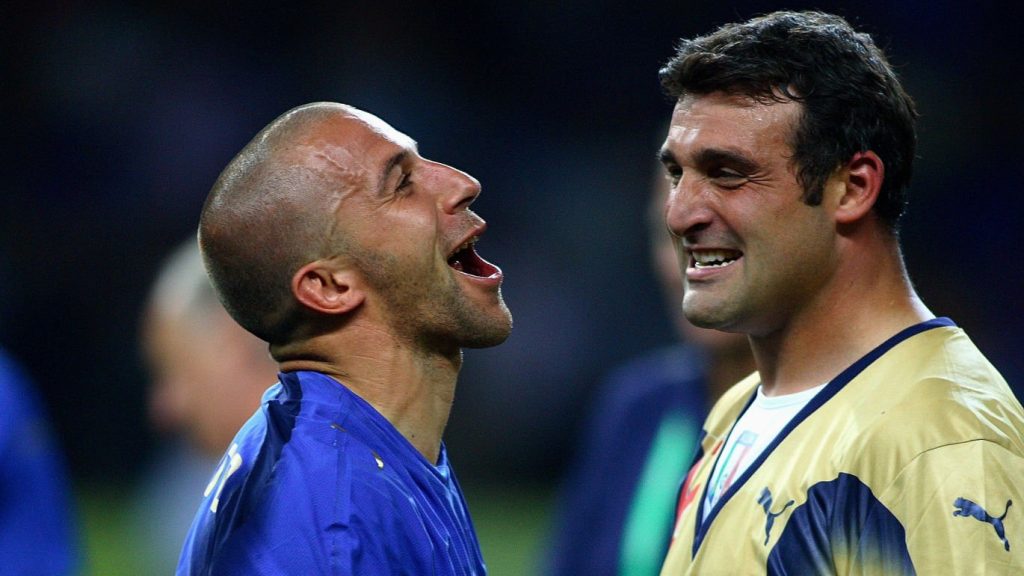
However, Peruzzi’s contribution behind the scenes was immeasurable. The 2006 Italian squad was playing under the dark, heavy cloud of the “Calciopoli” match-fixing scandal back home. The dressing room was tense. Peruzzi acted as the ultimate locker-room glue, a respected elder statesman who defused conflicts, motivated the squad, and kept the team emotionally grounded. He earned his 2006 winner’s medal not with his gloves, but with his leadership.
6. Dida and Rogério Ceni (Brazil – 2002)
To understand the sheer, terrifying depth of the Brazilian national team in 2002, one simply has to look at their bench. Manager Luiz Felipe Scolari brought a squad to South Korea and Japan that was so stacked with talent that two of the most iconic goalkeepers in modern football history spent the entire month acting as cheerleaders.
Sitting on the bench was Dida, the iceman who would soon become an AC Milan legend, twice winning the Champions League and cementing himself as one of the greatest penalty-stopping goalkeepers of his generation. Sitting right next to him was Rogério Ceni, the mythical São Paulo icon who holds the Guinness World Record for the most goals scored by a goalkeeper (131 goals).
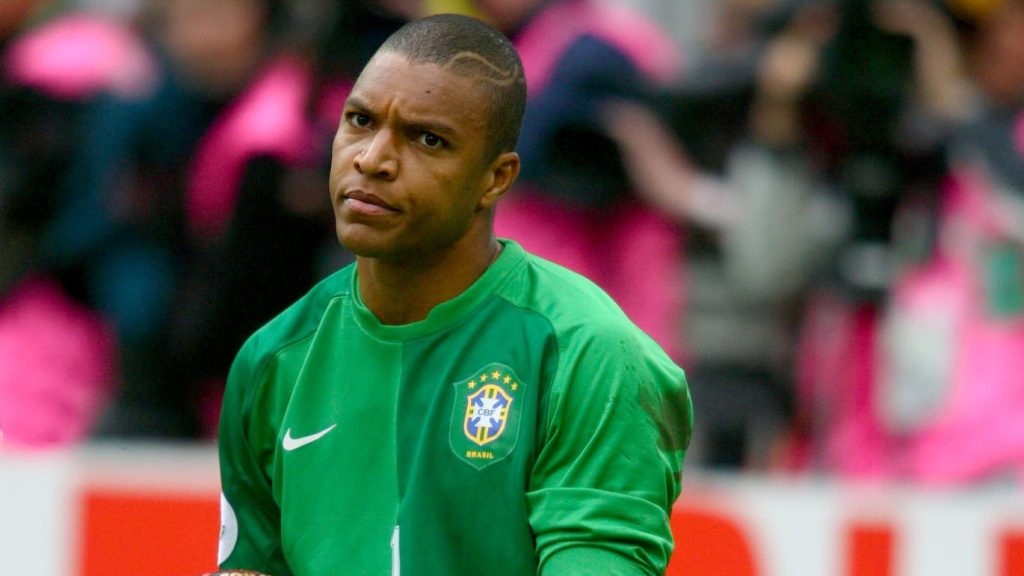
Neither of these titans played a single minute at the 2002 World Cup. Why? Because the starting spot belonged to Marcos, the Palmeiras legend affectionately known as “São Marcos” (Saint Marcos). Marcos was Scolari’s most trusted lieutenant on the pitch and played flawlessly throughout the tournament. Dida and Ceni graciously accepted their roles as backups within the famous “Scolari Family” environment, collecting their gold medals with zero minutes of sweat but absolute locker-room unity.
FAQ: Winning the World Cup From the Bench
Q: Do unused substitutes officially get a World Cup winner’s medal?
A: Yes, absolutely. FIFA regulations state that every single member of the official 23-man (or 26-man in recent tournaments) registered squad receives a World Cup winner’s medal, regardless of whether they played every minute of the tournament or never stepped onto the pitch.
Q: Has any player won two World Cups without playing a single minute?
A: Yes. As detailed in the article, Brazilian legend José Macia “Pepe” was part of the World Cup-winning squads in both 1958 and 1962 but missed all matches in both tournaments due to pre-tournament injuries.
Q: Why do international managers bring players they have absolutely no intention of using?
A: Squad dynamics in a month-long tournament go far beyond just 11 starting players. Managers bring third-choice goalkeepers for emergency cover. They bring young prodigies (like Ronaldo in 1994) to give them invaluable experience for future tournaments. Lastly, they bring veteran leaders (like Peruzzi in 2006) strictly to maintain harmony, discipline, and high morale within the dressing room.
You have just read the article “The Zero-Minute Champions: Legends Who Won the World Cup Without Playing”. Follow 52Hz Football for more captivating stories, tactical analyses, and historical football deep-dives.
READ MORE:
Why the World Cup Is Not Held Every Year? The 4-Year Rule Explained
The David vs. Goliath Effect: 10 Smallest World Cup Nations by Population (2026 Update)
Top 10 Breakout Young Stars in FIFA World Cup History: From Pele to Mbappe
Beyond Maradona ’86: Ranking 5 Greatest One-Man Shows in World Cup History
